

 Apple Podcasts
 Spotify
 Henrik Larsson - Part 4 (Parasport Pool, the WPA and a Legacy Beyond Championships)

Key Takeaways
- Six-time world champion Henrik Larsson is leading the World Pool Association's Parasport division, focusing on normalizing disability in sports by judging athletes solely on performance rather than circumstances.
- Larsson envisions integrating wheelchair and Parasport competitions alongside major professional pool events, with the ultimate goal of bringing cue sports into the Paralympic Games.
- When designing a fair global framework for Parasport pool, organizers must account for massive cultural, infrastructural, and economic differences across the world.
- Larsson emphasizes personal integrity in cue sports, recalling a pivotal moment at a 2017 world championship where he called a foul on himself that the referee and his opponent missed.
- Reflecting on a legacy beyond championships, Larsson states that he hopes to be remembered above all as a good person who always put the sport first.
In the concluding episode of our four-part Legends of the Cue conversation with Henrik Larsson, we meet a champion who is still winning—but increasingly focused on what he can leave behind.
Fresh from another major victory in Rome, Henrik discusses why integrating wheelchair and Parasport competition alongside major professional pool events matters so deeply to him. His goal is not special treatment. It is normalization: athletes with disabilities working just as seriously at their craft and being judged for the quality of their performance rather than the circumstances of their lives.
That philosophy now drives Henrik’s work helping lead the World Pool Association’s Parasport efforts. He shares his vision for international representation, fair classification systems, a global ranking structure and ultimately the dream of bringing cue sports into the Paralympic Games. Henrik also explains why developing Parasport pool worldwide requires understanding enormous differences in culture, accessibility, resources and attitudes toward disability.
The conversation becomes deeply personal as Henrik reflects on what disability really means, quality of life, parenthood and why—at 54—he continues competing only as long as he believes his game is capable of winning. He revisits the great characters of the pool world he encountered, from Mike Sigel, Nick Varner and Jim Rempe to Earl Strickland and Keith McCready, and explains why putting the sport first remains one of Jörgen Sandman’s most enduring lessons.
Then it’s time for Alli’s Rapid Rack, where Henrik chooses 10-ball, The Hustler, Las Vegas, pizza, Earl Strickland—and, when offered the choice between being a rock star for one night or world champion once more, doesn’t hesitate: world champion.
He still wants that elusive 100-ball straight-pool run. He still wants a seventh world championship. But when asked how Henrik Larsson ultimately hopes to be remembered, the six-time world champion offers a much simpler answer:
As a good person.
Give Allison, Mark & Mike some feedback via Text.
Follow our show and/or leave a review/rating on:
Our website: https://www.legendsofthecue.com
Apple Podcasts: https://podcasts.apple.com/us/podcast/legends-of-the-cue/id1820520463
Spotify: https://open.spotify.com/show/4Za0IMh2SeNaWEGUHaVcy1
Music by Lyrium.
About
"Legends of the Cue" is a cue sports history podcast featuring interviews with Hall of Fame members, world champions, and influential figures from across the world of cue sports—including pocket billiards, snooker, and carom disciplines such as three-cushion billiards. We highlight the people, places, and moments that have shaped the game—celebrating iconic players, memorable events, historic venues, and the brands that helped define generations of play. With a focus on the positive spirit of the sport, our goal is to create a rich, engaging, and timeless archive of stories that fans can enjoy now and for years to come.
Co-hosted by WPA and BCA Hall of Fame member Allison Fisher and Mosconi Cup player and captain Mark Wilson, Legends of the Cue brings these stories to life—told in the voices of the game’s greatest figures.
Join Allison, Mark and Mike Gonzalez for “Legends of the Cu...
Frequently Asked Questions
What is Henrik Larsson's role in the World Pool Association (WPA)?
Henrik Larsson leads the WPA's Parasport efforts, working to establish a fair global framework, international representation, classification systems, and a global ranking structure to grow Parasport pool worldwide.
What are the goals of Parasport pool integration in major tournaments?
The primary goal is normalization, ensuring athletes with disabilities are viewed strictly as serious competitors judged by the quality of their performance rather than receiving special treatment for their struggles.
What remains on Henrik Larsson's cue sports bucket list?
Larsson's main remaining goals are to achieve a elusive 100-ball straight-pool run and to capture a seventh world championship title.
Mike Gonzalez
We'll come back to Hayball and and to the Olympic dream for Q Sports as we talk about the WPA. But a couple other things, I guess I guess last year winning the what I think was probably your 16th, as you say, uh Euro Championship, this would have been an Estonia in a final that you won 5-2. Yeah.
Henrik Larsson
For me, that was important because it was the first time Predator was behind the European Championships. So for me, winning and especially winning the 10-ball, which is kind of Predator game, that was important.
Mike Gonzalez
So that yeah. And then more recently, just last week in Rome, Predator was behind uh what would have been what the inaugural tournament?
Henrik Larsson
Yeah, alongside the Women's Ten Bowl World Championships and and uh women team that they were playing. So we were at Rome and we uh playing just you know next to each other in different sets and a lot of exposure on the streaming tables for the for the Paris Sport. So it will really was a window for us to show Paris Sport. And I'm I'm very excited about to hear you know their take. How many viewers did they have? What was the response? But the the sponsors and organizers were very impressed and thought it was a great thing to do, and they want to do it again. So I hope that this could just inspire other forces to do the same. Yeah, yeah. Well, you're still winning. Yeah, yeah, I I I played good there. For me, integrate Parasport with uh with the others is a way to normalize. And uh I think that it that is so important and yeah, because we are working equally hard on our game and uh challenges. And it should not be about our disability, it should just be us as athletes working hard on our game and and having the same DNA. And so getting that I don't know. I w when I when I see America's Got Talent and I see this very sad story about someone who, yada yada, and then the only thing I want to hear you sing. If that's what you're gonna do, let's hear let's hear the song. Let's see how good you are as a singer. Because that is cool in itself. It doesn't have to get extra points for for you struggling with this or with that. Everybody has a story. I mean, it if if you grow up without a mom, that's challenging. If you're I mean, it everybody has a story. So I I don't want my target group to sort of have a corner of the market of, oh my God, you know. Everybody who's lost a child was placed with me in an instant.
Allison Fisher
Yeah.
Henrik Larsson
You know, there's a lot of stories out there.
Mike Gonzalez
Yeah. Yeah. Yeah. Yeah. Yeah. And I'm sure some of that philosophy that you've just shared has woven its way into your work now in a relatively new role, leading the WPA's effort in their Parasport division. Tell us a little bit about that responsibility. What does it entail? What's sort of your vision for that going forward?
Henrik Larsson
It's uh for me, it's it's a lot of responsibility because I don't know enough about the situation around the world. And to in order to create a framework that is fair, you have to have a pretty good understanding of the situation around the world. So I'm putting in there all my knowledge and and my sense of right and wrong and what is dignified and not. But I'm putting together a council with two representatives from each continent to have that as a decision-making council, and me being the number 13 if it gets to a tie. But what I really want from these 12 people is to just add all the perspectives and knowledge, and uh so I need representation from both sexes from different types of disabilities in order to just add the importance. And I also need people who are well connected so that they can reach out. So we there's a lot of players. I think this sport is one of the best sports ever for people with disabilities. Uh so I wouldn't be surprised if if I do a good job within a few years, you could have a huge number of players playing in these events. At the same time, I feel the pressure of doing a good job.
Mike Gonzalez
And and yeah. And you know, my perspective is the WPA is trying to do a lot with not a lot of resource, right, in terms of people, in terms of funding, and so that pressure adds to it as well. Yeah.
Henrik Larsson
And there's so many areas, as I mentioned before, that get into classification. We want to get into the Paralympics, and the IPC have their framework on different classifications and what would you consider being a disability or not. And you know, as soon as you're gonna limit, as soon as you're gonna have to exclude some, that's gonna be a lot of controversy, of course. Where do you draw the line? Who do you say yes to, and who do you not? But uh we we are working on four categories for people with disability: two wheelchair and two standing with disability. And people who are less disabled, you know, let's say you're missing two fingers on your right hand, or whatever. We will still have categories for that, but they are not gonna be represented in the Paralympic Games if we get in there. They're gonna have maybe the their own world championships to play in their classification, but not the Paralympics. That's gonna be limited to four.
Mike Gonzalez
Yeah. In terms of coming up with the the future of Paris Sport and coming up with solutions, is it fair to say that there's no one solution fits all all situations? I would think as you as you look across the various cultures on the globe, it plays differently everywhere, I would think. Yeah.
Henrik Larsson
And I mean people are I live in the most fortunate part of the world having a disability. And I have worked for 10 years a project in Romania. They have attracted, they have annual events with 70 participants just there in Romania, you know. And we have I'm trying ideas of how to train trainers that demographically are spread out in Romania and how they are gonna encourage others to play and so forth. So that is a project that I have, and if that works well, that could be suggested to other countries to do the same. But my point being, I'm seeing how they are working. It's just like going back in Sweden, 1972, seeing the situation that they're in, and what type of assistive a do they have, you know, the infrastructure in the country, how do they move around, how many are working, and so forth. And then just add, you can add culture and and religion into the whole thing. All of a sudden you will have people that are, you know, this is punishment for your previous life or your parents' previous life, and or this is we feel ashamed, because that's why we hide people with disability in in our country. And you know. One of the most famous quotes was 1980, when uh when the Olympic Games was held in Moscow. And uh and the reporter asked, are you also going to do the Paralympics dances? You've done the uh the Olympic Games. And if an official spokesperson said, and this is true, we don't have people with disability in in Russia. Or Soviet Union it was at the time. Which is just amazing. How can you publicly just say that? So they they said we had the Paralympic Games in London in in England, 1980. That's pretty wild. But uh it's still in a lot of corners of the world, you will still find the same sort of, you know, going back a hundred years in time and you hide people and you're embarrassed and and stuff like that. I mean Stephen Hawking, imagine how valuable Stephen Hawking was in a modern society.
Mike Gonzalez
You talked about people with disabilities being institutionalized not that long ago in history in a fairly modern first-world country. Yeah, that's true.
Henrik Larsson
And another part which I find fascinating is that a lot of development in society is because of people with disability. If you have a vibrating phone, that came about because someone not able to hear. And so, I mean, there's so many things that we are developing that was originally made for someone, entire IBM with a punching machine. It was someone who was blind, and so forth. So we really uh can contribute, and uh just to be philosophical for a second, I was questioned once, I was in a panel, and they asked us, what is what does this disability mean to you? And I thought it was an interesting question to get out of context like that. And I was thinking like this that if you leave medical explanation aside, what is a disability, and just take the word and you throw it out there, disability. Disability, that is that's a negative word. It's a word that we connect to limitations, it's a word that we sort of it adds up to a less quality life, you know, in many people's idea. And I thought that that would be cool if that was the definition of disability, that the higher quality of life you have, the less disabled you are. If those were connected, then you would have to reerute in the whole world because you will find beautiful rich people killing themselves because they can't find meaning in life. And you can have a person like myself who has, yes, there's been a lot of rough things, a lot of medical procedures, a lot of pain, a lot of things, exclusion, but I wouldn't change with anybody. I really love my life. I have the highest quality of life ever. And you can just take a person who was, you know, bullied in school and develops this personality who feels, you know, don't dare to do anything. Who are disabled. And we're all designed the same way. We we do the best we can with what we got. That goes for everybody. You know, if you're not good at math, you're not gonna be an accountant. Yep. If you're very short, you're not gonna be a basketball player. I mean, it's just everybody who's been to a karaoke bar has painfully exposed to that it wasn't your thing, you know. So so the So the important thing is to find uh accessibility. We need accessibility so people can figure out what is my thing. Okay, Steven, you're good at cosmology. Do you do that thing? And so I think we can achieve that. All of a sudden, you you're on this road where you're part of community, you experience love, you have a job, you have family, maybe, or you know. So I think the quality of life should be they should be in conjunction that with the word disability, I think.
Mike Gonzalez
Yeah, that's a great thought. So nowadays, how do you how do you divide your energy among parenthood and work and administration, advocacy, and your own game?
Henrik Larsson
Well, right now I have, you know, my kids are 14 and 15. I'm really milking every second I have because I know they just choose their friends instead of me, and they assume they're gonna move out and they'll be gone. So I'm really uh investing all my time as much as I can with them. At the same time, I'm really like the work I do, and I just wish I was 20 years young and had more energy to do all the things that I but as long as I have a game that is capable of winning, I'm gonna continue to compete. If if if that changes and and I can only reach quarters or semis, I would not play. So I'm gonna hang in there as long as I have a game capable of winning. So that is my relationship to pool. And I I have a table at home. I have, you know, I try to be more disciplined, uh, try to get up before the kids wake up and do an hour every morning or something like that. Uh but you know, if if I if if some ridiculously wealthy person would just put me in a training, you know, like you can play eight hours a day, I would do that for sure.
Mike Gonzalez
I would love that. Yeah. Of everything the game has given you, you know, if you look at travel and work and friendship and identity and independence and and a platform, which gift matters most?
Henrik Larsson
I think being brave and look within whenever I'm not getting my game out there, and I go all the way of seeing what is why is it working, what am I afraid of, and and really not afraid to look that, you know, look yourself in the mirror and deal with that. Choose, be proud of even your worst performance, be proud. You're trying hard, you should respect that. And because you can translate that into everything in life. Any situation, your relationship to partners, to anything. So I think what I've learned when when it comes to my philosophy of trying to live without fear, which I think if I could achieve that, everything would be fun. I can I I've learned so much about this game, just by how my mind works. And so that that that has been very beneficial. And I think it's beautiful. I mean, it's such a beautiful game. There's so many situations and you see so much heart. Sometimes you see matches and and uh you get so inspired by by how so much heart that goes in there. So and that never changes. I mean, it that's just new blood coming in, doing the same thing. It's important. Generation after generation. But one thing I feel very fortunate is that I when I started to play, everything was Mike Siegel, Nick Varney, Jim Rampel, Strickland, you know. And though those were different times. You had Jimmy Matthaya, you have Keith McCready going around with a t-shirt saying, I'll give the world the eight. You know things like that. There were characters back then. And and when we played the European Championship in 1999, after a game of tournaments, a couple of us had guitars with us and we drank some beers and played and sang. You know, it was different times. I'm I'm very happy to see today's a sport. Today everybody knows exactly what to eat and when and how to sleep and so forth. It's it's science now. It wasn't back then, but at the same time, it was so many stories that happened way back that was cool and that inspired me. And I'm I feel fortunate to have been brought into this game with the timing to see that side and see the development. Yeah, it's just been amazing.
Mike Gonzalez
Yeah. When the history of Parasport pool is written, what do you hope people remember about what Henrik did for sport?
Henrik Larsson
I hope that people remember me putting the game first. What is in the best interest of the game, try to be fair and to be a fair sportsman who never cheated on purpose ever. I think that that is that is most important to me, that I earn my peers' respect of being a fair guy who's not pulling any tricks or just, you know, just try to be better than the other one. Yeah, yeah. You know, one I talked about that not winning the worlds, but that wasn't a great experience. At the same time, winning fair is very important. And I remember I was playing when 2017 was the last world championship we had, and I'm in the quarterfinals playing. And I just made a jump shot and cleared the table and in the first, and I'm just having the momentum, breaking, everything looks fine. But I didn't get three balls behind the head string. And the referees didn't know. He didn't see that. My opponent didn't see it, because I break so hard, it hardly ever happens, you know. But I I saw it. And I was just about, you know, I'm thinking for half a second, can I can I look my kids in the eye and continue here? Even though I I I have it. I have the opportunity because the referee's there and he's in charge. But no. So it's just, yeah, it's your table.
Allison Fisher
Integrity.
Henrik Larsson
And that's one that's one of my proudest moments. I lost that match. But you know, it just no, I nobody, you know, whoever, you know, who who is without sin cast the first stone. I never cheated on purpose ever in my entire life. So I I definitely would throw that stone if that's important to me. Yeah. Okay.
Allison Fisher
Must be a wonderful father. I was just thinking. Can you talk a bit more about your kids? They're 14 and 15 now. I mean, what was it like when they were babies and growing up? And you know, how was that?
Henrik Larsson
I I I have I've exposed my four kids with everything from the 70s and 80s when it comes to uh movie and music, and because I think it's important. You know, you gotta know Pippi Long's rockings and uh, you know, all these characters. And I've empowered my daughter so much about being independent. You don't need anybody. You choose if you want somebody, you don't need anybody. Even culture says that to you. That's not the case. And I have just been always honest. I never lied to my kids, and I I never wrapped anything in in honey either. If they ask me about death, I will tell them. If they ask me about, and I'm not gonna say that word, but anyway, I always, yeah, this is what it is. So many people feel like, oh, they're too young to be exposed to, and why? And I if I'm happy, I'm happy. If I'm angry, I'm angry. They can always trust that daddy is what he says he is, you know. So those have been my my thing. We have so much fun. I've uh especially uh they have a lot of humor, and I've exposed them to so many different varieties of towers, probably. Amongst others, but uh you know, all the British comedies. They know they know them all. It could be the young ones, it could be Peter Cook, it could be, I mean, I've shown so many different things for him. Yeah, yeah. But we have a lot of fun. I really we are really a team with my kids. Fantastic. My my whole family is sort of like the southern European kind of thing. We it's family first. And what fun story is that my dad is a poor player. And after many years of playing at the elite level in Sweden, I was down in ranking. It looked like I was gonna drop down to the level underneath the elite level. But I I calculated and I thought that well, if I if I just go down to Malmo and play that event, all I need is just to go through the preliminary rounds, and then I'm fine. I'm gonna stay in the elite for another year. And who do I play in the last match to decide to go through? Well, I'm playing my dad, you know. And everything he touches turns into gold. He makes all those 10 long cuts, and he was just, I'm really, oh, you're kidding me. I'm again get knocked down to level one of you know of my own dad. So I ended up winning 9-7, which is a close match, really. And after the match, I told my dad was was at stake, and he just, oh wow. And when I told my mom the same thing, she was just, what? Why didn't you tell him before? He could have dropped that game. And I just, no, mom, it doesn't work like that. You're supposed to be somewhere because you earned it. Yeah, but for mom, it's family first. Yeah, of course.
Allison Fisher
Yeah. There you go. Yeah, it's true.
Mike Gonzalez
So, Henrik, our our next little section before we uh ask you our closing questions, which we ask all of our guests. We've got a little feature, a new one feature called Allie's Rapid Rock. Allie, why don't you kind of explain what that's all about, huh?
Allison Fisher
Well, it doesn't have to be that rapid because we have had guests who have taken quite a long time thinking about it. So you go at your own pace, all right? So we're just gonna ask you some questions and you just answer how you want to answer. You ready then? Yeah. Okie dokie. First question guitar or piano? Guitar eight ball, nine ball, ten ball. Great shot or safety battle battle atmosphere, you experience Amsterdam in the city for Urgent Simon I have no way to do it.
Henrik Larsson
I don't know if it's always always Respect. I don't want to say respect.
Allison Fisher
The player from any era that you would most like to face. Yes. Nice choice. Pretty much music or complete silence. Silence. Pizza after a win or something healthier. Well we know from earlier, I think.
Henrik Larsson
Pizza, without a lot. Pizza all in. With a lot of spicy things on it.
Allison Fisher
Here's a good one. Who wins a race to nine? Nineteen year old Henrik or Henrik today?
Henrik Larsson
Henrik today, without a note.
Allison Fisher
See, I love that.
Henrik Larsson
Yeah.
Allison Fisher
Rock star for one night or world champion one more time.
Henrik Larsson
World champion one more time.
Allison Fisher
I knew that answer. Your greatest strength, imagination. Patience, logic or stubbornness all in one word Infinity Best adv I love that by the way. Best advice Jurgen ever gave you.
Henrik Larsson
Put the game first. Put the sport first.
Allison Fisher
Oh I love this one. Favorite Swedish word with no perfect English translation. And you have to tell us what it means.
Henrik Larsson
The the first word comes to mind is Gnis, and and that would be my absolute best friend who hung himself in the army after seven years of living together. That was, you know, a word that I I you know he he was so much love and uh energy and happiness and it was just an accident that Yeah.
Allison Fisher
Sorry to hear that.
Henrik Larsson
Yeah. So that was just what popped in my head and Oh that's good.
Allison Fisher
That's good. That's what we want. Your Q case essential besides cues.
Henrik Larsson
The tip shaper.
Allison Fisher
Yeah. Here's one rule you would change in poor.
Henrik Larsson
The Celtic or nine ball. I don't like that.
Allison Fisher
What's the sound that you most love in a pool room?
Henrik Larsson
It's when you hit it perfectly and the sound the ball makes when it goes into the pocket and you know you cannot hit that ball better.
Allison Fisher
Yeah.
Henrik Larsson
That's a signal of you're in stroke, you know.
Allison Fisher
I don't know if Mike knows what you mean, but I Mark and I do, don't we, Mark? Don't we not? I think you do.
Mike Gonzalez
You'll teach me.
Allison Fisher
The win that made you celebrate the hardest.
Henrik Larsson
The win that uh celebrate the hardest.
Allison Fisher
Yeah. Was there any particular win in your career that you really that was the one?
Henrik Larsson
In 2012, that's probably the first one.
Allison Fisher
Yeah. Alright, here's a good one.
Henrik Larsson
The loss that taught you the most April final 2002, going on a very strong three-rack string, and then I just started to play defense, defense, defense, waiting for opportunities, and he just capitalized on that, and the game slipped away. The game slipped away, and I loved that.
Allison Fisher
Yeah, yeah.
Henrik Larsson
That was very yeah.
Allison Fisher
You're getting on the defensive. One thing people misunderstand about Parasport.
Henrik Larsson
That they're looking at tragedy or people that are fragile and unhappy, or you know.
Allison Fisher
Yeah.
Henrik Larsson
As I said before, life happens. Everybody has a story, and and it gives you perspective. It makes you humble, it makes you grateful for the challenges that you are experiencing. So it it can actually just make you a bigger person instead of a tragedy.
Allison Fisher
Yeah. Right. The last question is what is still on Henrik Larson's bucket list?
Henrik Larsson
How to run. There you go. Yeah.
Allison Fisher
And good luck to you in that. Let us know when you do it. I'm sure it'll be soon.
Mark Wilson
That's the benchmark. You're a life master if you do it once. It's funny, so many people say they've done it. And then I I want to say, no, you haven't. You know, because they've diluted themselves. They think they, if they applied themselves, they really could, probably, and then they've told it to themselves so many times. Finally they say they have. But they haven't because I would see them all the time if that was the case. And I never see a hundred-ball run. Yeah, yeah, yeah.
Allison Fisher
What do you know now that the 19-year-old moving to Stockholm most needed to hear?
Henrik Larsson
Try not to waste too much time. I spent so many hours in the pool room, and I think that if I would have had some sort of mentor or coach, I I would have made more quality training than just a lot of playing, playing, playing. So I I think that I you know, today I'm 54. I wish that I yeah. I've always been my own teacher in a way. And so I think I wasted a lot of time when I had the time. And then I started to work and I didn't have the time. So yeah. Just use your time wisely. Don't just hang out there and play a lot of ridiculous mind ball matches.
Mark Wilson
Alright. What would you say directly to a young wheelchair user entering a pool room for the first time? For the first time?
Henrik Larsson
I would recommend to. Well, it I would want to use the opportunity to inspire immediately with how much this game has to offer. And it is very hard to say that in just one sentence. But at the same time, I would also use the opportunity to the more you choose to be a victim, the slower it's gonna move you forward. Victim is one without an option. And uh we live in a world where we do have a lot of options, even though the road is harder and needs more work. We still have options. If you are born with a severe cerebral palsy in Yemen, you don't have options. You can just forget it. You know, yeah. So you gotta embrace the the all the options you have. And if you don't do that, that is a very active choice on your behalf. And I don't respect that. So I I don't only feel sorry for people who don't have a choice, and most people have.
Mike Gonzalez
Yeah, that's a good answer. That's a good answer. So, Henrik, uh, before we wind down, it's been a delight having you. Of course, we'll have some closing comments, but we always repeat the same three questions with each of our interviews, which makes it sort of interesting to compare and contrast the responses we get. And I'm going to give the first of the three questions to Mr. Wilson. Okay.
Mark Wilson
If you knew when you were twenty what you know now, what would you have done differently?
Henrik Larsson
I would have chosen different relationships and become a father sooner.
Mike Gonzalez
That works. That works. Okay, we're gonna give you one career mulligan. One shot to do over that might have made a difference. Where would it have been?
Henrik Larsson
It would have been last year's World Championship Hable Final. A shot on the eighth in the side that I chose to jump. I would have just played slight inside and spin that eighth ball and one. It was just a hair of a ball in the the way, and I just grabbed my break cue and I jumped at it and I overcut it. And it was oh, that was horrible. That would have given me my seventh world championship title, which is one of my you know goals or wanting to do. So that that that hurt me a lot and that shot. Yeah, okay. All right, Allie, final question.
Allison Fisher
And the final question is how would Henrik Larsen like to be remembered?
Henrik Larsson
Well, I hope that you know, if if a dream come true, there will be people to remember me as a good person.
Allison Fisher
Well, Henry, it's been a delight having you on today. Thank you so much for sharing all your wisdom. I've learned a lot, and it's very inspiring having you here. So thank you for joining us on Legends of the Q.
Mike Gonzalez
Thank you so much for having me. I'm sure you've got a new fan in Mark Wilson.
Mark Wilson
I love your positivity. The respect for the sport is always paramount to you, your mental toughness that you've demonstrated. It sets a great example for the sport and really a pleasure meeting you. Thank you so much. It's been a pleasure being here.
Mike Gonzalez
Thank you so much.
Henrik Larsson
Hope to see you soon.
Allison Fisher
Thank you for listening to another episode of Legends of the Cube. If you like what you hear, wherever you listen to your podcast, including Apple and Spotify, please follow, subscribe, and spread the word. Give our podcast a five-star rate on each day of thoughts. Visit our website and support our four history projects. Until our next golden break with more Legends of the Cube.
Pool Professional
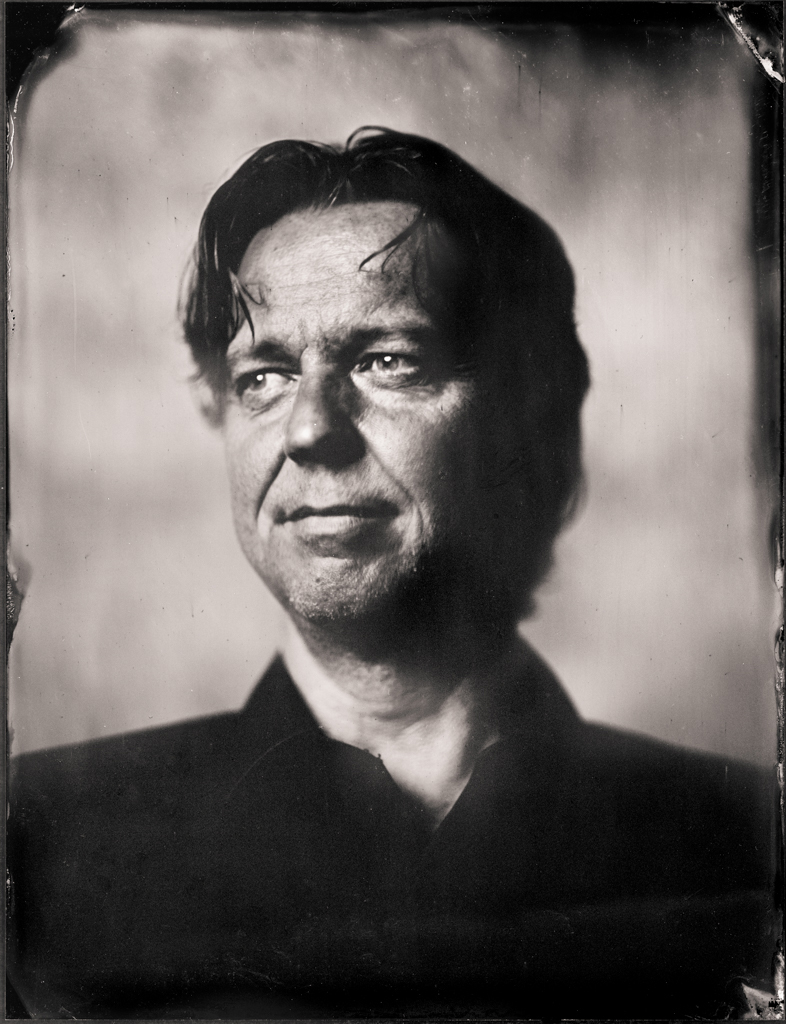
Few figures in cue sports have built a life around the game as varied, accomplished and consequential as Sweden’s Henrik “Henke” Larsson. A six-time WPA world champion, one of Europe’s most decorated wheelchair pool players, entrepreneur, poolroom owner, entertainer, instructor, organizer and disability advocate, Larsson has spent more than three decades proving that pool can be far more than competition. For him, it has been a pathway to independence, friendship, livelihood, personal growth and, increasingly, an opportunity to create those same possibilities for others. Predator lists him as a six-time world champion, 20-time Swedish champion and holder of a 97-ball straight-pool high run from a wheelchair.
Born in southern Sweden on November 16, 1971, Larsson lost movement in his legs during infancy after a benign hemangioma grew within his spinal cord. He grew up at a time when Swedish society offered far fewer accommodations for children with disabilities than it does today. Henrik recalls a childhood without automatic doors, accessible curbs or even appropriate wheelchairs for young children. Yet his parents made a conscious decision not to treat him as fundamentally different from his two older sisters. He was expected to make his bed, carry his plate and participate in family life, while being given considerable freedom to discover for himself what he could and could not do.
That upbringing helped produce the independence for which he later became known, although Henrik is candid that childhood was not simply an inspirational story. He remembers q… Read More