Larsson, Henrik
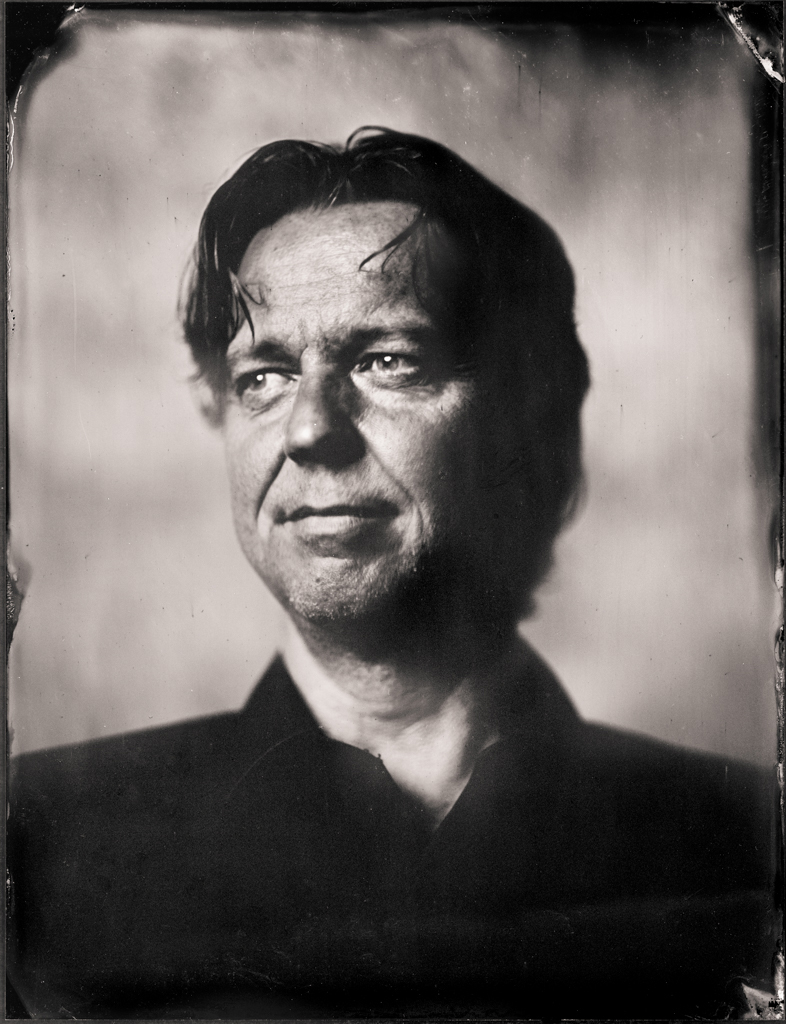
Pool Professional
Few figures in cue sports have built a life around the game as varied, accomplished and consequential as Sweden’s Henrik “Henke” Larsson. A six-time WPA world champion, one of Europe’s most decorated wheelchair pool players, entrepreneur, poolroom owner, entertainer, instructor, organizer and disability advocate, Larsson has spent more than three decades proving that pool can be far more than competition. For him, it has been a pathway to independence, friendship, livelihood, personal growth and, increasingly, an opportunity to create those same possibilities for others. Predator lists him as a six-time world champion, 20-time Swedish champion and holder of a 97-ball straight-pool high run from a wheelchair.
Born in southern Sweden on November 16, 1971, Larsson lost movement in his legs during infancy after a benign hemangioma grew within his spinal cord. He grew up at a time when Swedish society offered far fewer accommodations for children with disabilities than it does today. Henrik recalls a childhood without automatic doors, accessible curbs or even appropriate wheelchairs for young children. Yet his parents made a conscious decision not to treat him as fundamentally different from his two older sisters. He was expected to make his bed, carry his plate and participate in family life, while being given considerable freedom to discover for himself what he could and could not do.
That upbringing helped produce the independence for which he later became known, although Henrik is candid that childhood was not simply an inspirational story. He remembers questioning why life was unfair, wondering whether anyone would love him and struggling with feelings he did not always know how to express. At the same time, Swedish Parasport training camps introduced him to an almost rebellious culture of self-reliance: confront a problem, develop the skills and equipment necessary to solve it, and move forward. That attitude—part patience, part imagination and part stubborn determination—became central to both his pool career and his later work with wheelchair users.
Before pool, however, Henrik’s great passion was music. He began playing guitar and piano at six and once imagined becoming a professional musician. His influences ranged from the Beatles and Frank Sinatra to Paco de Lucía, Gary Moore, Eddie Van Halen and Steve Vai. Music remains his emotional and creative outlet; pool, by contrast, appeals to the analytical side of his personality.
His direction changed when he wandered into a poolroom owned by Jorgen Sandman, the Swedish coach, promoter and administrator who would later serve as president of the World Pool-Billiard Association and become one of international cue sports’ most influential leaders. Sandman had never seen a wheelchair player shoot pool and was intrigued by the possibilities. He offered to train Henrik, beginning a demanding three-year mentorship. Through Sandman, Henrik was also exposed to international pool at a remarkably young age, even serving as a referee at the 1991 World Championship in Las Vegas. Today the World Confederation of Billiards Sports lists Sandman as President Emeritus.
When Sandman moved on to work in Austria, 19-year-old Henrik packed his belongings and moved to Stockholm in search of stronger competition. Pool became an obsession. He remembers playing until one room closed, moving to another, finally leaving the last poolroom around five in the morning, eating dinner and falling asleep to Fawlty Towers before starting the routine again the next day.
Larsson also proved unusually resourceful in finding ways to finance his ambition. He taught juniors and beginners in exchange for table time, developed corporate events and trick-shot shows and helped create TriQ, a business supplying poolrooms with instruction and entertainment. He estimates that he performed more than 2,000 exhibitions during his Stockholm years. Eventually, he and partners acquired two large Stockholm poolrooms, combining competition, live entertainment, restaurants and corporate events. His career was becoming an unusual combination of elite sport and entrepreneurship long before professional pool offered athletes anything resembling a reliable living.
His international breakthrough came in Berlin in 1993, when he won what the Swedish Parasport Federation recognizes as the first official European championship for wheelchair billiards. A year later, on his first competitive trip to the United States, he defeated leading American wheelchair player Aaron Aragon, a victory Henrik still considers one of the most important of his career. By the late 1990s he was competing at an elite level against standing Swedish players as well as dominating wheelchair competition.
The defining breakthrough came at the 2003 ISMWSF World Wheelchair Games in Christchurch, New Zealand. Larsson won both WPA-sanctioned pool titles, defeating Chinese Taipei’s Chu Shou-Wei 5–3 in the 8-ball final and Japan’s Takahiro Terada 11–5 for the 9-ball championship. Contemporary Swedish reporting noted that Henrik was then ranked eighth among all active pool players in Sweden—not merely wheelchair players.
Those victories were only the beginning. Larsson added WPA World Wheelchair 9-Ball Championships in 2007, 2012, 2014 and 2016, bringing his world-title total to six. His decades-long rivalry with Finland’s Jouni Tähti became one of the defining rivalries in wheelchair pool. The 2012 championship remains particularly meaningful to Henrik: after falling behind Tähti, he refused to accept a third consecutive defeat and produced one of the performances of which he remains most proud.
In 2014, at the Hansa Shopping Mall in Turku, Finland, Larsson defeated Ireland’s Fred Dinsmore 9–6 in the semifinal and Great Britain’s Matt Duffy 9–6 in the final to capture another world 9-ball crown. He joined the Predator team in 2010, beginning a relationship that has now lasted more than fifteen years.
Larsson’s contributions increasingly extend beyond tournament victories. In Malmö he became a leader of Rullstolsakademin—the Wheelchair Academy, working through FIFH with medical professionals to teach wheelchair users not merely mobility skills, but independence in everyday life, employment, family responsibilities, health and self-confidence. Malmö describes the program as operating since 2014 with the goal of helping participants maintain a dignified and equal view of themselves while becoming more independent.
In 2021, Henrik became the 26th member of the Swedish Parasport Hall of Fame, recognition not only of his competitive record but also his work as an ambassador, instructor and role model.
His competitive fire has hardly diminished. In 2025 he won the wheelchair 10-ball gold at the Predator European Pool Championships at Kalevi Hall in Tallinn, Estonia, defeating Slovenia’s David Slacek 5–2. Then, on August 3, 2026, at the Rome Cavalieri, A Waldorf Astoria Hotel, Larsson defeated Slovenia’s Matej Brajkovic in a three-set final to win the inaugural Predator Wheelchair Open—another major title more than three decades after his first European breakthrough.
Today Henrik is also helping shape the future of the sport. The WPA established its Parasport Division in 2024, and by 2026 Larsson was serving as WPA Parasport Director, working on classification, rankings, international representation and opportunities for athletes with a wider range of disabilities. His ambition extends ultimately toward greater recognition of billiards within the Paralympic movement.
Yet for all the championships, records and honors, Henrik’s measure of success has evolved. He speaks openly about learning that his value does not depend upon winning. He remains fiercely competitive—he still wants a seventh world championship and dreams of finally breaking the 100-ball barrier in straight pool—but the legacy he values most is simpler: putting the game first, competing fairly, helping others discover their independence and being the kind of father his children can trust.
When Legends of the Cue asked how Henrik Larsson ultimately hopes to be remembered, the six-time world champion did not mention trophies.
His answer was simply: as a good person.

Henrik Larsson - Part 4 (Parasport Pool, the WPA and a Legacy Beyond Championships)

Henrik Larsson - Part 3 (Pressure, Rivalries and Six WPA World Championships)

Henrik Larsson - Part 2 (Stockholm, 2,000 Exhibitions and Becoming a World Champion)
