

 Apple Podcasts
 Spotify
 Henrik Larsson - Part 2 (Stockholm, 2,000 Exhibitions and Becoming a World Champion)
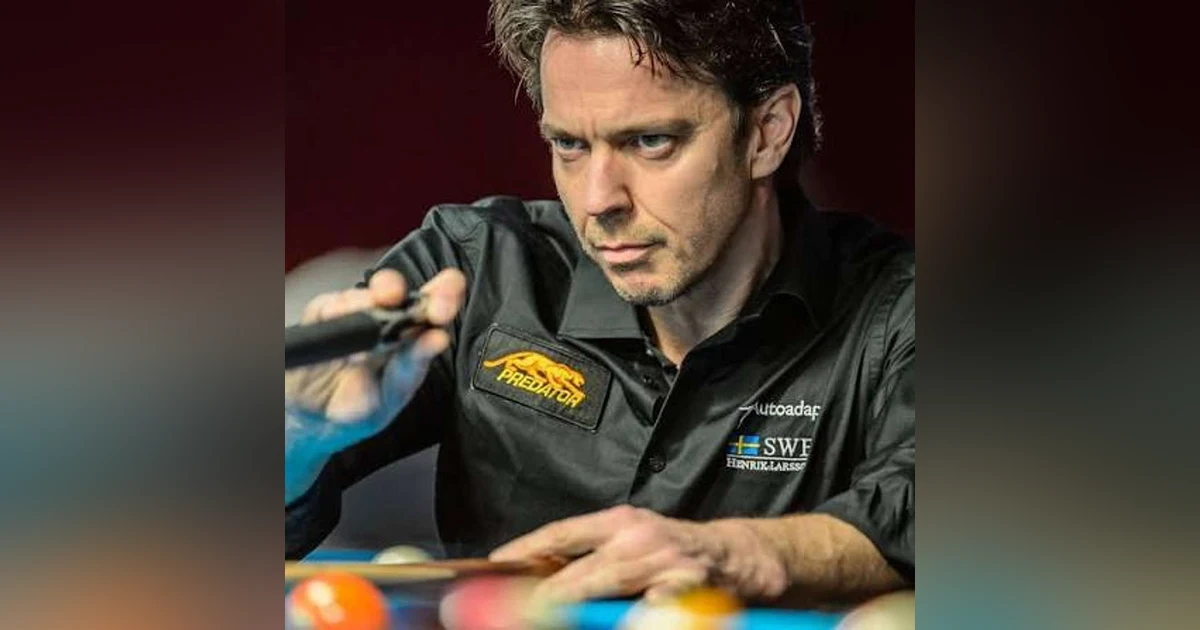

Key Takeaways
- Henrik Larsson built an entrepreneurial career in professional pool by teaching juniors, creating corporate pool programs, and performing over 2,000 trick-shot exhibitions in Stockholm.
- Disabilities can foster unique advantages, with Larsson noting that his lack of internet access and physical limitations helped build patience and creative problem-solving skills.
- Larsson was a true pioneer for wheelchair cue sports, competing against able-bodied players at the elite level and winning an early milestone championship in Berlin in 1993.
- By 1999, wheelchair competition was successfully integrated alongside the European Championships, paving the way for Larsson's extraordinary run of 19 total European titles.
- In 2003, Larsson achieved international greatness by capturing both the WPA 8-Ball and 9-Ball World Championships in Christchurch, New Zealand.
In Part 2 of our Legends of the Cue interview with Henrik Larsson, the aspiring Swedish pool player arrives in Stockholm at age 19 with no elaborate career plan. As Henrik puts it, he was simply addicted to shooting pool—playing until the last poolroom closed at five in the morning, sleeping late and starting all over again the next day.
But Henrik quickly realized that becoming a great player also required finding a way to finance the journey.
What follows is a fascinating story of entrepreneurship in professional pool. Henrik teaches juniors and beginners in exchange for free table time, develops corporate pool programs, forms an entertainment business and eventually performs more than 2,000 trick-shot exhibitions. He and his partners go on to own two major Stockholm poolrooms—one built around rock-and-roll and live music, another designed as an upscale, multi-level billiards and corporate-entertainment venue.
Then we turn to the competitive career.
Henrik recalls being at the forefront of wheelchair pool in Europe, competing successfully against Sweden’s standing players and winning an early championship in Berlin in 1993. A year later, he travels to America and takes on formidable American wheelchair star Aaron Aragon, scoring a breakthrough victory that Henrik still considers one of the most important of his career. He explains the physical realities of elite wheelchair pool—the reach, table height, bridge shots and pattern choices—and why straight pool became his favorite discipline.
By 1999, wheelchair competition is being staged alongside the European Championships. Henrik begins an extraordinary run of European titles.
And in Christchurch, New Zealand, in 2003, everything changes: Henrik captures both the WPA 8-Ball and 9-Ball World Championships.
From Stockholm poolroom obsessive to double world champion, Part 2 traces the years when Henrik Larsson turned opportunity, creativity and relentless practice into international greatness.
Give Allison, Mark & Mike some feedback via Text.
Follow our show and/or leave a review/rating on:
Our website: https://www.legendsofthecue.com
Apple Podcasts: https://podcasts.apple.com/us/podcast/legends-of-the-cue/id1820520463
Spotify: https://open.spotify.com/show/4Za0IMh2SeNaWEGUHaVcy1
Music by Lyrium.
About
"Legends of the Cue" is a cue sports history podcast featuring interviews with Hall of Fame members, world champions, and influential figures from across the world of cue sports—including pocket billiards, snooker, and carom disciplines such as three-cushion billiards. We highlight the people, places, and moments that have shaped the game—celebrating iconic players, memorable events, historic venues, and the brands that helped define generations of play. With a focus on the positive spirit of the sport, our goal is to create a rich, engaging, and timeless archive of stories that fans can enjoy now and for years to come.
Co-hosted by WPA and BCA Hall of Fame member Allison Fisher and Mosconi Cup player and captain Mark Wilson, Legends of the Cue brings these stories to life—told in the voices of the game’s greatest figures.
Join Allison, Mark and Mike Gonzalez for “Legends of the Cu...
Frequently Asked Questions
Who is Henrik Larsson in cue sports?
Henrik Larsson is a pioneering Swedish pool player, entrepreneur, and multi-time WPA World Wheelchair Champion known for his incredible trick-shot exhibitions and dominance in international wheelchair competition.
When did Henrik Larsson win his first WPA World Championships?
Henrik Larsson captured both the WPA 8-Ball and 9-Ball World Championships in Christchurch, New Zealand, in 2003.
How many European titles has Henrik Larsson won?
Henrik Larsson has won 19 total European titles throughout his illustrious wheelchair pool career.
Mike Gonzalez
So, what was in young Henrik's mind at age 19? Did you know where life was taking you? Did you have a clear idea where you're going?
Henrik Larsson
No, just shooting pool. I was just addicted. It was just ridiculous. And the way you play in one, you play at one pool room, and when they close to go to the next one, and finally, when the last pool room closes at 5 a.m., you you buy food and you make dinner. And then me and my buddy used to fall asleep to 40 towers every night. Then you wake up somewhere after lunch next day, down to the pool room. She pulled again whole day and whole night.
Mark Wilson
Mark, this is a perfect man. It is, yeah. We're brothers.
Mike Gonzalez
That sounds familiar, doesn't it, Mark?
Allison Fisher
Perfect.
Henrik Larsson
So those those were the days, and and I immediately made a deal with a with a pool room. I offered them to take care of the juniors and train them and uh and also have beginners courses if they allowed me to play for free and that I could the money I was making or doing the courses that I could just put that in my pocket. And and they said yes. I got to know them in Bergheim when me and Jurgen were having the World Championship, and they just uh built this new pole room downtown Stockholm. So I think it was yeah, they felt confident since I was there with Jorgen prior. And but so little by little I I did that and and I I developed more courses at the higher level, and all of a sudden companies got to be interested in watching exhibitions, and I did a lot of trick shot exhibitions for them. And that turned into a bigger deal, so big that I uh created this company together with a female player, top player in Sweden. So we started something called TriQ, which supplied pool rooms with anything when it comes to education or entertainment in Pol, we would do that. And that turned into an even bigger deal. And I was just doing exhibitions after exhibition. I literally did more than 2,000 exhibitions during my period in Stockholm, which is just insane. Unbelievable. Sometimes I could do nine at one day because we have different stations in the forum. So I had one company in the basement, and then moving up to another one, didn't exhibition there, and then over to look. So it was just crazy. And you get so sick of yourself after a while. You know, after you've done like 500, you really want to kill yourself, you know, even though the entertainment is good, the shots are cool, but you really want to think because I I was a serious player, and and being an entertainer and just cracking jokes and doing trick shots, that's a light version of what is really my passion. My passion is to run 100 balls in street pool in a wheelchair, you know. That's the cool stuff. And and uh they only wanted the uh the stand-up comedian doing funny things at the pool table, you know. So anyway, it it that was my uh job for many, many years. And we ended up buying two forums in stock with me and some friends. And uh also we we have a main distributor of pool equipment in in Sweden, it's Biljardex Pupten. They have kind of monopolized the thing. And I knew that they needed help with some work, so I offered them if I do that and you don't pay me salary, instead, you pick up my tabs when I go to the States because I need to be there and play. And we made that deal. So they they hired me. They didn't hire me, they they illegally uh financed my my tours to the US. Also, I think Brunswick was involved, so they were using their connections to do that.
Mike Gonzalez
So you found a lot of creative ways, a lot of creative ways to to build income and and support your your habit, if you will. Entrepreneur. I've been entrepreneur my entire life.
Allison Fisher
Yeah. It's fantastic. You could teach a lot of fall players how to take care of themselves, I think.
Henrik Larsson
I think I yeah. Before I did all that with the with the companies and uh come up with events and stuff, no one has done that in Sweden before in in that fashion. So that led the way for others to also do it in different cities and so forth.
Mike Gonzalez
Yeah. Speaking of that, Ali, isn't there a big need in professional pool for that kind of guidance and mentorship?
Allison Fisher
And absolutely. Definitely would be. I mean, you everyone's just winging it on their own, really, and they don't have any guidance and maybe not educated in how to do that. Probably one of the most successful players over here in America has been Jeanette about marketing herself. And but I you know, you see a few players now are very good on social media, but you know, it needs a lot more than that, you know.
Mark Wilson
Well, I think the mental toughness that Henrik developed as a boy played into that, and then the discipline for music played into that, and then the fact that he wanted to be self-reliant played into that. And Americans are uh tend to be sloppy and lazy, so that it won't work that way. You'd have to have that. Some of the disadvantages became your advantages down the way, is my point. Yeah.
Henrik Larsson
I think so too. If there's one thing my disability has given me, the positive aspect is the patience. Because you gotta have patience. There's so much you you just you gotta be patient. And secondly, is my imagination that was I didn't have internet, I didn't have other stuff. I I needed to if we were out in the woods, you know, my family was picking mushrooms and I was just sitting there. My imagination was the only thing that kept me alive, kind of. And so that is whenever I see an opportunity, my mind very easily has this inspiration that, well, hey, we can do this. I have an idea. And and I always very easily see a bigger picture of something that could turn into something good. And I think that if I do have one skill, it's to see how do I get from A to B. If I have a vision and I'm here now, what is the path to get there? Who do I need to cooperate with? Where can I find funding? Where, you know. So that has been, I think maybe if there's any skill that I have in entrepreneur is to see see the prospect. We you know, like one, we had a we had a concept, we we didn't have any action in the pool rooms on on Mondays. And I just thought that we have so many bank and tech companies coming here doing these exhibitions, you know. Why why don't we set up a prestigious thing, uh accompanied league play, and I forced six companies that I knew personally, whether it was Microsoft, it was some bank, it was someone else, and they were playing a team of three, kind of a Moscone Cup thing. Yeah. And year by year, I I pampered them, I made everything very classy, it looks professional, we, you know. And all of a sudden, after a few years, I had 32 companies coming every Monday. That is more than 100 people. Everybody was eating, everybody was buying cues in between and practice before the next lead match. You know, but I just saw the idea that we can turn this Monday with just absolutely no income at all, into be something prosperous if you just have a good idea. And sometimes you need to work a while in order to make it fly. But that that was went phenomenal.
Allison Fisher
That's brilliant.
Mike Gonzalez
Yeah. I hear a little bit of Jurgen in that when I hear about some of these creative ideas that you've developed. Yeah, Jurgen, he's also very good.
Henrik Larsson
He has created a lot of great stuff over the years.
Mike Gonzalez
Yeah. Yeah. Yeah. Talk about your pool rooms. Describe for our listeners what they look like, smell like, felt like back in the day.
Henrik Larsson
Uh we were buying two companies that was not going so well, but we had an idea how to make them do good. So one place we just turned into this rock and roll place. We just we we built this huge scene where a very good PA system, and it was purple cloth, it was everything was black except the pillars that were silver, and uh and we had live bands every week. And that is actually very few, there are very few places in Stockholm where you can practice being on stage. So we had a lot of great bands coming playing for free. Yeah, because they just needed the practice on stage, and that was a cool thing, that turned out well. But the other was more the uh luxurious place at three stories high. We have the a la cut at the top, and we had a big pool room with a VIP room, and and the uh lower floor we had just for special occasion, the you know, bigger companies doing things. And and that was a I think a third of the entire revenue was just simply companies coming. So that's how important they were for making money. But it's uh it was fun for a while. At the same time, I have to say that it's a horrible thing to run a restaurant or a billiard room because your entire business can be bankrupt in a second if something goes wrong. So I I did, you know, I felt a bit in anxiety. In Sweden, if you accidentally would serve a beer to some to a minor, all of a sudden you lose all your liquor license. Yeah. Like that. I mean, it is so many things that can go wrong that I thought was stressful. I didn't much like that.
Allison Fisher
How long did you have them before these these poor rooms?
Henrik Larsson
Could have been five years or five six five, six years, something. When I had my second child, I I I sold my part to w we were five sharing on these two big rooms, and uh became a situation where we were two groups, we wanted to do different things. And the uh offer came that either we buy you or you buy us. Right. And I thought it was a good deal and it was good timing, and uh I took my kids and went to Malmö in the south of Sweden because I needed babysitters and my parents and my sisters, everybody was. No, yeah, no, I I I don't miss Stockholm. I I actually I that was an interesting chapter for 20 years, but I really enjoy living where I live now. In a house. Yeah. Yeah. Yeah. In a ridiculous house, I might say. Uh-oh. And this is I'm this is just a side thing. I was looking for a house just like you have, Mark. You a need to fit a pool table. And I don't want to sacrifice a living room in order to do that. So I was looking, looking, and I found this weird house. This previous owner turned it into a castle. Outside, it's looked just like any other house. But when you step in, every floor is marble, there's huge crystals. I mean, it's just a crazy place. But there's a lot of room, and it looked like a museum, and I think that why was why he had problems selling it. Because people with families could just see the kids getting killed on the marble floors and no social area and so forth. But I just immediately saw there's the pool room, we do some lounge here, we do, you know. So I I bought that, and it was so spectacular that TV contacted me and I asked if they could use my house in a TV program that England had done for eight seasons. It's a super popular uh program where you have five people living in different houses, and uh the it's a game show. You visit every house and you're gonna guess who lives in which house. And it's educational because I see a lot of good ideas and how to decorate your house and different, you know. And uh I'm I'm not I don't I'm not knowledgeable about interior in that sense, but I said, yeah, I they asked me if they could use my me in my house. And I said, yes, for the simple reason that it's cool for a guy in a wheelchair to be on a show. It's not about my disability, it's just that I happen to live in a cool house. So I thought everything that would normalize my target group, that is I'm I'm game. So I was in there and and uh I had to fake at the pool table, like I didn't know what I was doing. And you know, the guitar is everywhere in every room, and I just no, I don't know how to play.
Allison Fisher
Oh funny. Yeah, and this is how sure and now yeah, yeah, yeah.
Henrik Larsson
I still still I'm I'm I'm never gonna leave this place. It's a fantastic sound. I have a studio, I have the pool room, I have the movie experience upstairs, yeah. Perfect. COVID for me was perfect. I could just stay home, play the guitar, and practice pool.
Mike Gonzalez
Let's take you back to some of your first competitive breakthroughs and describe for our listeners what the environment was like playing in a wheelchair back when you were starting to compete. Were there many tournaments? Were there many uh accommodations for people with those conditions, or were you sort of at the forefront of all this?
Henrik Larsson
Totally at the forefront. To this day, I think I'm more or less the only licensed pole player in a wheelchair in Sweden. The just the last year or two, they have added activities around Sweden. But uh, I've been playing the Able Bodies my entire life on all levels. And it was funny when I started to be a stronger player and I entered the elite level of Sweden. And, you know, my fellow companions, Tom Storm and everybody, you know, they were sort of helping me to rack the balls or something like that. But as soon as I started to kick ass, all of a sudden no one was helping with the balls anymore.
Allison Fisher
They were just Rat Your Own Balls.
Henrik Larsson
Yeah, we met you, yeah, yeah, yeah. So I I really earned my spot as just one of the players quite rapidly. And then we had, and that was an independent contractor who organized the first European championship for disabled people in 1993. And that was all types. There was standing with disability and it was uh wheelchair, and that was held in Berlin. And it was so close to the wall being torn down that we were living in the uh West Berlin, and the tournament was in East, and East at the time was still everything was gray. It was just incredible how different the two sides of Berlin were at that point. But we played in that tournament, we played eight ball. I know I remember I played Kurt de Klerk in the final in that tournament, and he's still around, he's also still playing. So that was and then we had the year after that, I went to the US for the first time to because they you've had a tournament in Arizona called the Syllabus Books Classic. Randy Flores was doing that. And I came over and I knew that there was this guy called Aaron Aragorn.
Allison Fisher
I remember that name.
Henrik Larsson
Was the main main stake in the US and I I used all my money just to get there. And I I haven't even entered the pool room when a guy comes up to me, an older guy comes up to me, and he says, Hey, you look like you might be interested in shooting some pool for some small bucks, you know, something. And what are you talking about? Well, yeah, just some small cash, you know, like a hundred bucks a rack or something, you know. And for me at the time, I mean, that was ridiculous, ridiculous money. I didn't have that money. But that was Aaron's manager. Just wanted to sort of let me know that don't come here and try to be cool, buddy. So we played the tournament. I beat Aaron in the preliminary rounds, and I ended up meeting Aaron again. Aaron was, I'm I gotta say, he was a phenomenal player, really, really good. And he played the Able Body Tour, and he beat a lot of the big names. I have a huge respect for Aaron. I really enjoy all those finals that we played together. But in '94, I I played him again in the final, and he got into a strong lead, and I got back to him, and this was the first time Brunswick was involved helping me to get there. So I know how important it was. It was the same year as I am telling also won the world. But anyway, I remember getting back at him, and at the final eight, nothing in my body is working. You know, my entire body is just freaking out. And I had this awkward shot on the eight to win the thing with the with the with the bridge. And I, you know, because I was so I trained so hard, my my brain, my brain was still working. So I just narrowed it down to okay, this is wrong to the left, that is wrong to the right, and I narrowed it down, this has to be right. And then I shot and I made that eight. And all of a sudden I was on the map in the US because I beat Aaron twice in my first debut visit to the States. So that was probably one of my most important wins in in my life.
Mike Gonzalez
Yeah. So bridge that gap sort of from that first European event you you participated in in '93 to '99 when you won your first European pool championship. How did the game develop? What were you doing behind the scenes to get better and learn?
Henrik Larsson
Well, that was the uh falling asleep to Forty Towers period, when I was just playing all night. But we did actually, we did have two or more European championships before the 99 uh event. What is significant about 99 is that that is when Litgott was integrated with the able bodies. So from 1999 up until last year, they have had men, women, and wheelchairs playing alongside at the same time, building up a center court arena with three tables, playing the finals at the same time, which I think is just beautiful. That is how how sports should work. So that is why the 99 is an important year. But we did have tournaments prior to that, and I just kept on doing all the drills that I knew and kept on my entrepreneurship in Stockholm, meanwhile.
Mike Gonzalez
So speaking of drills, you brought that up. Mark always asked the question, right, Mark, about uh how you prepare.
Mark Wilson
Yeah, uh you know, going back to Aaron, he used to play on the camel tour with us, and he was uh formidable. He certainly won uh his share of matches against Elite Pros. So it wasn't just able-bodied, he was playing taking on the world. Uh remarkable. But uh yeah, you know, certainly the training aspect for you has to be different, and uh curious to hear just exactly how you would go about training and if you're training today.
Henrik Larsson
Well, I I do uh I'd prefer the uh old school drills. I know my weaknesses, I'm working with the frozen rail shots. Uh since I'm going sidearms, my stroke is not 100% accurate. I need to be pay attention when the cue will get frozen to the rail or if I'm reaching, depending on what type of cue power I need. So I isolate the like anybody else, the the things that are my weaknesses. But I think the the most I mean the frustration really in a wheelchair, if if you reach a high, very high level, is the frustration of knowing what you could have done if you couldn't use the center of the table, but not able to. So you can actually you can lose against somebody who's not as good, but for the simple fact that I have to pick other shots. I have to, you know, it's it's yeah, just accept that. But at the same time, it is my choice. I'm choosing to play this game. No one is forcing me to play pool. So if I if I get into the game, I gotta accept the rules and go along with it. You reach. Yeah, uh physically, I mean the the obstacles would be the reach. That is the main thing. So you gotta choose other shots, you have to take longer shots. If you wanna stay with your stroke and getting that flow, uh someone might say, well, can't you just use the bridge? No, because it's a different thing. It's a it's it's it puts you off a little bit timing-wise, setting that up. And some of the shots where you're gonna do a solid draw and you have the cue all at the center, that's hard to do. And I mean it's uh it's an awkward shot. I don't think anybody would be comfortable with that. And I think if an able body player should understand what it would like would be if we elevate the table just underneath your pelvic, you know. And then then you play and see what it feels like. And then you can add not having balance, maybe. You add uh blocking out a pain that very many of uh people in the wheelchair are are just living with and dealing with, and and how that drains you mentally. And I mean there are other aspects that come here. You can be spastic that you need to be in control of, and so it's not just if you want to try it and you sit in a wheelchair and see what it's like, that will not really give you the full experience. But when it comes to jump shots, massive shots, you know, some players have uh difficulties with the hand functions that are not working in it. So but if if I was some summarize the whole thing, I would pick the uh not being able to reach as the main thing that is frustrating you or gets in the way.
Mark Wilson
When you look at table heights, uh the slate bed is uh regulated between twenty nine and a half and thirty one inches, but that's gonna affect you dramatically, even though that range, just an inch and a half, is gonna diminish further the amount of shots you can reach, and then particularly in the straight pool, where you maybe have to use a bridge over the rack or balls that are impeding and then right? I mean it's got to be brutal and then yet you've created a high run of 97 balls, which is just remarkable because you have to play brake shots with a bridge a lot of times.
Henrik Larsson
Yeah, again, I I I try to find other ways. I'm use very often different brake balls, breaking ball into the side instead of in the corner, so I can get close to that shot. Picking brake balls that are close to the rail so I can lean in and get that shot instead of going from the bottom rail and reaching over. But I I'm merely only play on the highest table possible so that I'm ready for any table ever. And that was a lesson learned when I was uh practicing in Stockholm in the 90s. I had spent two years with a phenomenal player in Sweden who was a straightfold champ. And he said that no no what you should do is only play on the highest table. So you have that advantage. Whenever you you know face a lower table fine. But you are ready to excel on any table always. So and I also like that thing that we don't have any adjustments. If you're playing from a seated position it's the same tables it's the same rules it's the exact we don't have to have a foot connected to the floor but otherwise it's the same thing. It makes it so easy to integrate I you know I've been playing all kinds of tournaments against able bodies and I just show up and play at this point have you optimized your chair in terms of height way it moves etc yeah I've I found the perfect height and what what is a little embarrassing that now I'm I'm 54 and I shouldn't eat as much pizza as I do. I have uh gathered too many extra pounds and that gets in the way of me because I have to fold you know every time I make a shot I'm sitting down and I realize that oh my God my stomach is in the way now that's not okay. So I need to work on that. Yeah yeah yeah to to to Mark's point then is is 14-1 kind of the most difficult discipline just because the balls are clustered on one end and there's a lot of traffic no I think I mean I think straight pool is that is my favorite game I think it's a wonderful game and the more you understand of how to separate clusters and and how to do the break shots and you've you will find different patterns that are very effective. So I I I still would advise anybody everybody especially people in wheelchair to play straight pool because you will learn so many finesse and playing 10 ball effectively I think one pocket is also a good added game because there's so many different shots that you can play. You can play aggressive at the same time playing the safety in 10 ball if you understand one pocket because there's so many weird shots that come up in one pocket that you're not used to if you don't ever play it. So yeah I I love straight ball it's it's and you know when you see old school uh straight ball being played you know the way Steve Misra played or Thomas Enyett and you see just after two or three racks that it's over because they're in the perfect flow and it it's just impossible to miss. You can see that if you say it I think that modern players now they're so great shock makers on the expense of making it look so simple.
Mike Gonzalez
Like I think old school was really they master that yeah yeah let's talk about that first European pool championship then back in 1999 you won the eight ball competition.
Henrik Larsson
What are your memories of that I was playing phenomenally good. I think it was like a 5-0 match or something. So that was a final that was fantastic. And I remember how I I lost in the semis and the nine ball and I was so feeling sorry for myself. It's kind of a pathetic way when I look at it now. But I I won it so hard and it was so hard that I couldn't live my game and I was so embarrassed that what what is everybody gonna think about my game because it was the first time we played alongside with everybody and even though I played the eight ball well but the eight ball final was not in the center court in that way like the nine ball was so anyway it it it was a win. It was a good experience. Well that was the first of how many European championships you've won uh I won 19 total 19 yeah so the run starts in 1999 you win the nine ball the next year yeah I'm sorry I'm I'm kind counting 93 as well and you know what we did before that was three goals before 99.
Mike Gonzalez
Gotcha that I won yeah yeah so let's say 16. 16 plus the the three that came before 99 then right yeah yeah yeah but you started a pretty phenomenal run which by the way is not over because we'll talk about it later just winning recently in Rome. So you're not done winning but you got on quite a roll starting in 99.
Henrik Larsson
I mean uh eight ball in 99 in 2000 you win the nine ball and 2001 you win the nine ball for a second time third time the next year and so forth leading up to your first of six WPA world championships so the first one that you won there was in 2003 this in Christchurch New Zealand winning the WPA eight ball and nine ball world championship yeah how big was that for you that was huge because what happened 2002 a new guy came on the tour from Finland Yaunitetti and he is a phenomenal player and uh all of a sudden I was facing someone who could uh challenge me big time and we play the finals 2002 in the US and he beat me in the finals and that was frustrating and so finally getting the title 2003 was a huge relief because then I I finally had a WPA gold medal super important and it was funny I I you know New Zealand is on the opposite side of Sweden it's the farthest you can go from Sweden and I've added an extra day just for sightseeing you know but after winning I didn't want to do anything but just get home and brag about my gold but and it this this was in Christchurch it was also before they had a the huge tragedy there. So yeah the earth yeah yeah yeah but but but that was yeah that was huge that was super important.
Mike Gonzalez
I I remember when we had Gerda with us talking about uh after her first big win coming home and they and the and the little town's band was playing for did you have a band playing for you when you came home no no I had my dog being happy when I got back always good those dogs.
Henrik Larsson
Yeah they are yeah that was a hundred pound Rothweil I had in those days I'm I'm not strong enough uh today to have that type of dog but back in the days I could yeah so what changed for you winning you know two world championships in a single go? Anything changed for you lifewise yeah prior to that we we like when I won 94 that was sort of the unofficial world championship and then I was in the US 2000 and won the nationals and we had a thing going on with the ESPN covering in those days that was Europe against US a team event that was broadcast which was a really cool thing. Alan Hopkins and Mitch Lawrence used to commentate on that and so that was also very important for me to get that exposure on TV and to bring that home. But yeah all of a sudden I I was officially a world champion and and that's being an entrepreneur of course you you use that and see how you can turn that over to to more work and and more good ideas.
Mike Gonzalez
Yeah so in parallel with that then on the private side of life outside of competition what was going on in terms of business and other ventures you were involved in and did that then really help with those?
Henrik Larsson
Sure. That was just before I think like we bought the pool room somewhere 2005 or six so this was when me and my uh female co-partner was doing all the exhibitions and all that and that sort of uh was easier to to get attention of course with the more titles you had so that was cool and there were so many different gigs that were cool we were uh doing gigs for the military in in Chechia where Sweden was was uh lending planes or they were renting planes and we were there for the whole team that is the the service personnel that takes care of those planes and all that and I remember we had to sign I think it was about 50 page document with legal things and you know you're not allowed to say anything about anybody or yada yada it was so so hush hush. But so there was a lot of things going on with that company and we we did a lot of different exhibitions around Sweden even outside of Sweden I was in Lakeside I did a Michaela Tab uh through me in there because one of the guys got sick and she had seen me do an exhibition in England and she said that well I I have a guy for you and Sharon Toky took me in there and and that was that was one of the most traumatic things ever to to do exhibitions 12 minutes on the unprepared on the table and I just had like a week and a half to prepare for that. And we get there and I'm sitting in the green room with Ephraim and Earl and everybody and I try to be calm and in the middle of the night I couldn't get sleep. I was so nervous I finally get to sleep and all of a sudden the fire alarm rings and everybody had to evacuate the the hotel. And I was my friend she was saying that funny thing about you Henrik as soon as you heard the fire alarm you just where's my cue we gotta go and get out here you know but anyway I finally I got a few hours but I was like a wreck but it it went well anyway but that was a a weird experience there's been so many so many things happening over the years thank you for listening to another episode of Legends of the Cube if you like what you hear wherever you listen to your podcast including Apple and Spotify please follow subscribe and spread the word give our podcast a five star rating and share your thoughts visit our website for our fourth history project until our next golden break with more Legends of the Cube along everybody.
Pool Professional
Few figures in cue sports have built a life around the game as varied, accomplished and consequential as Sweden’s Henrik “Henke” Larsson. A six-time WPA world champion, one of Europe’s most decorated wheelchair pool players, entrepreneur, poolroom owner, entertainer, instructor, organizer and disability advocate, Larsson has spent more than three decades proving that pool can be far more than competition. For him, it has been a pathway to independence, friendship, livelihood, personal growth and, increasingly, an opportunity to create those same possibilities for others. Predator lists him as a six-time world champion, 20-time Swedish champion and holder of a 97-ball straight-pool high run from a wheelchair.
Born in southern Sweden on November 16, 1971, Larsson lost movement in his legs during infancy after a benign hemangioma grew within his spinal cord. He grew up at a time when Swedish society offered far fewer accommodations for children with disabilities than it does today. Henrik recalls a childhood without automatic doors, accessible curbs or even appropriate wheelchairs for young children. Yet his parents made a conscious decision not to treat him as fundamentally different from his two older sisters. He was expected to make his bed, carry his plate and participate in family life, while being given considerable freedom to discover for himself what he could and could not do.
That upbringing helped produce the independence for which he later became known, although Henrik is candid that childhood was not simply an inspirational story. He remembers q… Read More