

 Apple Podcasts
 Spotify
 Hydred Goldberg - Part 1 (The Accident That Changed Everything)

Key Takeaways
- Two-time WPA Heyball Parasport World Champion Hydred Goldberg reflects on the immense pressure, intensity, and personal isolation that came with defending her world title in Oslo.
- Born in London to Filipino parents as the eldest of a large family, Hydred grew up balancing diverse cultural traditions, food, and the heavy responsibilities of a second mother.
- A catastrophic automobile accident on August 10, 1993, just five days after her 18th birthday, left Hydred paralyzed and changed the trajectory of her life forever.
- Navigating the emotional journey from denial to acceptance took years, with getting her driver's license serving as a pivotal moment of realizing her life wasn't over.
- Hydred contrasts her experience of acquiring a disability in young adulthood with fellow champion Henrik Larsson, who has used a wheelchair since infancy, highlighting two completely different perspectives on parasport.
Two-time WPA Heyball Parasport World Champion Hydred Goldberg joins Legends of the Cue to begin an extraordinary life story that stretches from London and the Philippines to California—and eventually to the top of international wheelchair pool.
Hydred sits down with hosts Allison Fisher, Mark Wilson and Mike Gonzalez just months after surrendering the world title she had held since the inaugural WPA Parasport Heyball Championship in 2024. She reflects on the pressure of defending a world championship, her evolving rivalry and friendship with Switzerland’s Catherine Schneeberger, and the unexpected attention that followed becoming the first woman to win the title.
Then we go back to the beginning.
Born and raised in London to Filipino parents, Hydred recalls childhood at the “Orchard Bungalow,” growing up as the eldest in a large family, Filipino food, festivals and traditions, her early love of art and music, and moving to Northern California as a teenager. She also discusses what it meant to grow up feeling connected to three different places—England, America and the Philippines.
Everything changed on August 10, 1993, just days after Hydred’s 18th birthday. A catastrophic automobile accident left her paralyzed. Hydred recounts the crash, months of hospitalization and rehabilitation, receiving her first wheelchair, and the long emotional journey from denial toward accepting a radically different life.
She also contrasts her experience of acquired disability with that of fellow wheelchair pool champion Henrik Larsson, who has used a wheelchair since infancy.
This first chapter is not yet the story of a world champion. It is the story of the young woman who would eventually become one.
Give Allison, Mark & Mike some feedback via Text.
Follow our show and/or leave a review/rating on:
Our website: https://www.legendsofthecue.com
Apple Podcasts: https://podcasts.apple.com/us/podcast/legends-of-the-cue/id1820520463
Spotify: https://open.spotify.com/show/4Za0IMh2SeNaWEGUHaVcy1
Music by Lyrium.
About
"Legends of the Cue" is a cue sports history podcast featuring interviews with Hall of Fame members, world champions, and influential figures from across the world of cue sports—including pocket billiards, snooker, and carom disciplines such as three-cushion billiards. We highlight the people, places, and moments that have shaped the game—celebrating iconic players, memorable events, historic venues, and the brands that helped define generations of play. With a focus on the positive spirit of the sport, our goal is to create a rich, engaging, and timeless archive of stories that fans can enjoy now and for years to come.
Co-hosted by WPA and BCA Hall of Fame member Allison Fisher and Mosconi Cup player and captain Mark Wilson, Legends of the Cue brings these stories to life—told in the voices of the game’s greatest figures.
Join Allison, Mark and Mike Gonzalez for “Legends of the Cu...
Frequently Asked Questions
Who is Hydred Goldberg?
Hydred Goldberg is a two-time WPA Heyball Parasport World Champion who won the inaugural women's title in Los Angeles in 2024 and successfully defended it in Brisbane in 2025.
What caused Hydred Goldberg's paralysis?
Hydred was paralyzed in a severe automobile accident on August 10, 1993, just five days after her 18th birthday, when the steering column of her boyfriend's Volkswagen bug locked and caused them to crash into a telephone pole.
Where was Hydred Goldberg born and raised?
Hydred was born and raised in London, England, to Filipino parents before eventually moving to Northern California as a teenager.
What other creative passions does Hydred Goldberg have besides pool?
Before and alongside her pool career, Hydred has pursued a passion for art, pencil drawing, watercoloring, and special effects makeup.
Mike Gonzalez
Welcome to another edition of Legends of the Cue and Mark Wilson. On a day when we've released the life story of Henrik Larsson, Alli thought it very, very important that we have this lady on as well.
Mark Wilson
Every week we get someone with an interesting and inspiring story. These are all so different in terms of the backgrounds and genuinely make for a fascinating look at how each player arrived at becoming a Legend of the Cue.
Allison Fisher
Our guest today is Hydred Goldberg of the United States, one of the most fascinating new champions on the international pool team and a pioneer in world chair billiards. Hydred is a two-time WPA Heyball Parassport World Champion, having won the inaugural women's title in Los Angeles in 2024, and successfully defended it in Brisbane in 2025. But there is much more to her story than those two gold medals. A life-changing automobile accident forced Hydred to learn a new way of moving through the world. Along the way, she discovered competitive pull, developed a game from the wheelchair that would eventually take her into semi-professional competition, pursued another creative passion in special effects makeup, and then returned to the table to become a world champion. And although the world may know her best for Heyball, Hydred would tell you that Nineball is really her game. Today she competes internationally and has become an increasingly visible ambassador for the growth of para sport billiards around the world. Hydred Goldberg, welcome to Legends of the Cue.
Hydred Goldberg
Hello, glad to be here.
Allison Fisher
It's wonderful to have you. So Hydrid, for two years you were the only woman Parasport Hable world champion the sport had ever known. What was it like arriving in Oslo this year with everyone trying to take something you had never surrendered?
Hydred Goldberg
Yeah, I think uh coming to the the Oslo competition that there is that feeling, you know, it's a lot more intense, there's more pressure. People are gunning for you. They want to take the spark.
Allison Fisher
Sparrow in the back.
Hydred Goldberg
Yeah. Yeah. Um and and I did find myself uh feeling a little bit more guarded, to be honest, um and trying to keep my peace as much as possible. Like trying to stay meditative and in my little bubble. Um since the 2024 Haybor competition uh started and ended, I have kept in touch with many of the people um from that competition. And so we've become quite friendly. Um for me it's it's it's uh an interesting balance because I was I couldn't quite regulate uh and find the stay with the competitive spirit and then keep keep it you know, friendly talks outside. So I did deal with that quite a bit. Uh and especially for that Oslo competition.
Allison Fisher
Right.
Hydred Goldberg
Yeah.
Allison Fisher
If you want to win, you can't have friends. That's the bottom line. Is that it? No, I'm I'm not joking. Is is that a thing? Is it no, you have to be able to compartmentalize to put it aside, but I do absolutely agree with you. Sometimes it's hard to put that aside and just get to the table and be in the office and do your job.
Hydred Goldberg
Right.
Allison Fisher
Definitely.
Hydred Goldberg
I think also the timing in between, you know, the the the first tournament was December 2024, the second one was six months later. Oh um and then the Oslo the third one came one year after uh Australia. So um it it felt for me like very compacted and very fast, and my five minutes of fame, I mean it it really uh it blew up. You understand how it was quite impactful to win that first uh competition. I I didn't I honestly didn't expect the kind of attention I get from it. Which is something I still struggle with a little bit, you know. Yeah.
Allison Fisher
You're not a center of the room person naturally then.
Hydred Goldberg
No, I prefer to behind be behind the camera. Uh doing making it.
Allison Fisher
Yeah. I'm the you're either on the wall, in the centre, or in the middle. I'm kind of in between the two. I'd like to know what's going on in the centre, but I don't want to be on the wall either. Right. That's how it described Kelly and me. Kelly's in the centre. I'm right behind her, but not quite against the wall.
Mike Gonzalez
And it's her birthday today. And it's Kelly Fisher's birthday today.
Hydred Goldberg
It's her birthday. Yeah, that's lovely. Yeah. That's great.
Mark Wilson
Catherine Sneeberger finally got you in the semifinal after finishing second to you twice. How long did it take before you could appreciate what she had accomplished?
Hydred Goldberg
Ah, you know, we played uh in Oslo, of course. Uh the first match that we played um was the first time uh she had vested in me. And I could tell, just uh I could just tell how um more focused she was. Um and uh shortly after that we we we played uh again and uh she took me out. Um and she was heading just solid. Really concentrated and I could see, I could, you know, she'd been she'd been really working it. I I do think that the first two tournaments were just too close together. Uh quite a few people um were first time participants in this Hayball game. So it was just uh an equal field for all until, you know, it was no longer just sort of like a feeling of a charity event. It was more, okay, this this is an actual competition, um, and we're making history here.
Mike Gonzalez
Yeah, yeah. Well, we're gonna come back to the details of all that. Uh we thought we'd just open up and ask you a little bit about your most recent experience there. But uh, you know, we'll come back to Catherine, we'll come back to Hayball, we'll come back to world championships. But before we do, we've got a lot to talk about. Uh we always start with uh our guests going back to their childhood. You know, you're you're a little kid now growing up in London and the and the London area of England. Uh, what are your first memories of uh growing up as a child there?
Hydred Goldberg
Um God. The thing that came to mind was painting the garage walls with mud. That was that should be it. But that's one thing that sticks out. Is that a thing or is that just what kids do there? It was no, we just had um we lived in a house called the Orchard Bungalow. You could write the Orchard Bungalow and uh uh on the address Bedfont Middlesex TW148LG, and I just remembered that because it's just it's it's just etched in the memory there. But it was 148 bedfold close, and um probably one of the first homes there, and yeah, we had apple trees and pear trees and um blackberry bushes and strawberries, and our father he would grow a lot of vegetables too, and he was quite handy, so he would also build things like swing set in a tree house and definitely. Yeah, it very much so, you know, because I've got a big family too, so it's definitely uh a playground.
Mike Gonzalez
So define big.
Hydred Goldberg
Big. You know, we turned it. It wasn't it it was big, you know, when you were little. It's ginormous. But I remembered going back to visit maybe uh I don't know, like a decade, decade ago. And um yeah, it's uh it's uh it's a two-story home, and remembered being on the the there's you know two floors, there's the blue room and a pink room next to it. Blue room would look over the garden. Uh and we were above the office, um, my parents' bedroom, um, and it always looks so tall and scary, you know. But I remembered heading back. Um I did knock uh on the new owner's home, and that they were you know very gracious enough for us to kind of peek around the corners, see what changes they did.
Allison Fisher
Uh it's kind of concreted out, but um yeah, of course, it was a lot a lot smaller than how we thought it was I've done the same thing going back in time to the house that I was born in or raised in, and I'm like, oh, it's not as big as I thought. So I got I've got all grown up now. Um I got more than myself. So we've seen you described as American via the Philippines. What's the real story behind that? Can you tell us a little bit about parents, grandparents, siblings? Yes, yes.
Hydred Goldberg
I'm for Filipino, um, born and raised in London, England, um, Elephant Castle.
Allison Fisher
Oh right.
Hydred Goldberg
Um, my parents, um my father was from uh Pampanga, um very metropolitan kind of uh city by Manila, and my mum is Ilcano. So the way that the cities were that they're sort of uh provinces um with about 50 miles between them, but they have completely different uh languages, uh food, um you know different types of uh culinary tastes in each place, and there's definitely almost like a class difference between them too. Uh most times you'd see like my father's side for Manila or um Pampunga as being more like the actors, uh politicians, people who are more publicly facing, you know. Um my mum's side was um you know, like uh working class people, but strangely it would seem if you were to look at my parents as a couple who'd think that they were from the other side of each other, or uh swapped places. So uh in the home they would either speak English or Tagalog. They do have their own language too, but my sisters and I, we understood Tagalog, uh, but we never spoke it. And when we tried, we would be made fun of by each other because it sounds so stupid. So we it's horrible because you know, kind of uh became an obstacle between us and talking to our grandparents, you know.
Allison Fisher
Did you do you still have or did you have back then Filipino family traditions?
Hydred Goldberg
Yeah, you know, they had uh a lot of Filipino festivals. Um and I remembered we would we as you know the whole family, we'd be part of them with uh costumes and um the the way that to use the instruments. There's I can't, I don't know the name of the instrument, I won't even try, but it's like a wooden bamboo thing that you shake. Um and they all have different notes and tones, uh, and also with a dancing style with two bamboos. So, you know, we learned a lot about the culture in that way through the dance, through mostly the food, um, and you know, uh some of the instruments there, costumes. Yeah. Yeah.
Mike Gonzalez
You you mentioned to me um you were the oldest, right?
Hydred Goldberg
Yes.
Mike Gonzalez
Uh with that comes some privileges, but with that comes some real responsibility too, especially with as many siblings as you had.
Hydred Goldberg
That's correct. Yeah. Yeah, uh, you know, in many ways, I'm I'm like a second mum. Uh I know how to do everything that my mum does. You know, how to prepare the meal, change nappies, do everything. Um it's I don't know, you just kind of have to grow up real quickly. There there wasn't that much uh uh I'd say affection in our family. It really wasn't. We didn't really get hugs and stuff. It was more of okay, just delegating of work, okay, go do this, take care of that, you know. Yeah.
Mike Gonzalez
Um Well, I kind of lost count when you you named them all for me. I kind of lost count. How many siblings do you have?
Hydred Goldberg
Well, there's there's 11 of us all together.
Mike Gonzalez
Okay. So I I might have been one off, but I that's a family. Good Lord. And the age spread between you and the youngest is what?
Hydred Goldberg
So uh between 51 and 26 now, I believe.
Mike Gonzalez
Okay, so 25 years old.
Hydred Goldberg
Oh no, actually, sorry, younger, younger. Maybe it's no, no, that that sounds about right. Maybe 20 or something.
Allison Fisher
Okay.
Hydred Goldberg
It was a busy time. Oh yeah, yeah.
Allison Fisher
But there's you had a very busy childhood, didn't you?
Hydred Goldberg
Raising kids. Yeah, yeah. Although um to to correct a part there, uh, my father did have another family of five children. So the first media is six of us.
Mike Gonzalez
So there's all right.
Hydred Goldberg
Yeah.
Mike Gonzalez
All right. I don't feel so bad for your mother now.
Hydred Goldberg
Yeah, sometimes I wonder how she did it.
Mike Gonzalez
Yeah, otherwise I'd kind of put her up here in Saint category, you know.
Hydred Goldberg
Yeah.
Mike Gonzalez
Oh yeah.
Hydred Goldberg
Although I do understand why she's so stoic like today. Um just doesn't seem like anything phases her.
Mike Gonzalez
Mm-hmm.
Hydred Goldberg
Yeah.
Mike Gonzalez
Yeah, probably doesn't. Now, were were you ever co-located all you kids together or kind of two separate homes?
Hydred Goldberg
Uh well, uh it's a little bit complex, but um uh yeah, we we grew up, me and my immediate siblings and I um grew up around Greater London um and that you know, stayed there. Uh I think or what happened was my sister's nanny, because I had moved back to the to America for a little bit, um were taken care of by Nanny and uh the nanny's kids are our our fathers as well. So that's how that came about. Yeah. Okay.
Mike Gonzalez
Oh now I got you.
Hydred Goldberg
And applied seconds. Oh yeah.
Mike Gonzalez
Yeah. Yeah. Mark Mark, you've got a question, I think.
Hydred Goldberg
Sure.
Mark Wilson
Uh before Pool entered your life, what were you passionate about?
Hydred Goldberg
Oh goodness. Art. Definitely art. Um and I've always been good uh pencil drawing, watercolouring for a very long time. Um love reading, was never really into sports, although badminton was probably the closest because it's slow moving, you know, when you think about the bird. Don't have to run too much. I can actually, yeah, I can I can time that better. But other than that, it was mostly art. Uh and loved listening to music. Um so before Paul, uh, that was it. I'd I'd say socializing in school. Had no real interest in education at that time, just making friends in another country. Yeah.
Mike Gonzalez
I I will say about badminton, and and our daughter, our oldest daughter, played that a lot in high school as well. But yeah, uh, because she did, we went to the uh Olympic Games in Atlanta in 1996. Rolled into town with no tickets, and the first thing we found tickets to was mixed doubles, gold medal match, badminton, South Korea against South Korea. And if you'd watched that, you wouldn't think it's slow moving.
Hydred Goldberg
Oh, yeah.
Mike Gonzalez
I imagine amazing.
Allison Fisher
Wow. The way we played it was slow.
Mike Gonzalez
Yeah, yeah.
Allison Fisher
That's what she said.
Mike Gonzalez
That'd be me too, probably. So what kind of what kind of student were you?
Hydred Goldberg
Um I'd say because my interests were mostly with making friends and being accepted. Um say more mediocre than anything. You know, I excelled in the arts, uh, drama, that class, um, you know, stuff like that, but nothing really Yeah, wasn't yeah, I wasn't really into the education um as as much and you weren't around pool at all uh in your early days that you can remember, right? No.
Mike Gonzalez
Yeah. So when did you come to the States?
Hydred Goldberg
So we'd been coming back and forth because my mum's side has uh our aunties are out in Northern California. So we would come and visit them in San Leandro, California every so often. Um the actual move was probably around the nineties. And I remember going to school in San Leandro and then Yeah, yeah. And I know with like with immigration and petitioning for our green cars to get out here, I'm not sure when everything really settled in or our parents never really told us about how that worked.
Allison Fisher
So It's just like we're going, get you on a plane and we're going. Yeah, we're going. So your parents landed in London and your aunt and other parts of the family landed in America.
Hydred Goldberg
Yeah.
Allison Fisher
So different, isn't it? And uh how were you feeling like leaving London? Like how old were you when you left London? Fourteen. Right. Well that's a tricky time in life too, isn't it? It is, it is.
Hydred Goldberg
You know that I think you're establishing more close bonds.
Allison Fisher
Yeah.
Hydred Goldberg
Um yeah. Uh and it's uh but then also with the the traveling back and forth, you know, like on vacation out here. Um I didn't yeah, I really didn't have many lifelong friends. I can say though, today I do have like my girlfriend Eileen, I've known her since we were 11. We went to St. Mark's Catholic School in Houndslow, and she's definitely someone I still keep in touch with. Uh and uh girlfriend named Bowner, she was my next door neighbour. She now lives in in Australia. I actually got the chance to see her out there last year, which was fantastic. Ah, it was it was amazing. Yeah.
Mike Gonzalez
So your periodic visits to the States to visit your auntie, uh, did that prepare you better for the eventual move over here in terms of how easy it was to transition as a as a younger kid?
Hydred Goldberg
Absolutely. Cause you know I I think we because we were used to just coming out and easily making friends, you know. Um and I think that's what accounts for the whole social aspect for me was trying to find some grounding, you know, trying to find some real friendships that weren't just kind of choppy and cut up kind of thing. Uh so yeah, yeah, I'd say kind of made the transition easier.
Mike Gonzalez
Yeah. So you went through your high school years then in in Northern California, is that right?
Hydred Goldberg
In Northern California, I ended up finishing, yeah, my senior um uh yeah, senior class out in uh Vallejo High School.
Mike Gonzalez
Yeah. And so leading up to that 18th birthday, what what was going on in your life? Were you preparing for college at the time, thinking about where you might want to attend university? What was going on?
Hydred Goldberg
Yeah, yeah, I was uh now I don't remember or really recall. I mean, I think I did apply for some colleges, but I don't remember. So in my mind, I'm I'm pretty sure it wasn't really all that important to me at the time. Um uh at the end though, uh nothing came up nothing came about because I was in the hospital, but while um or just after the accident, I realized you know, people were moving fast. You know, they've got their families already, they've got they go into college, uh and so you know, this feeling of being left behind is definitely there.
Mike Gonzalez
Yeah, yeah, yeah.
Hydred Goldberg
Maybe accelerated because I was just lying there.
Mike Gonzalez
Um take take us back to that time then, uh, because you had mentioned you had the uh this uh this accident that occurred uh just five days after your 18th birthday back in 1993. Just take us take us through that.
Hydred Goldberg
Yeah, uh so I have uh three of my siblings. We have a birthday that lands on the 5th of a month. Um my sister Hilda Brown, she's the baby, her birthday was July 5th. But we, you know, I wanted to take her out shopping out up in Northern California, and so we're on uh freeway uh 80. Uh my boyfriend at the time had a VW bug. Um it was very well, uh he he had it painted. It was his I could tell it it was definitely his pride and joy, and I enjoy being in that car too, but it had issues, mechanical issues. Um Hilda Brown was in the back seat, I was in the passenger seat. It was a uh a beautiful day, it was August 10th, 1993, and we were gonna go out to the outlet mall um just take her out shopping. Um so on the way back the uh steering column uh started sort of shimmying, you know, just doing like sort of rattling. And the way that uh Steve and my boyfriend at the time would remedy that was just by slowing down, uh you know, it would stop. But this time the whole steering column locked. Um and you know, before we knew it, we slided into the centre divider, crossed over all lanes and fell into a ditch. We hit a telephone pole. Um basically that's what caused my paralysis. So it was it was a pretty severe crash. Everybody we all had some pretty bad injuries. Um Stephen got pulled out of the car first, you know, they quickly put the the neck brace on him. I was the last one to get out. My sister was found underneath a steering wheel. She had like uh broken collarbone, bruises, and you know. And then um uh I was the last one to get out and you know, they put the neck collar on me too. We were all airlifted uh to different hospitals. Um and then that was basically the beginning of of new recovery or living living a different life.
Mike Gonzalez
Was your experience like many, which this seemed like it just looking back happened in slow motion at the time?
Hydred Goldberg
Yeah, actually it did. Yeah. Yeah, that I I s I recall that um in other talks too. Uh I just I do remember Steven putting his hand out like this to to hold me back, you know, like like that was gonna help, but it's uh everything was so fast, but at the same time it was it was really I think your mind does that uh I don't know to help with the shock, you know?
Mike Gonzalez
Yeah. So how did the other two come out of that uh ordeal?
Hydred Goldberg
Uh so bruised and banged up. Um Steven was okay. He also came out with uh just some bruises and stuff. Uh my yeah, my sister had broken collarbone. Um and I stayed um at the Kaiser Permanente out in Vallejo, which had an adjacent like rehab facility there. So I ended up staying at that basic facility for like five five months or so. From ICU to the surgery to bed rest to um physical therapy and stuff.
Mike Gonzalez
Yeah. How how long was it before uh it dawned on you that you know what, uh whatever I'm feeling now, this isn't going away?
Hydred Goldberg
I'd say once I left uh the hospital, you know, to to kind of take on this new life, I think of maybe about four or five years after. Like accepting it at the hospital I understood, you know, what the doctors were saying what my neurosurgeon was saying, but I didn't um I guess I didn't want to accept it. I think I was still truly in denial. Um but the thing that broke that uh illusion, I suppose, was when I got my uh license, my driver's license to drive. That's when I sort of really truly accepted, okay, it's not the end, you know, that kind of thing. Yeah.
Mike Gonzalez
So it it took you a while to go through these various stages that everybody must go through to to one of acceptance, you're saying, huh?
Hydred Goldberg
Yeah. Yeah, I think I think for most for most people there's there's you know the same the uh stages of grief when you lose a person. You know, I'm losing the function and mobility of my legs, you know. Um, I forgot to add, I I danced. I did oh like k oh how did I forget this? But I was dancing, they called it disco dancing, it was like part of uh a group that I was in as an after school project. Um the thing that my mum put us all in. So it was tap dancing, disco dancing and stuff. But that's where kind of I remembered a lot of how I you know missed the idea that I won't be able to walk on um you know in on the beach. Well, that would I'd never been on a real beach before until later in my adult years, you know, like when you go we you go to a beach in in England, right, Allie?
Allison Fisher
It's like oh yeah, we don't it's not that comfortable, is it really? It's got like rounded Legos, yeah.
Mike Gonzalez
It's not real beachy, is that what you're saying? Not really.
Allison Fisher
Yeah, right.
Hydred Goldberg
Right. So I would you know, those are the sort of things I would think about. It's just like I won't be able to walk on grass or you know, yeah dance again or do this or do that. That was or find a boyfriend or get some work or you know, subscribe, lots of kinds of things.
Allison Fisher
Yeah, yeah. So you went from hospitalization, rehabilitation, your first wheelchair, learning new daily routines, emotional adjustment must have been very tough. I mean, maybe when you're in hospital and you're going through rehab, your first wheelchair, I mean, that must have been tough.
Hydred Goldberg
Yeah, psychologically. It it is. That's you know, that's the first time that that's a question I've never been asked before. Um my fur you know, getting fitted for my first wheelchair. That I never thought about this, but it's true. I remembered it was this midnight purple Quickie wheelchair. And Quickie was a very well-known wheelchair company.
Allison Fisher
Okay.
Hydred Goldberg
Um and I thought it was quite sporty, but the way that it was built for me was slightly larger to accommodate growth and uh say weight gain and stuff like that. So it you know, it was a good first chair, and I had it for a really long time. And um but I just yeah, I remember just it needing to be a necessity because half the time I honestly felt like I was uh in a daze. Yeah. Like really just numbed out, just checked out, you know.
Allison Fisher
And I I can I can tell, yeah. Yeah. How is your family taking it? Your you know, parents you know, you'd only been there a few years, hadn't you? And then this complete change of life.
Hydred Goldberg
Right. So uh, you know, my family, they I mean they stepped up and uh and beyond, like my sisters were taken out of uh regular public school to go to a school that would help accommodate me being in this uh rehabilitating uh time in my life and so I was never alone which was a good thing and at the same time a bad thing because I felt like they were probably dealing with it worse than I was. And maybe because I was checked out I couldn't really feel, you know, anything. I just wasn't really uh not to say I was not allowed to feel badly, but you know, they they were always uh there to and I won't say mask because I think they probably did just want to be happy and move forward and um be positive about things, but I didn't really get to grieve so much or be sad around that time at all. Yeah, I I I honestly I don't think I knew what I was feeling um around that. Yeah.
Mike Gonzalez
I I'd mentioned uh earlier when we opened about uh releasing Henrik Larson's story today, and and you know, it was just recently that we visited with Henrik, and so we explored this with him as well. We were rather curious because his experience is different, right? His experience was he never experienced what you experienced, which was walking on your two feet and dancing and you know other things that able-bodied people were able to do. And so his experience then of dealing with um his condition and and and learning to live with it, uh certainly much different from yours. And and he didn't want to necessarily call one better than the other, you know, right, uh, or or more preferred, if you will, than the other. Like, you know, does he hearken back and say, Man, I wish I had that chance to walk for 17 years or 18 years and then, you know, and then and then start dealing with it, or whether he would have been better prepared as an 18, 19 year old to deal with it versus just starting off, that's all he's known, right? Um I don't know if you guys have ever talked about that.
Hydred Goldberg
Oh, yeah. We've had numerous conversations uh just around disability in general. Um you know, the funny stuff, the sick stuff, the scary stuff, you know. Um and and it can be an emotional subject, and it's true because you know who's to say what's better, you know, having lived life um on two feet uh as opposed to having been born with it and not uh knowing what it was like, is it you know? So it it's good that you know, because when we talk about it, it's it's mostly in the current moment of well, this is what we have.
Mike Gonzalez
Yeah, right.
Hydred Goldberg
Yeah, and perceptions, you know, that kind of thing.
Allison Fisher
Thank you for listening to another episode of Legends of the Cube. If you like what you hear, wherever you listen to a podcast, including Apple and Spotify, please follow, subscribe, and spread the word. Give our podcast a five-star rating today's thoughts. Visit our website support our Four History projects. Until our next Golden Break with more Legends of the Cube, along everybody.
Parasport Pool Player
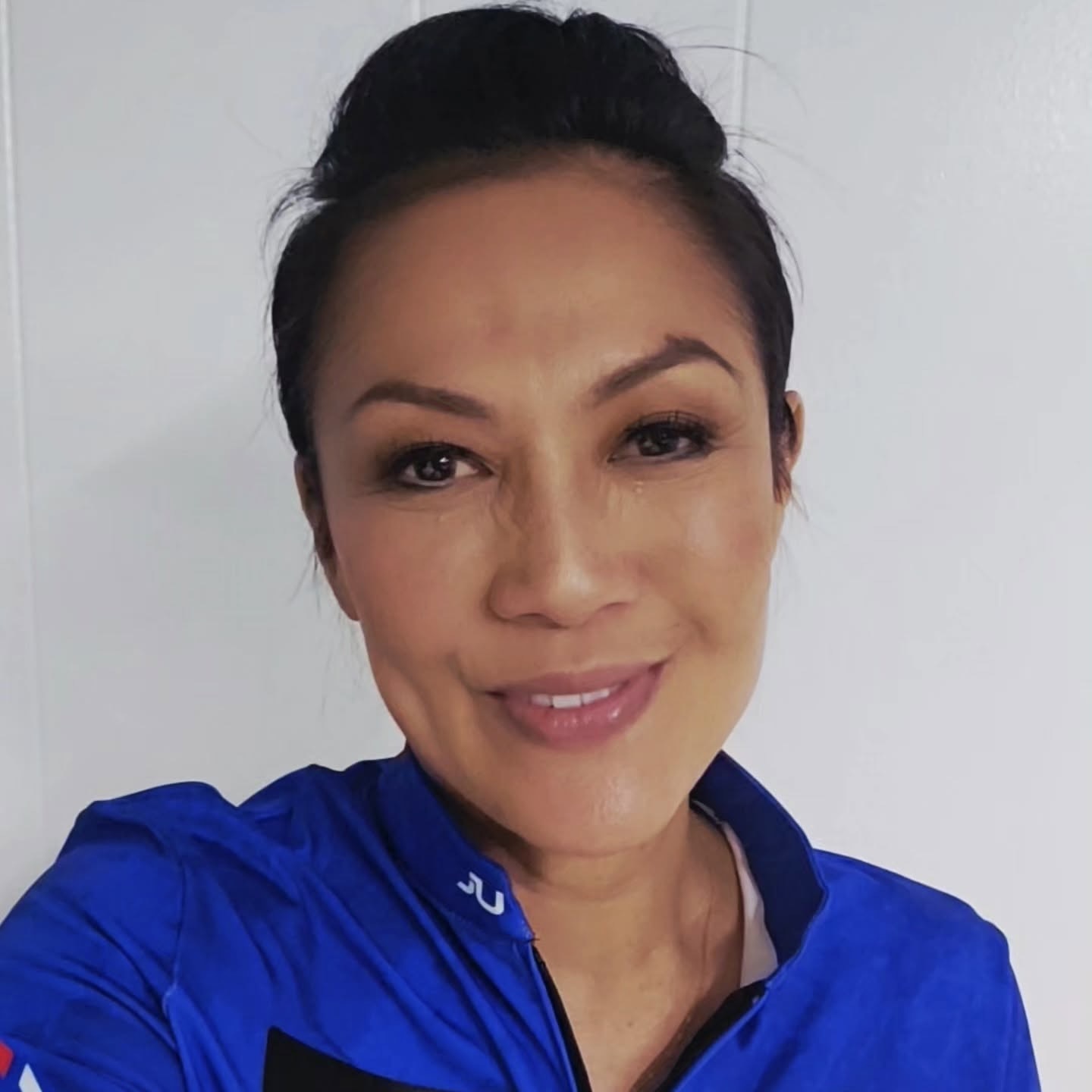
Hydred Goldberg is a two-time WPA Heyball Parasport World Champion, an American wheelchair pool pioneer, artist, former special-effects makeup professional and increasingly visible ambassador for Parasport billiards. Her journey to the top of international cue sports is one of reinvention—a life shaped by three cultures, a catastrophic accident, artistic curiosity, fierce independence and an enduring fascination with the geometry and beauty of a pool table.
Goldberg was born and raised in London, England, the daughter of Filipino parents. Her father came from Pampanga and her mother from the Ilocos region, giving Hydred a childhood rooted both in British life and Filipino traditions. The eldest in a large family, she remembers taking on responsibility early—helping care for younger siblings while growing up around Greater London. Filipino festivals, traditional food, dance and music remained part of family life, although Hydred and her sisters understood more Tagalog than they spoke. Art was her natural passion: pencil drawing, watercolor and other visual forms captured her imagination long before competitive sport did.
As a teenager, Goldberg moved with her family to Northern California, having previously visited relatives in the San Leandro area. She eventually finished high school in Vallejo. Five days after her eighteenth birthday, on August 10, 1993, her life changed completely. Riding in a Volkswagen Beetle with her boyfriend and younger sister, Hydred was involved in a severe freeway accident after the car’s steering failed. The vehicle crossed tr… Read More