Goldberg, Hydred
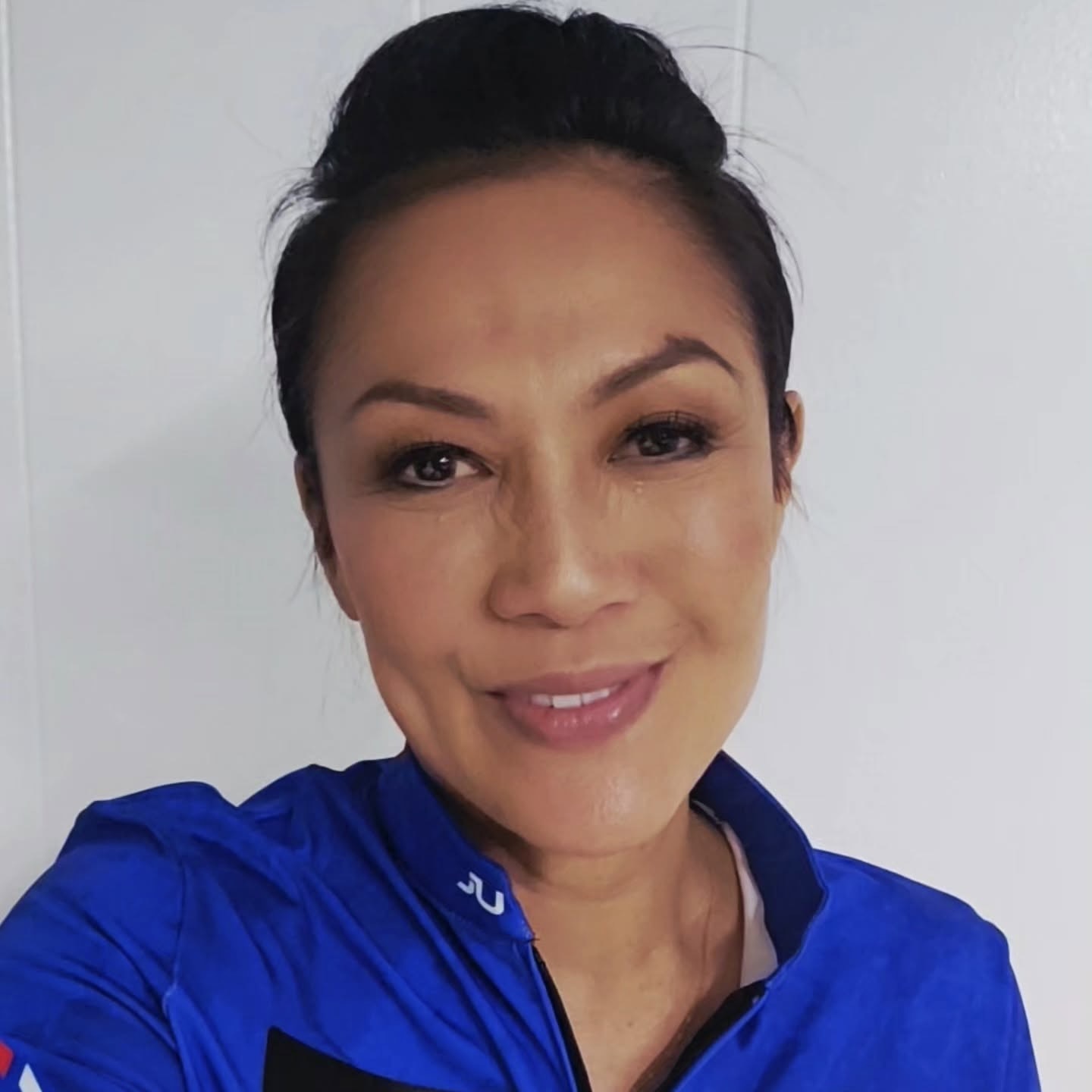
Parasport Pool Player
Hydred Goldberg is a two-time WPA Heyball Parasport World Champion, an American wheelchair pool pioneer, artist, former special-effects makeup professional and increasingly visible ambassador for Parasport billiards. Her journey to the top of international cue sports is one of reinvention—a life shaped by three cultures, a catastrophic accident, artistic curiosity, fierce independence and an enduring fascination with the geometry and beauty of a pool table.
Goldberg was born and raised in London, England, the daughter of Filipino parents. Her father came from Pampanga and her mother from the Ilocos region, giving Hydred a childhood rooted both in British life and Filipino traditions. The eldest in a large family, she remembers taking on responsibility early—helping care for younger siblings while growing up around Greater London. Filipino festivals, traditional food, dance and music remained part of family life, although Hydred and her sisters understood more Tagalog than they spoke. Art was her natural passion: pencil drawing, watercolor and other visual forms captured her imagination long before competitive sport did.
As a teenager, Goldberg moved with her family to Northern California, having previously visited relatives in the San Leandro area. She eventually finished high school in Vallejo. Five days after her eighteenth birthday, on August 10, 1993, her life changed completely. Riding in a Volkswagen Beetle with her boyfriend and younger sister, Hydred was involved in a severe freeway accident after the car’s steering failed. The vehicle crossed traffic lanes, left the roadway and struck a telephone pole. Hydred suffered the spinal injury that resulted in paralysis and spent roughly five months moving through surgery, bed rest and rehabilitation.
Acceptance did not come immediately. Goldberg has described understanding what doctors told her while remaining emotionally resistant to the permanence of her disability for several years. An unlikely milestone eventually became transformative: learning to drive. Independence behind the wheel helped convince her that life had not ended—it had changed. Soon afterward, she moved on her own to San Diego, a decision she now considers one of the most important she ever made. She enrolled in college, studied fine arts and psychology at San Diego State University and earned a degree in psychology. She also explored adaptive swimming, skiing and racing, approaching each new activity with a simple philosophy: she could not dismiss something until she had tried it.
Pool proved different from those other experiments. It stayed.
Goldberg recalls Palace Billiards in Vallejo as one of the rooms where the game first took hold. She was fascinated not only by the physics of balls moving around the table but by the atmosphere—the serious players, tight equipment and slightly rebellious culture of the traditional poolroom. After settling in Southern California, College Billiards in San Diego became an important part of her development, as did On Cue Billiards in La Mesa.
With few established models for how a wheelchair player should build a technique, Hydred largely taught herself through experimentation. Chair height, wheel position, flooring, table height, reach, balance and weakened abdominal strength all influenced the mechanics of her game. Over the years she experimented with cushions, added height, cue extensions and extra-long mechanical bridges. She also developed different stroke positions to accommodate varying shots and table heights. Her analytical approach resembles another childhood interest: chess, a game she learned from her father. Yet Hydred says the attraction of pool has never been purely competitive. She loves its aesthetics—the lines, angles, movement and creativity.
By the early 2000s, Goldberg was testing herself in serious women’s competition, including WPBA qualifying events. At one tournament she remembers taking Stacy Hurst hill-hill and receiving encouragement from LoreeJon Jones. Her pool life also intersected with her artistic profession in an unusual way: while working in makeup, Hydred did makeup for leading women professionals including Allison Fisher, Gerda Hofstätter-Gregerson, Ewa Mataya Laurance and Karen Corr during the ESPN-era WPBA years.
Art eventually became Hydred’s principal professional world. For nearly two decades she worked across makeup disciplines ranging from beauty and weddings to special effects, prosthetics and injury simulation. She spent approximately nine years working around San Diego Comic-Con, collaborating with professional cosplayers and creating characters with materials such as latex and prosthetic appliances. To Goldberg, makeup and pool share a common language: visualization, precision, patience and the ability to imagine a finished result before creating it.
Around 2019, feeling burned out professionally, Hydred stepped away from makeup and gradually returned her focus to pool. Her renewed involvement led her deeper into the National Wheelchair Poolplayers Association and the small community of women competing in wheelchair cue sports. She began thinking more seriously about promoting women’s wheelchair pool, recognizing how tiny that competitive niche remained even as women’s pool itself was growing.
Her competitive breakthrough on the world stage came almost improbably.
In December 2024, Goldberg entered the inaugural WPA Heyball Parasport World Championship at the Los Angeles Convention Center despite having virtually no previous experience with Heyball and no regular access to a Heyball table. The unfamiliar discipline combines pool-sized balls with rounded, snooker-style pockets and demanding equipment. Hydred adapted through patience, concentration and strategy.
She defeated Switzerland’s Catherine Schneeberger 4–3 after a spot-shot shootout during the opening stage, then blanked Ukraine’s Emma Svidzinska 5–0 in the semifinal. Incredibly, Goldberg and Schneeberger met again in the championship match—and again required a shootout. Goldberg prevailed, becoming the first WPA Women’s Wheelchair & Standing Parasport Heyball World Champion.
Six months later in Brisbane, Goldberg proved the first victory was no accident. She defeated Schneeberger again to successfully defend her title and become a two-time world champion.
Their rivalry produced a compelling third chapter in 2026. At the WPA Parasport Heyball World Championship in Oslo, Schneeberger finally broke through, defeating Goldberg 4–1 in the semifinal before going on to win the world title. Goldberg finished third.
Despite becoming internationally known through Heyball, Goldberg considers 9-ball her primary game. She continues competing against both wheelchair and able-bodied opponents and remains intent on strengthening every aspect of her fundamentals. Her stated competitive ambition is wonderfully straightforward: she wants to win a match in a professional women’s pool event.
Goldberg also sees her growing visibility as carrying responsibility. She has worked alongside six-time WPA wheelchair world champion Henrik Larsson, whom she calls both a mentor and doubles partner, in efforts to promote Parasport billiards internationally. The two have also appeared as ambassadors at events supporting wheelchair billiards in Romania.
Ultimately, Hydred Goldberg’s story is larger than two world championships. She is simultaneously British-born, Filipino by heritage and American by choice; an artist who became an athlete; a woman who learned independence after losing mobility; and a pool player who entered a world championship in an unfamiliar discipline and somehow left as its first female champion.
When asked on Legends of the Cue what she would tell the eighteen-year-old Hydred lying in the hospital after the accident, her answer was simple: be patient, stay strong.
And when asked how she hopes to be remembered, she did not mention gold medals.
She hopes people remember someone who was present, caring and kind.

Hydred Goldberg - Part 2 (Reinvention, Poolrooms and Finding Her Game)
