

 Apple Podcasts
 Spotify
 Jeanette Lee - Part 3 (Falling in Love with Pool)
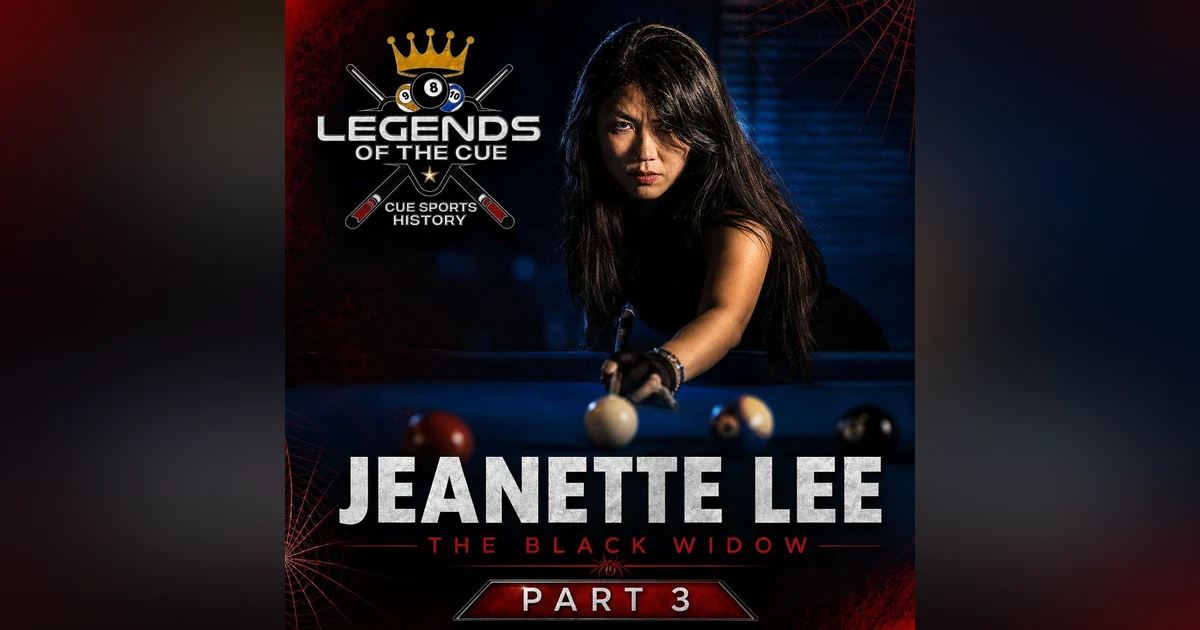

In Part 3, the story turns toward the game that changed Jeanette Lee’s life forever. After a difficult and unsettled youth, Jeanette discovers pool and is instantly captivated. What begins as fascination quickly becomes obsession. She describes walking into the poolroom, seeing the game in a new way, and feeling something click deep inside. For the first time, she had found something that demanded everything she had — and gave something back.
Jeanette shares what it was like in those early days, balancing work, rent, and survival with a growing devotion to pool. She wasn’t asking her family for money, she didn’t yet see the game as a career, and she had no clear roadmap. What she did have was relentless determination. Every dollar mattered. Every hour at the table mattered. Every lesson mattered. Pool became not just a pastime, but a place of focus, discipline, and possibility.
This episode captures the moment when raw hunger began turning into purpose. Jeanette explains how she started entering events, scraping together money, improving little by little, and beginning to believe she could become something in the game. You can hear the energy shift in this part of the story: the turbulence of youth is still there, but now it has direction. This is the beginning of Jeanette Lee the player — still rough around the edges, still learning, but already impossible to ignore.
Give Allison, Mark & Mike some feedback via Text.
Follow our show and/or leave a review/rating on:
Our website: https://www.legendsofthecue.com
Apple Podcasts: https://podcasts.apple.com/us/podcast/legends-of-the-cue/id1820520463
Spotify: https://open.spotify.com/show/4Za0IMh2SeNaWEGUHaVcy1
Music by Lyrium.
About
"Legends of the Cue" is a cue sports history podcast featuring interviews with Hall of Fame members, world champions, and influential figures from across the world of cue sports—including pocket billiards, snooker, and carom disciplines such as three-cushion billiards. We highlight the people, places, and moments that have shaped the game—celebrating iconic players, memorable events, historic venues, and the brands that helped define generations of play. With a focus on the positive spirit of the sport, our goal is to create a rich, engaging, and timeless archive of stories that fans can enjoy now and for years to come.
Co-hosted by WPA and BCA Hall of Fame member Allison Fisher and Mosconi Cup player and captain Mark Wilson, Legends of the Cue brings these stories to life—told in the voices of the game’s greatest figures.
Join Allison, Mark and Mike Gonzalez for “Legends of the Cu...
Jeanette Lee
So long story short, I got that job. I ended up going to work and going to play pool. And what changed was when I walked in out of curiosity that day, all the tables were taken. So you have like all these young yuppies from the central area businessmen coming to play pool in their lunch break or whatever it is. But when I was walking, there's like an aisle that separates each, you know, the tables. So I go down this aisle while all these people and the music is loud, everyone's having fun. It's a very happy, excited atmosphere. But it was like I was just drawn to the corner table. And the far corner table was George McCoolah. I wrote, I know this sounds awful, but I actually wrote Johnny Uvalino because I could not remember George McCool's last name. But it was somebody, and I didn't want to give credit to nobody. I wanted to, and Johnny Urvolino was at that pool room all the time, but it was George McCula because he was playing there a lot. But it was like, man, he had this like I think it was a slipstroke or something, but he had this style, and it was like he just had that cue ball on a string, and it was just like, my God, this is so beautiful. Oh my god, you know, it's just like and I don't know that I had experienced well, no, I was actually a junior fencing champion when I was 11, YMCA, a whole nother thing. But anyway, but in general, you know, I mean, I just didn't get really excited because I after after the surgery, things ch I changed after that surgery. Things changed. Because before that I was pretty happy and I would get excited about things, but after that, nothing got me excited, you know. But this was like, God, he's so good. Like I'd never seen anyone so good at anything. This guy is so good. Like, oh my god, he makes it look so easy. And it it was like I was so I tend to be very like analytical, but also observant to like the small details. I don't necessarily remember them, but I when I'm observing, I'll notice things that a lot of people don't notice. And for me, it was like just after a few minutes of watching, I feel like our heart was beating at the same rate. I felt like he was floating and we were in a dance of him playing and me watching, but like his focus, his tempo as he breathed in and out. I felt like we were at the same, it was just an incredible experience to get to witness something that gets you that excited. It was it was really he was so good. So I remember that day. I think I stayed there like I I didn't go to work the next day. I was there like 27 hours, 28 hours, something like that. I watched him until he eventually left, and then there were other people that were like when you look closer, a few of those tables actually had good players in it. It's just when you first come in, it's loud and it's Yuppie Town, it's Chelsea, you know. So you got all the Wall Street guys coming out and all the you know, Chelsea Pierce guys, and but actually within there there were some tables rented by good players. So I eventually got to see good players, but I remember like watching the way he carried himself around the table and the pace that he was at. And I just thought like this is something I could do. This is I'm not jumping, I'm not running like screw the doctors, you know, because before that I was quite active. I was I was active.
Mike Gonzalez
Yeah, so so you're watching George and you're mesmerized at Chelsea Billiards, and you tell yourself, I think I can do this.
Jeanette Lee
No, I know I can do this. I don't know that I can do it well. That hadn't entered my picture when I first saw him. I was just thinking, I finally found a sport that the doctors can't tell me I can't do. Like I couldn't do basketball, I couldn't run and do football, I couldn't do gymnastics, I couldn't do the pool, all you're doing is walking, bending, walking, bending. That's not gonna be bad at all. Well then I fall in love with it and bending, standing, walking, bending, standing, walking is not good for your back at all. But you know, what did I know? But I also didn't know, I just became just so mesmerized, and I just wanted it, and I remember like watching him make that bridge. You know, the closed bridge. And it took me a while. It was like my fingers don't even work like that. I don't think it bends back that far. And I've got these things going on trying to replicate him exactly. The way he stood, the way he walked, what his breathing, his bridge hand, his stroking arm, his grip, his foot placement. It was just automatic for me to just like a computer, you know, just taking it all in and trying to replicate it. So I didn't have enough money that day for me to play, but that day I just watched, and then there were also I was like, oh, these guys are pretty decent too, and I'd watch them and watch Sam. I was just absorbing. And then once they started playing, I was so horrible. Horrible.
Mike Gonzalez
Subhorrible or just horrible?
Jeanette Lee
So horrible. That I mean, from my perspective, it was horrible. So if I'm ever gonna get decent at this, I I gotta get started. So it hadn't entered my mind yet that there's a pro tour or anything like that. Hadn't never entered my mind that this could be a career. That's like saying video games could be a career, you know, which now it is, but back then I was like insane to think, right? So it those kinds of thoughts, it was just, oh my god, there's so much fun. You know, like if I went swimming and just really enjoyed, oh, it was so much fun. So all I was thinking is this is something fun. My life is miserable here. This is something fun I can do, and the doctors can't stop me because I'm not running, I'm not getting hit, I'm not gonna fall, I'm not taking any impacts, you know, I'm not jumping up and down because my knees have always been bad and my hips have always been bad, and this is something that I can do, I'm capable of doing. Of course, when I finally did see the doctor, he was like, You don't need to be playing pool at all. And I was like, Well, it's that or kill me now, you know, I'm gonna play pool. Because by then I was already too addicted that I couldn't walk away. Like I was so bad that I really felt like it was desperate. I need to get on the table now. We gotta get started. I only have so much, I only have the rest of my life, and that's not enough because I'm so bad that I could work every day, every minute for the rest of my life, and I still might get mediocre because I'm so bad. That's just the way that I saw it. So I was just playing all the time, and I literally I had smoked, I don't even know how many times, a good number of times, pot before I found pool. But I remember a few days later my boyfriend called, we were all gonna go hang out for a little bit. But I really just wanted to play pool. But I met them and they smoked Louis. And generally, I would say maybe a third of the time or half the time that they were smoking, I'd smoke with them. I really wasn't interested, it was just more what we were doing. So we did it, but I remember that I went to go hang out for them and I was like, listen, guys, I I gotta go. Because pools on my mind, I really at that point no longer had any interest to just waste time. Like we would just sit by a school yard and just hang out and smoke pot and engrave trees or just do random start trouble, do graffiti, you know, destroy things. You know, we were just time wasters. Well, once I found this pool, there was way, we cannot waste time. And I'm not gonna sit here and smoke pot and waste time when I could be playing pool. So I, you know, we hang out for a while and I smile and I was like, guys, I gotta roll. I'm sorry. I I'm gonna go play pool. They're like, okay. So I go to the pool room and I start playing, but I'm high. And I did not like it. Way, no way. How do you race this thing? Do I take a pill? What gets rid of this fogginess, slow, I don't give a crap thing. Like, can is there a way to like fast pace get it out of my system? Because this is bull crap. I can't play pool like this. That was the last time I ever touched it or anything. I mean, I really didn't drink, I was underage, but I just wasn't interested in any of it. But for sure, after I played pool, it was the last time I ever touched that or anything else. It was like until I had surgery after surgery, and then you're taking pain medicine. But even that, I would always take like the minimum because I was always worried about becoming an addict.
Mike Gonzalez
Yeah. So Alison, you've known Jeanette for a long time, and and of course, we're at at the part in her life story where she hasn't really even gone on the tour yet, but sort of reflect back on just what you've learned about Jeanette that perhaps you didn't know in her earlier life.
Allison Fisher
So much. I had no idea what you went through as a kid and how you felt and all the negativity and childhood trauma, really, in lots of ways, through lack of friendships and how people treated you. And going out on your own is amazing, you know, at 15 years old, leaving home and coming and going, and the relationship with your mum. I'm sure that was terrifying for her as well. Yes, it was. Yeah, I'm sure it was. And then the relationship with your sister, Doris, right? That's an interesting one. It still goes on, it sounds like that there's a little I don't want to say inferiority complex, but it seems like you've always put her up there and felt that you can't reach her heights.
Jeanette Lee
Yeah, but it wasn't just that. She also treated me that way. Okay. She doesn't now. She but we've always argued, we've always fought, fist fights, all kinds of fights. I never won. But she was always like, Why can't you be why, you know, and then I'd sneak and borrow her clothes because I want to be like her. But then I would return it like mangled, shoved in a garbage with staints in it, hoping she doesn't notice that it's gone, you know, kind of thing. And she's like, ah, you know, younger sister, tag along, annoying, copycat. So she really did a good job of putting me down a lot. And it was well deserved. It was well deserved. I mean, I I would borrow her stuff, I would seal it, and I did not take good care of things, and not that I asked permission, because I knew if I asked permission, she would have said no anyway. She wasn't like a caring older sister, she was just really sick of me.
Allison Fisher
Yeah, my mom had a sister like that too.
Jeanette Lee
And made me feel like that. But as we've gotten older, she has shown that she cares and she shows more patience. I think it's hard for her not to be, I won't say condescending, but judgmental. I think it it was hard for me not to experience that when she speaks. Like I don't even know that that's her intention or anything like that. She's an incredibly good human being. So she sounds terrible, but we were kids. But as we got older, she didn't treat me like that. She did treat me more as equal, but then she would come home because she was always gone. She would be on their international foreign exchange program or this scholarship trip. But you know, they got a lot of opportunities going to these gifted schools and different things like that, and she was trustworthy and responsible. So my mom made it happen. So she'd get to travel to all these places I didn't get to travel.
Allison Fisher
And right. Different personalities, very different, sounds like, too.
Jeanette Lee
But she would get very frustrated because she was close with my mom. I was never close to my mom. And she would come back and see the way I would speak to my mom and be like, What the hell are you doing? How dare you talk to mom like that? Do you know how hard she works? Do you know what she goes through? And I'm like, Do you know what it's like to live in with that psycho woman? Like, she, you'd have no idea. Two really different perspectives. Yeah. Yeah, you're you're gone all the time. I'm the one that has to live with her.
Mike Gonzalez
Yeah.
Jeanette Lee
I mean, I would go to play pool and come home, and there would be Bible verses, scotch tape to my door. You know, and like in the bathroom and in the bathroom wall, like Bible verses and whatever. And whenever we had like any family gatherings or parties, boom, she had all these different people like put their hands on me and pray for me and pray for me. Like I was just this broken, disgusting thing that needed to be fixed, you know? And so, and they're all talking Korean, which I don't understand it, but I didn't ask to be prayed for. And why aren't they praying for Darse or anybody else? Why does everybody have to pray for me? Which I understand now, you know. I was a rebel, my mom was terrified, she was grasping at straws, you know. Anything, help me.
Allison Fisher
You had nobody guiding you then, really. You were just off on your own, finding your own path, you know? Yeah, very much. Very difficult being female too, as well.
Jeanette Lee
Yeah. Being female, being black, I mean not black, Asian, and yeah, having an overachieving perfectionist older sister and Yeah.
Allison Fisher
It's a lot going on, a lot of dynamics here.
Jeanette Lee
Yeah, and just being so poor. Like we were poor, poor, but we didn't have like extras. I can't say that I ever felt poor, but you know, like when we went to restaurants, we don't order appetizers. We don't get to we get to have one soda and one entree. That's it. You know, you don't get to like get refills. Are you insane? You're looking, you got a soda, you know. Right, yeah.
Mike Gonzalez
So, Mark Wilson, what are your takeaways thus far in our visit with uh Jeanette Lee?
Mark Wilson
I love the fact that she learned Latin. That was uh three years of my life, so she can relate to how hard that is. And then you know, all the uh people that I know that go on and become successes in life, it was always wrought from hardships and adversity. And it's kind of like you start off rough, but then it teaches you like a center uh toughness, persistence on your own, you know, escape that life and make something of yourself, and so that's very endearing and engaging. And then I think Jeanette's a little bit like me. I'm always attracted to women that play pool. You know, and she's attracted to guys that play pool.
Jeanette Lee
Oh, I was gonna say, I don't know that I'm attracted to women that play pool.
Mark Wilson
I'm sorry. But yeah, that was uh interesting, you know, and um anyway, that's it.
Allison Fisher
It's interesting to hear what shaped you. All these parts, all these facets have shaped who you are today, which is an amazing woman and incredibly strong to have gone through what you go through on a daily basis still.
Mike Gonzalez
So, Jeanette, as you've talked to us about just how the game grabbed you, how you how you were captivated, mesmerized, as you said, by uh the game as you first got exposed to it at Chelsea Billiards. Tell us a little bit about then from that captivation, how your game developed and sort of bridged for us the gap between learning the game and then turning up at uh Howard Beach Billiards Club in Queens.
Jeanette Lee
So I walk into the pool room, I see this guy playing, and I fall in love with the game. I start playing all the time, and it was quite expensive for me because I never wanted any money from my parents because I I guess I was just too proud, and I knew I was not living a lifestyle that they wanted me, you know, because I didn't think of it as a career. I didn't know it could be a career. It's just like loving video games and becoming addicted to video games. Parents are gonna think it's a waste of life, you're not really working towards a career. With pool, you just don't think it's a a job. So, and I was playing pool all the time, so there's no way I was gonna ask them for money, which meant that and I could only work so much because I wanted to be playing pool. So it's balancing, being able to pay. I would rent rooms in apartments. I took a nanny job so that I could I figure I work all day, I don't have the overhead of having an apartment. I couldn't afford my own apartment because I wanted to play pool, and I wanted all my money to go to that, so I was trying to live. So, you know, in in in the city it's very easy to find three, four bedroom apartments and have roommates. So they'd say bedroom for for rent, stuff like that.
Mike Gonzalez
So it was always Or live with or live with Ernie and Zola.
Jeanette Lee
Right, could do that. Although I yeah, I I would like to thank them someday. I mean, I don't know that they're around because they were a bit older back then. So it's been, you know, they're probably quite a bit older. But I I never really got to see them again after that period to say thank you for what they did. Because it makes a difference when you're a teenager, you're 12 and 13, and you're living couch to couch, and you're, you know, I mean, money and food and things like that to have like a stable place and getting that. I don't know that they meant to mentor, maybe they did, but just having that adult influence instead of just being on friends' couches all the time made a difference and it gave me some stability and direction and you know, just kind of a way of not telling me what to do, but I think influencing me to appreciate family and stability a bit more. But anyway, going back to pool. So after a while, you learn that you can start playing people instead of you know paying $15, $16 an hour, which is what it costs in the city in Manhattan to play pool. I would play people four table times. So we'd play races to nine, or usually it was only straight pool. So we'd play straight pool to 50 or 100 or whatever it was, and the winner pays time. And the one thing I learned pretty quickly was that I was good at negotiations. And to get I I'll give that less credit and more credit to the fact that I was a woman, and no matter how bad I was, I was always underestimated. Like they could see me play, but no matter how much they saw me play, they would still think I could beat her. And so I was always able to, I would negotiate based on what I saw, and I think they would negotiate based on the fact that I was a woman. And I know that sound maybe they're not even aware of it, but either that or every single man, coincidentally, were really bad negotiators, but I tended to win most of the time. So after a while, that gave me the courage to play. I mean, there would other be people that would play $20 a game, which for me was still a lot because again, I was 18, 19 and living independently. So for me, I still had to have food, room, and board, things like that. Because I left home on and off from the time I was 11, 12, but I was pretty much moved out by 15, like had my own little studio apartment, and then eventually gave that up so I could rent rooms so I'd have more money for pool. I just kept living cheaper and cheaper till I finally actually took a nanny job, a live in nanny job, because then I had no overhead. I could work all day and then have all night to play pool. But I underestimated what it was like to care for a seven-year-old or a five-year-old from 7 a.m. to 7 p.m. And then I would now I just had a check at the end of the week. They paid me like $2.50 a week plus room and board, so have that extra money. And then I would just pay for a cab to get to the pool room sooner because I couldn't shave the minute. I didn't want to spend the extra, you know, 10-15 minutes to walk. So I would just cab there and just play pool all night. But you know, after five days, like a whole weekday, you know, five days of that in a row, you're just so tired that your pool isn't getting the quality. So eventually I had to let that go also. But first you start playing, so first you start playing $20 a game, $50 a game, $100 a game, start making a little bit more money, and then you I don't remember who said it, but oh, there's a weekly tournament and so-and-so, we're all going there. Do you want to go? And I'm like, okay, I'll try it. And I loved it. I hadn't played in a tournament, I'd only been gambling. And these are weekly $10 or $15 entry tournaments for amateurs. But then as I got better, I would always be playing in the C tournaments, but you could see they're playing in the A tournaments. Let's go see what they play like, and then I'd, you know, go watch them, and it'd be so good. And and so I wanted to compete against that, even though I knew I couldn't win. For me, that was like paying for lessons and just putting myself up under a different kind of pressure than gambling is. Gambling is no matter how bad you play, you can just put the money up, you're back in. Tournaments, you know, if you lose, you're out. You know, single or double elimination. Either way, if you lose twice, you're whatever it is. And so it it was a different feeling, and also just seeing the way people act in a tournament versus gambling is different. The way they behave, you know, their professionalism, their style. And one of the places I played every week on Tuesdays was at West End Billiards, and Tony Robles, who was the best player in New York City, uh just seeing he's known as the silent assassin. And just he didn't really know me. Then he probably saw me as like a cockroach in his pool room. I don't think he really noticed me in any way, but I was like, oh, he's so good and so smooth and so cool. And so I tried to be like him, but I I I always felt like when I would just try to just focus and and have no emotion, I felt like I was in a straitjacket and I was just gonna explode. And I never played well like that. So I just tried to, I mean, I I know people think I tried to attract the attention, but I'm just like if you see me watch foosball, I'm like and I do that if there's people around or not. I'm just uh dramatic, I guess, but it's not for others, it's just who I am, the way that I naturally am. And I did try to conform and be emotionless, and I even tried to dress like the women. So anyway, I start playing in these weekly tournaments, then I start playing in the C and the A tournaments. Those tournaments were $25 entry fee with huge Calcuttas, and it just opened my mind going into those bigger ones. The Calcuttas would be over $2,000, $3,000. Now I'm thinking, wait, I can make money at this. And again, I didn't know really about the Pro Tour. No one talked about the Pro Tour or anything like that. It was just local pool players. But you know, $2,000 felt like a million. And so I thought I can make real money, you know. I might make I could make, you know, maybe $15,000, $20,000 a year on this, which might have been less than a teacher. But for me, I didn't have high hopes. I had no dreams, I had no ambitions to be rich or famous or anything like that. I just love children and I wanted to do something meaningful with my life. You know, I wanted to impact lives. And then when I started playing pool, you know, I'm always thinking my mom's pushing me towards a career. And I was like, well, you know, as long as I can make enough money to live, I'm gonna love what I do if I could do this. So started playing in more of the tournaments, but I didn't have enough money to buy myself in Calcutta anyway, and it would have made no sense because I was horrible compared to the other players. So I mean, horrible. So started doing that, and I think the gambling in the tournaments, eventually I was playing in four tournaments a week, you know, Monday night Deer Park, Tuesday night West End, Wednesday night Hard Beach, you know, Amsterdam Hadham, and Rockaway Beach. There were there were specific places that had weekly tournaments. And so if I could get a ride.
Mike Gonzalez
Did you have a teacher at this point, Jeanette?
Jeanette Lee
I mean, just watching the guys play and annoying them and asking questions, and most of them were not, you know, you want to learn, you put your money on the table. That was there weren't lessons around. There was I don't want to name, but anyway, there were some players that used to play on the WPBA that were from New York that were a bit older. And she would play at Chelsea Billiards, and I would just see her come in in the afternoon and give give lessons and then leave. And one point I introduced myself and said hi. And I said, Oh, by the way, you know, there's this shot. And I was just wondering what you thought about it. And she was like, I worked hard to have this knowledge. So if you want to learn anything from me, it's $30 an hour. And, you know, nobody gives anything away for free. This isn't a a charity or something. I don't remember. It was something like that. And I was just like, okay, I'm sorry, I don't have an extra $30 because whatever. I didn't, I guess I didn't know if how much value there would be in getting a lesson from her when I felt like I was playing with all these great men players, you know, having that around and being to study them. And eventually I also learned about the Acusats, where you could get like videotapes of real professionals playing like real tournament matches. Ah! So then I started like saving and investing, and and eventually I became a very regular customer of Pat Fleming. That's how I got to know him, who owned Acusats, and he would go to these pro events, which I'd never seen one, and we didn't have any in New York that I knew of. I'm sure we did, but I didn't know if nobody in the pool room again ever talked about pros or tournaments or anything like that. So I started, you know, when you start playing in these weekly tournaments, you end up making friends and kind of carpooling with people that you know have cars that go to these tournaments. And so sometimes one of them would bring up, oh, so-and-so opened up, because it wasn't long after the color of money, it was a few years after the color of money came out. So there were new billiard clubs popping up all over, you know, all the dingy dark pool halls were kind of going by the wayside, and all these nice billiard clubs were popping up everywhere. And so we'd say, Oh, why don't we stop at this place and check it out, and stop at that place and check it out. And that's where I think by the time I had gone to Hard Beach, I had already spent my time at Chelsea Billiards and Amsterdam Billiards. But I was still going to all these local tournaments, and we had heard about the first million-dollar club of New York City, and it was in Howard Beach. We'd never been to Howard Beach, New York, no, had no reason to go there. And so it was, I guess, through them and curiosity that made us kind of just check the place out. What I was what drove me to play at one place or another is I started to get to the place where even though maybe not everybody didn't know my name, people knew that there was this Asian woman that was playing pool that was really good. I mean, I was just for a woman. So I was just I was a shot maker, you know, and I just uh loved competition. I would tend to play strong under the gun. I always played better for money than for practice, and I hated that because I always felt like you should play the same no matter what. There's no reason why I should play great under pressure, but not be able to play as well. Because I'd go to these tournaments, and even though I'd get my butt handed to me, I would play better than my average game. And I would want to show, I'd think I've I've really grown. My game is getting stronger, and the next morning I'd go to G Nagy and play with him all day and want to show him that I'm getting better. Oh, I made this shot and checked this out, and this is what I did, and I could never do it. I just always played terrible. And sometimes sometimes I would obsess over what's wrong with me. Why can't I be more consistent? I'm trying really hard both ways. I was never a person that just banged balls for it, was always trying to improve, always, and always trying my best. And Gene said, it just doesn't work like that. You're either a pressure player or a practice player, and just be thankful that you're a pressure player. Because he said he was the opposite. He was a practice player, but when there was pressure, he absolutely couldn't handle it. And he ended up becoming known as he was already one of the greats, but he became known because he started playing in tournaments. That was the natural thing when you get that good to start playing in tournaments, but he couldn't handle the pressure. But there would be people that would gamble on him, and he couldn't handle the nerve, so they'd say, Oh, just take this. So that's when he started popping pills, and he said, You know, when you're on that, you feel like King Kong, you can do anything. You feel like there's, you know, there's no end to this, and you can actually play perfectly. You can do this, you just feel like you can. And it just totally took away the nerves of the pressure of the tournament. But after years and years of that, he said it just wore on him that he just didn't want to constantly have to take all these pills and be as manic as he was. And I don't know if it was because of the pills or because he was actually had bipolar disorder or I don't know what, but he eventually quit it. But once he decided to quit drugs completely, he couldn't play anyone. And when he was playing me all the time, people would start talking about me, and they knew where I played, so people would get curious and they'd see G Nagy, and finally some people tried to set him up to play gambling match, and he didn't want to do it, didn't want to do it. But there were so many of us young kids that loved him that really wanted to see it. And he couldn't give a woman, Neslie O'Hare was a player from New York that would gamble a little bit. And I don't know who set it up, but it was between them two, and he was giving her the seven. Now, this guy is a guy that's run over 400 balls, you know, so he could give Neslie the seven, but he couldn't win even. I mean, it was crazy the difference. If you're not if he wasn't doing drugs, he was literally just absolutely crippled. It was like a different person. But it made me realize be thankful. Instead of being angry that it's not the same no matter what, be thankful that at least I can rise, you know, to to the pressure. It just made me hungrier.
Mike Gonzalez
Yeah.
Jeanette Lee
And I really didn't think about the people around or the TV cameras. I was so, I think that's where the ADHD became a superpower. Because you get so into what you're doing that you're not really aware of. I've literally like played the match and turned around and went, ah, and smacked my head into the TV man who was getting close up, but I was so unaware that he was standing right there with a camera in my face, that I smashed my face into the camera and done that a few times.
Allison Fisher
Thank you for listening to another episode of Legends of the Cube. If you like what you hear, wherever you listen to a podcast, five, five, four, five, four, four, great, thank you.
Pool Professional
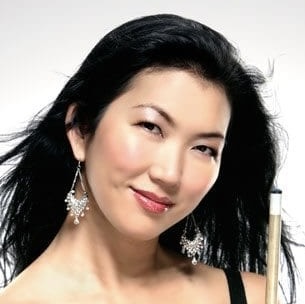
Jeanette Lee did not simply become one of the most famous players in billiards history; she changed what a pool champion could look like, sound like, and mean to the wider world. To sports fans everywhere, she became known as “The Black Widow,” a magnetic champion in black, a fierce competitor with movie-star presence, and one of the rare cue-sports figures whose fame broke far beyond the poolroom. But behind the iconic image is a far deeper story: one of pain, resilience, rebellion, craft, and relentless self-invention.
Born in Brooklyn, New York, on July 9, 1971, to Korean immigrant parents, Lee grew up straddling cultures while trying to find where she belonged. In the stories she shared on Legends of the Cue, she speaks candidly about racism, loneliness, and the emotional toll of feeling like an outsider from an early age. She also describes the values that came from her Korean upbringing: discipline, respect for elders, family obligation, and toughness. Those tensions, between rebellion and duty, would shape much of her life.
A defining challenge came in childhood, when Lee was diagnosed with severe scoliosis and underwent major spinal surgery. The physical pain was immense, but the emotional impact may have been even greater. In the podcast transcripts, she describes how the surgery, body brace, and feelings of isolation darkened her view of herself and the world. Yet those same experiences also forged the stubborn will that later became her trademark. Long before she was a champion, Jeanette Lee was already learning how to endure.
She atte… Read More