

 Apple Podcasts
 Spotify
 Jeanette Lee - Part 4 (The Grind, the Mentors, and the Making of a Champion)
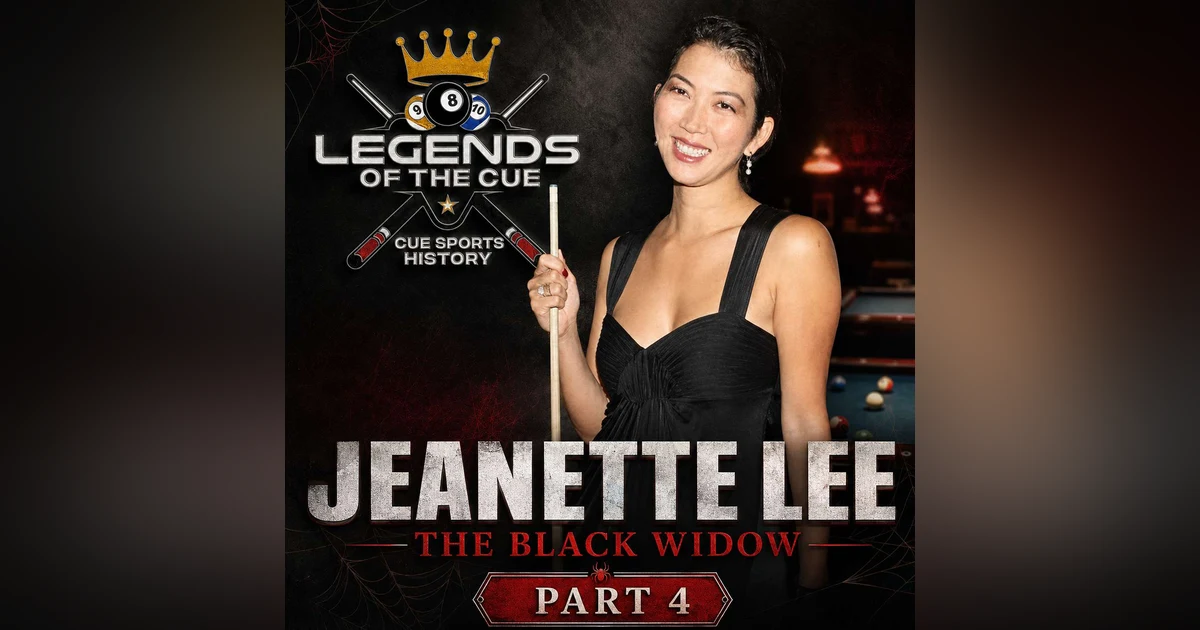

Part 4 is where talent meets discipline. Jeanette takes us inside the all-consuming years when pool became her life and improvement became an obsession. She talks about the players, rooms, and routines that shaped her game, including the influence of Gene Nagy, whose relentless straight-pool sessions helped sharpen her ability, discipline, and mental toughness. Day after day, Jeanette showed up and put in the work. Open to close, then more of the same. This was not glamour. This was the grind.
What makes this chapter so compelling is the detail. Jeanette explains how she climbed from smaller tournaments into stronger fields, how missed shots stayed with her, and how she turned frustration into training. Rather than just patching weaknesses, she tried to transform them into strengths. That mindset — intense, analytical, stubborn, and deeply competitive — becomes one of the defining themes of the episode.
She also reflects on the generosity of poolroom owners and communities who saw her dedication and helped fuel her development, whether through table time, support, or opportunity. By now, Jeanette is no longer simply in love with the game. She is building herself inside it. This episode is a portrait of apprenticeship, hunger, and repetition — the unseen years that create champions long before the spotlight arrives.
Give Allison, Mark & Mike some feedback via Text.
Follow our show and/or leave a review/rating on:
Our website: https://www.legendsofthecue.com
Apple Podcasts: https://podcasts.apple.com/us/podcast/legends-of-the-cue/id1820520463
Spotify: https://open.spotify.com/show/4Za0IMh2SeNaWEGUHaVcy1
Music by Lyrium.
About
"Legends of the Cue" is a cue sports history podcast featuring interviews with Hall of Fame members, world champions, and influential figures from across the world of cue sports—including pocket billiards, snooker, and carom disciplines such as three-cushion billiards. We highlight the people, places, and moments that have shaped the game—celebrating iconic players, memorable events, historic venues, and the brands that helped define generations of play. With a focus on the positive spirit of the sport, our goal is to create a rich, engaging, and timeless archive of stories that fans can enjoy now and for years to come.
Co-hosted by WPA and BCA Hall of Fame member Allison Fisher and Mosconi Cup player and captain Mark Wilson, Legends of the Cue brings these stories to life—told in the voices of the game’s greatest figures.
Join Allison, Mark and Mike Gonzalez for “Legends of the Cu...
Jeanette Lee
Yes. And at some point I actually started dating one of the friends who happened to be the manager of the pool room where Gene played all the time. And so Gene was friends with there were three or four people at this pool room. It's called Elite Billiards. It's gone. But that's where he was. And so he took me there. And I remember going in and seeing this older gentleman with suspenders all kind of hunched and playing pool and never missing. And the guy never even looked at me. And I'm, you know, trying to like watch and just because they were busy, so they couldn't introduce right away. And then I got a table like nearby, hoping he'd see, maybe he'd ask me. I didn't have the guts to like go up to him, but hoping that he'd see me and see that I could kind of play and maybe ask me to play or something. And then I got the table. I was like, I got the table three tables away, and then two tables, and he still didn't even know existed. And then at some point, Vinny was able to come over, introduce me to him, and and I was like, hi, and he's like, hi. He was just very unbothered by anything, kind of he was a bit of an introvert hermit. And he said, Well, you know, Jeanette, she's really nice. I didn't know if maybe you could hit a field ball with her. And you know, he's like, alright. And then we started playing, and then I said, Do you think we could play sometime? He's like, Yeah, sure. Like tomorrow? He's like, Yeah. And I was like, I are you free tomorrow? What time are you free tomorrow? He's like, Well, I come. I said, What time do they open? And he's like, Well, then he was the manager, so he had the keys so he could open it and close it when he wanted. So he's like, Well, I usually go to the park and find my kites in the morning, and then I get to the forum around 10 or 11. I'll be there at 10, you know. And I just started doing that every single day, like day and night, every as long as he could play me. That's when we played. And when I first started playing Vinny, I wasn't playing in a lot of tournaments. But mostly because of money and because I wasn't really good enough to play in anything but the C tournaments, you know. But as I was getting better, I wanted to play in the B tournaments, then eventually to the A tournaments. I wanted to get to where I could do that. So as I got better, I could play in more events, but also I got to the point where none of these pool rooms were charging me table time anymore. Hard Beach wasn't charging me table time, Amsterdam wasn't. So I had more money to play in tournaments. The money that I was using to pay for table time could now be put towards tournaments. And also before I was going to and out all the time. But eventually I was starting to do well enough. Like you get from the C tournament, you get to where you can win the C tournaments, you know, and then you graduate. So now I'm starting to make a little money back, which gave me just extra money to play more tournaments or buy more of those Acustats DVDs or contribute towards rides to tournaments, and then eventually I had anyway with Gene, we were playing at Elite, and then Elite went under. And that's when them and the whole crew found Lac Q Billiards, which was in Masteth Queens. And I met the owners there, and that's where I actually ran my first hundred. I ran 122 against Gene Nagy. And Lacue at that time paid for my all my entry eventually became sponsors in the way that we played there morning and night. I mean, till open till close. And she didn't get in a car because when I was playing in the city, we'd play open to close, and then we'd all take a cab or a subway to Chelsea, which was 24 hours. We'd just do that all the time until my body just couldn't move anymore. And then I'd hobble home and then do it all again the next time I woke up and could do that. But around the G Nagy time, I was playing in the bigger, stronger A tournaments, you know, B and A and B tournaments, and some of the tournaments that were further away, but Gene wouldn't go anywhere except by his bike. He didn't like getting in cars, so he never came to any of these tournaments. I would just have to report back to him how I did and what the shots were. And I guess at some point I added in my 400, which is I started getting confidence to where I should have won that match. I should have, I should have, if I didn't miss this and miss that, which is, you know, everybody says, but a specific shot that cost me would just the ADHD would just go over repeat over and over. I couldn't let it go. So I used to get up and just be there and wait for Gina. We'd played straight pulled till we dropped. And yeah, I don't think in all of our years that he ever quit me when we would start to play. I don't think I can't remember a single time that he ever said, I'm done, I gotta go. He would play me for as long as I could play. And unless I was playing a tournament, we'd be there till close, and sometimes even later, if the management would hang out with us and watch, because we're all good players, we became a family. So they'd lock the doors up but let some of us keep playing. We just play pool all night.
Mark Wilson
When you said you added in your 400, what does that mean for those of us that don't know?
Jeanette Lee
The the shots that would bother me, I would come in and before I would start playing Gene, I would have to get this out of my head. And I just had this idea that it's a weakness, a weakness that costs me. So I was gonna build this weakness into a weapon. So it wasn't I didn't want it just parallel to my game. I wanted to get so good at that shot that no matter what the pressure, no matter how tired I am, whether it's stomach ache, I can make it in my sleep. So I would play weakness to weapon. So I would take the shot, whatever the shot, let's say a spot shot, I would take the shot and should shoot it 200 times to the left, and then it's the same shot, shoot it 200 times to the right. And if I couldn't make it 15 out of 15, by the end of that, I would start and do another 200. I wouldn't do another 50, it would be another 200 to the left. It was almost like punishment, you know, that it cost me that. And I'm never that shot is and I think it was good because you feel like you see your weaknesses, but you're not just letting it cost you and letting it slide. You're handling it. You know what I mean? You know, and when you know that you handled it, you know you can have the confidence that that's not gonna happen again. Not that one. I might miss other ones, but I'm not gonna miss that one. And it gives you even more confidence because whatever, like a spot shot, whatever shot you shoot, there's gonna be hundreds, thousands of shots that are very similar, just slightly different. And you go, I got this, I did this for, you know, I did this, my 400, I did it. So you you gain confidence, you know, as you as you attack the things that make you weak. I even played a lot of people hate the bridge, but I'm always telling people the bridge is the the smallest table we have is a seven-foot table. So unless you're seven feet tall, there's going to be shots you cannot reach. Period. There's gonna be shots, and to refuse to to learn to play well with the bridge is like thinking in your mind you're gonna be a professional basketball player, but refusing to practice with the free throw. It's part of the game. It's part of the game. The bridge is part of the game. We're not gonna reach every shot. And so I would play every day. There was an older Japanese guy, I just like seniors, you know. And he would come in and say nice, and he would play all day just one-handed by himself, and we became friends, but I always wanted to practice like with the hardcore, all the good players, but one of them couldn't quite reach a shot, so I would play him straight pull to 50, with him playing his one-handed, and I would play left-handed, and I would also do that playing with just the bridge, like literally every shot holding the bridge. Because you you gotta turn your weaknesses into weapons, or they will come up and they will take you down, it'll make you sick.
Mike Gonzalez
Jeanette, how old were you when you started working with Gene?
Jeanette Lee
Probably close to 20, 19 or 20. There's so much story, and there's so much that happened, but it all actually happened in three years, period. I started when I was 18, I turned pro at 21, and I was number one at 20, like a year and a half later. It was so I have so many stories and so many things I did, so it sounds like it's over a 10-year period, but it was actually very quick. And for me, it felt like I played a lifetime with Gene, but it actually was like those few years because once I actually before I became number one, I'd found out about the tournaments and the accura stats, and there was a tournament in New York, the US Open Straight Pool tournament, and that's where I met Bobby Hunter, and he was like a real professional, he was so cute, and he was so amazing, and so I fell for him. He was like 20 years older than me, and I remember there were a lot of photo shoots and magazines and things where they would do my makeup. But if you look in the early one, I have almost no makeup on. I just wore lip gloss. I didn't know how to do eyeliner or anything. I learned it as I went. I and I didn't feel like the Black Widow. I hated the nickname. Gabe, it was just something they teased me with. It was like, you know, your local friends in that one pool room. He he said about a year after hanging out in the pool room, it was 3 a.m. closing time. He was like watching me while they're cleaning up. I'm still playing. And he said, I remember when you first walked in there, and in here, he's the owner of Heart Beach Blue Club. It was the first million-dollar club in New York City. So it had velvet couches and a cigar bar and a cappuccino machine, its own private enclosed arcade. And, you know, it was just otherwise very posh. Everything was very nice. And he said, You came in smiling with a friend. We we just like to, if a new pool room opens up out of curiosity, sometimes me or you know, one or two people we go and check it out. Because we were always playing in weekly tournaments at that point. And he said, Yeah, you came in all smiling with your friend, and you seemed really friendly, dressed in all black, you know, pretty young thing. I stood out because this is Howard Beach, New York. It's John Gotti Jr. played in our club. This is Italian mafia like town, you know, the core of it in New York, you know, they're at Howard Beach. So he said, You seem so sweet, and then you got a rack of balls. And he said, It instantly when you're down the table, your entire demeanor changed. At this point, I'm not even a semi-pro, I'm just somebody that's like got a fire and passion playing pool all the time. And he said, you know, you just started slamming balls in. I was a shot maker, you know, slamming balls, but it was like there was such an intensity around you. And he said, You reminded me of a black widow, and I'm like, and I'm actually taking it literally like a widow. Like a black woman who's a widow. Who's a widow? I'm from New York. We have cockroaches and rats. We don't have black widows, you know. I'd never heard of a black widow before then, you know, just you know, cockroaches the size of your hand, you know. And so I I didn't get it at first, and they laughed, and then I asked, and then they explained it. I'm rolling my eyes, and I remember something that always bothered me just naturally without anyone saying it is that there were almost never any women in the pool rooms. And Gabe had given me a lot of you know, free table time and free food. And he didn't have to, I wasn't anybody, I didn't have any. He just was supportive because he saw that I was really good and I worked hard. I was there from open to close. So he was kind to me, and I said, and Monday and Tuesday nights it was really slow. And I said, you know, if you'll give up a Monday, Tuesday night, we can have a ladies' night, encourage more women, and I'll teach them for free. I'm not great, but I could teach the basics, you know. He's like, You would do that? And I said, Yeah, I mean, I'm here anyway. I said, You you give them, give me an hour to teach them and give them a free hour of table time that night. And he was like, Oh, well, just make ladies' night, Tuesday night ladies play free. I said, Great. Well, when I a year earlier, we had gone in just to check it out, and I guess it was their soft opening. They hadn't had a grand opening yet. So he and his son was there, and I really have a passion for young kids, and it's like connected when he was really into it too, and he was proud that his dad owned a pool room. And so we just hit it off right away, and and he's like, You need to come to our grand opening. Willie Moscone is gonna be there. And I was like, cool. And then I had to ask people who Billy Moscone was because I I wasn't around or in that world. And it was like, wow, that's no, I'm great, cool, Willie Moscone, you know. And I said, Well, I don't really have dressy things, but I I went through a lot of stress and actually borrowed some money to buy a black dress because from the time I was very young, I never asked my parents for money. Every dime I earned was from me working. And I don't know why, because I think if I asked, my mom probably would, but I think it was my pride because I was never I didn't follow the regular path. I was always kind of a rebel, and I felt like me as a rebel, I didn't really have a right to ask for support when I wasn't doing things they were supportive of. But anyway, I I go to this grand opening and he picks me out of the crowd, probably because Gabe mentioned something, and Willie Moscone played me a straight pool game, race to 50. And it was exciting because in New York, that's all I played. Straight pool is the main game, not eight ball or nine ball. When I was there, and all the pool rooms mainly played straight pool. And I mean, he was in his 70s or 80s at that point, so he wasn't at top of his game, but you could tell just his professionalism. I hadn't been around a professional before, you know, just the way that he was, and I was like, this is so cool. Just this is cool. And they took pictures. So a year later, I'm offering this class, and we're gonna start next week, and we didn't have, you know, web and stuff like that. It was just word of mouth and putting up a sign. We didn't have all the opportunities to market yourself that way. I come in one day, and on every paper, I mean on every table that the billiard tables had, there was a trifold, you know, like a triangle. And there was a picture of me getting down shooting from that grand opening. That's how he had the photo. And it said, come play pool with promoting ladies' night. Didn't approve it, didn't ask me. It just had an image of me looking really mean. That's the way it looked to me, is I looked angry, mean, not nice. My number one goal in life was to make people happy, make people smile, to be liked. You know, that that was who's gonna like that, you know, and it was this horrible from my perspective, horrible picture of me, you know? And so it was an image of me shooting, and it said, come play pool with the black widow. She really knows how to break balls. And I'm like, what? Give me, give me, give me, and I'm running around to like every table faster than ever, and just ripping the things. I'm like, what are you? You can't, you can't just do that. I'm like, what are people gonna think? They're never gonna come back here again. And my mom could see this. I mean, she never came to the pool room, but God forbid she came, she'd have a heart attack. Like, what are you doing? And I didn't mind. It was like three or four people that called me Black Widow to make fun of me, to tease me from that one night in private. Everyone's gone. There was only four of us still in the pool room. It shouldn't have gone anywhere. Here he is trying to make a thing of it. I'm like, no, no, that doesn't even make sense, a black widow. Like, I'm obvious I'm not married, nobody's dead. It just is not funny. And uh he laughed it off, and yeah, but he would not change it. He was like, you keep taking him off, we're gonna keep putting it up. And he said, I'm telling you, you are the black widow, and one day you're gonna be a world champion, and everyone's gonna know your name. And I'm like, oh my god, this guy's thinking crazy. He's just old. That's his problem. He's old. Because I was, you know, young, so I thought of everyone as just old, and that makes them crazy, you know, or not not crazy, but just stupid, not thinking. Um so from that point, I don't think it would have grown except for the locals, because I would go out to Deer Park once a week on Thursday night to play in their tournament. I played in West End on Tuesday night to their tournament. And I, you know, I would save up money and work for this money. All my money went to playing pool or getting to the pool room. And nobody knew anything like that. And I never thought of anything like that. But then there's a women's tournament, the New York State Championship. Like it's a real like championship. I'm gonna play in that because I'd only played in weekly tournaments. Well, I come in second, you know, even though I was feeling the heat, for some reason I just was able to power through the nerves. You know, I actually played better under pressure than when I practiced, which always bothered me, but Gene Nagy always said, you're never the same. You're always gonna be either better or worse under pressure. Under the gun. You're better under pressure. And you should be thankful for that because most people their game goes down when they're under pressure. Whereas I would play awesome in the tournament the night before, and then the next day I want to show Gene how great I'm playing, and then I play horrible all day. And I'm like, I'm telling you, you'd never see me play well. I I played better than this, but like, unless for some reason the tournaments, man, I'd come with the shots, do whatever, and then the practicing, I'm bearing down. I was trying my best from the beginning, but I just wasn't, I don't know, just overall didn't play as well. It really bothered me. Anyway, the New York State Championship first place not only wins a state championship title, but you also get a spot to play in the WPBA National Championship, a women's professional tour event. Like one of the most prestigious, I mean, not that I knew any of the events, but they would say the most prestigious event on the WPBA and the national championship. You know, I'm playing like weekly five and ten dollar tournaments, you know. So I'm learning that even though I thought I was a horrible player and I was always playing around so many good players, the women's field were very different than the men's field. And actually, I wasn't too bad. Maybe I could do this, you know, maybe I could make my odds of making money because all my entry fees that, you know, I would never cash. I mean, I would always just play and get that experience. So I playing it, I come in second. And for the life of me, I can't remember who won it. And I was disappointed, but for me, that was such a pipe dream anyway. So I wasn't crushed, but it would have been cool, you know. It was kind of like, you know, I didn't think my odds of winning were very high anyway, but I come in second. About a month before the event, I mean, for me, just out of the blue, I get a phone call from the WPBA office, and the woman who had won it, the spot, still could not get her bus her boss to give her the time off work because it was like a four-day, five-day event. And unfortunately, she's giving up. She was trying to work on it, work on it, but in the end, she still can't get it off. So she's gonna have to give in the spot. It's a little less late mint last minute, but if you want the spot, Janet, you can have it. It's like, oh, okay, thank and they're like before I answered, they like just take some time to think about it. You know, we'll give you about 48 hours, and if you can make it, you know, these are. This information, and if you can't, no problem, we'll go down the list, but you know, just think about it. It's like okay. So I go to the pool room and I'm thinking about it. I'm thinking about it, but I'm not talking to anyone about it because my problems have always been my problems. But I'm quieter, you know, I'm just playing, I'm not as friendly, I'm not I'm just quieter because my mind is on that. And it's like, what's going on? And so then I tell him I've got this chance, but and he was like, So you're going, right? And I said, It only covers the entry fee. And I said, I'd have to pay for a whole week at hotel. I mean, I don't know how much that is, a thousand, two thousand. I don't, I don't know what I hadn't ever needed my own hotel room at that age, and at that point, and airfare and flying by myself, and he's like, that's what's holding you up. He's like, don't worry about it. I got that. I'll take care of that. And I said, I was like, wow, I really appreciate it, but I still can't go. And he's like, why not? And I said, There's a dress code. I I only have black tank tops and jeans. I mean, I I don't, I mean, I can't just suddenly appear a huge wardrobe. I I don't have anything. I'm broke, like literally every dime is saved for pool. That's it. And he said, tell you what, I'll cover your airfare, your hotel, your entry fee, money for eating out for food, because that was another thing I mentioned. And he said, and I'll give you $500 for a new wardrobe. And I was like, Wow, I mean, that's literally like hitting the lotto.
Mike Gonzalez
Yeah.
Jeanette Lee
I mean, it's not like getting an incredible Christmas spree. It was like hitting the lotto. You know, I mean, it was big, and I was just like, What? But before I could even, I was just shocked. But before I could say thank you or anything, he said, on one condition. And I'm like, send it. I'll give you my first child. I don't care. Like, what what yes, yes, whatever condition, yes. And he said, everything you buy when you go shopping, everything you buy has to be black. And I'm like, duh, okay, because I was always wearing black anyway. That started when I was 12. During my dark stage, I started wearing black a lot. And then you don't have to worry about matching up or being in fashion, and I just wanted to be invisible. I just wanted to disappear. Well, I can't I I don't know why I'm so emotional when I'm writing about that time, but anyway, it's a sad time.
Allison Fisher
It's a sad time. It's been a long time since I it never goes to things like that, does it? You know, when you feel something in your body, it's always there. Yeah.
Jeanette Lee
You can have whatever you want. And he said, everything happens, and I said, Yeah, no problem. But you know, just curious, can I ask why? And he said, Jeanette, you don't see it. But you are gonna be world champion. I said, Oh no, I know I'm gonna be world champion. I there is no option. I'm gonna be number one. I'm gonna, that's all it was like. And it wasn't about being number one ranking comparing to other people. I wanted to be the best, the best that I could be, and the best that ever was. And the way I saw it, I didn't have to be the smartest, strongest, fastest, most fit. I just had to be willing to work hard and be playing when they were eating out and watching two-hour movies and doing video games. Every minute that I was playing that they weren't, I was gaining on whoever was out there. And every minute that I wasn't, people were gaining on me. That was just my way of thinking about life in in this game. It wasn't about quality or learning tips or asking for lessons. It was just, I'm gonna work so hard that no one can deny me. And I don't have to worry about all these people or what people think. I I could just play. And my brain was always thinking, you know, like I might have 20 thoughts in my head right now. I just always like this, but when I played pool, it was the first time in my life that my brain just got quiet. Like things were very clear. I know I that probably I don't know, maybe that doesn't make sense, but from my perspective, it was it was so it was like taking a vacation from the hardship of life and just being in heaven. You know, that's the way it felt. It was like everything was just so ugly and miserable and dark and mean, and I was so invisible and incapable and unreliable and irresponsible and messy and disorganized all the time, all the time, no matter how much I tried, and I was never gonna live up to being like my sister. Well, actually I wasn't jealous of, I admired her so much, but it was like, why can't I get anything right ever? You know, I still struggle with that, but anyway, and then it really does look like she just thinks, you know, she doesn't care. This is before I became number one, just as a person, everything was always like so hard. Anyway, when I felt like if anything, I cared more than the average person. I just couldn't get it right no matter what. And I'm sorry, I don't know why.
Mike Gonzalez
But Gabe said, you are gonna be a world champion, and you will go to that tournament because you are the black widow.
Jeanette Lee
Yeah, he said that's what he said. He said, You just don't see it, but you are. He didn't say you're gonna become. He's like, you don't see it, but you are the black widow. You just have to realize it. Like you have to get behind you, and you are strong and you're beautiful, and you're deadly, and you're, you know, you have it all. And I'm like, I'm scrawny, I'm ugly, I'm scarred, I'm complete wreck mental headcase all the time. Like, what are you seeing? I'm dirty, I'm always playing pool, my hands are always black, you know, blue, you know, my hair was always just slicked back in a ponytail. I didn't know how to dress, which why I just wore black. I didn't know how to do make, you know, or be girly or anything. I was just like, what are you looking at? But he he said, I'm telling you, you are the black widow, and someday everyone's gonna know your name. And I that was good. I was okay. You know, that was that was the end of that. And so I shopped and everything was black, and and I think things would have been, I mean, I don't know how things would have turned out, but it was the timing of everything. Right when that happened, this one event, which I happened to even find out about that state championship by accident. It's not like I paid attention to tour news or anything, just somebody like I like overheard, and then I asked, and then it was like this. Plus, I would have had to get a ride there, and like just it was like somehow the timing or everything just worked out where I was in the right place at the right time. And this was this particular WPBA championship, was the year that blew Ava up. They the New York Times magazine, which is a huge, you know, magazine. It's the center of the New York Times. You get this huge bundle, and the mid inside thing is the New York Times magazine. And she was on the cover, and they did a 12-page spread, which is enormous, the amount of pages in a magazine, in the New York Times magazine. And I had a picture of Pretty Boy Floyd and Mike LeBron and Buddy Hall and whatever, and it was like the hustling side of pool and the professional side of pool and the hustlers and the what a pretty boy Floyd and I don't remember the rifleman and you know, these different they didn't really push nicknames so much, but it was the characters, you know, the the different characters in pool, I guess, is more what they were kind of saying, how interesting. And for some reason, the person who was doing the big spread flew to the WPBA Nationals because it was their most prestigious event. So while they'd been working on this article and had gone to several events to meet these guys and all you know, the men's pro and the women's pro and taking photos and doing all that, she was getting her last bits at this WPBA. And so while she's there and she's taking more, they'd already done photo shoot or whatever, they were doing more photos there. They said, Oh, by the way, do you have any any pros here from New York? Because since it was New York Times magazine, they wanted to get that local New York angle. And I guess they were like, that girl right there, that's at least she's a this is her first pro event, but she's from New York. She's not a pro, but she qualified to play in the oh, so let's interview her. And so they did. We, you know, they interviewed me and I was excited, you know, like I'm doing a I would be in New York Thailand magazine. I'm gonna be, you know, famous, you know, it's like it was a big deal. And I had my nice, you know, black suit. And it was just a very conservative suit jacket that zipped all the way up, and I had it zipped down to like mid-whatever, and underneath it, it was like a turtleneck halter top. So there was a neck, and then it kind of went like this, but it covered all the way to right here, so there was no clean, which nothing, it was just to here, but from here, my shoulders and my arms, it was sheer. But I never took the jacket off. I was always under the jacket. So this is what's I'm wearing. This is important because when the magazine came out, so she does this interview and she's got microphone thing and uh also recording tape thing. And so she's recording, talking, and she's got she's writing things in some kind of notebook. So then it's over. And they're like, Do you mind if we take some pictures? And they take me over the corner and they take all these pictures. I'm just standing, I'm trying to, you know, stand. I just didn't have a lot of experience. I'm just standing there, I'm trying to smile, and then they'd say, you know, try to give me some intense looks, you know, like you're about to compete or whatever. Give me a strong, you know, so then I'm looking more serious. Throughout that weekend, though, she's like, Well, I'm gonna hang around for the rest of the events. If I have any more questions, I'll let you know. But good luck in the tournament. I'm like, oh, okay. So throughout the tournament playing my matches, I'll see her. And when I came out, hi, you know, yeah. And she's go hi. And at one point I'm sitting in the sand, she comes over and sits, and we're watching matches. And she just had some random questions, but I'm thinking she's just being friendly. There was no microphone, there was no notebook, there was no cassette, and I didn't know there's a there's this thing called, is this on the record or off the record? I didn't know those terms, I just didn't have any experience. But I assumed, since that was the interview, that's what would be in the magazine. And this was all off the record, you know, without knowing the term, but anyway. So we talk about some things, and at some point she says, Do you have a nickname? And I'm like, Nope, just Jeanette, the ugliest name on the planet. There uh yeah, no one no one gave me a nickname and no one cares and knows me enough to give me a nickname. So it's just Jeanette. I didn't really see myself well, maybe I did, as a loser, but I I didn't have a lot of like pride in myself, you know. So yeah, I I would say things like that, and I was like, Yeah, no, nothing, nope. So that passed then, and some point during the interview, Carrie Hartsville and another woman, rookie woman, I think she played in a couple tournaments before me. She's at the bar and very friendly. We're still friends to this day. And she's like, hey Jeanette, come have a drink. And I'm like, We're the tournament, no, like Anna was like 19, you know, or 20 or whatever it was. Yeah, 20 or 21. 20, I think. And I'm like, no, and I'm in a tournament. Carrie, what are you doing? Like, don't you still have matches? She's like, Yeah, but not till tonight. And I was like, it's three in the afternoon. What are you doing drinking now? You're gonna be drunk, and then you're not gonna be able to play. And, you know, again, I was a kid, and she's like, Oh, don't worry about it. It's no big deal. She was a few years older than me. She's like, I'm just having a couple of drinks. A couple of drinks, you're gonna be drunk. You know, you're not gonna be able to hit the ball. And so this woman sitting next to me, Alessandra Stanley, the reporter. And she hears part of this because we're in the interview when she says, Hey, Jeanette, because she doesn't see we're in an interview. So we're doing this back and forth, and then I go, Oh, sorry about that. Few months later, the article comes out. I'm excited. I'm thinking this is gonna be awesome. I'm gonna be famous in New York, it's gonna be incredible. And um, I end up finishing 17 through 24.
Allison Fisher
Thank you for listening to another episode of Legends of the Cube. If you like what you hear, wherever you listen to a podcast, five, four, six, four, five, six, five, five, six, six, four, five, five, four, five, four, six, six, four, four, five, four, five,
Pool Professional
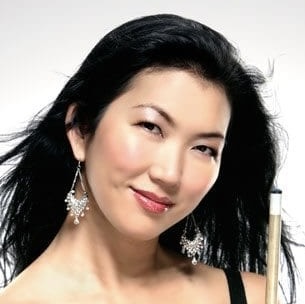
Jeanette Lee did not simply become one of the most famous players in billiards history; she changed what a pool champion could look like, sound like, and mean to the wider world. To sports fans everywhere, she became known as “The Black Widow,” a magnetic champion in black, a fierce competitor with movie-star presence, and one of the rare cue-sports figures whose fame broke far beyond the poolroom. But behind the iconic image is a far deeper story: one of pain, resilience, rebellion, craft, and relentless self-invention.
Born in Brooklyn, New York, on July 9, 1971, to Korean immigrant parents, Lee grew up straddling cultures while trying to find where she belonged. In the stories she shared on Legends of the Cue, she speaks candidly about racism, loneliness, and the emotional toll of feeling like an outsider from an early age. She also describes the values that came from her Korean upbringing: discipline, respect for elders, family obligation, and toughness. Those tensions, between rebellion and duty, would shape much of her life.
A defining challenge came in childhood, when Lee was diagnosed with severe scoliosis and underwent major spinal surgery. The physical pain was immense, but the emotional impact may have been even greater. In the podcast transcripts, she describes how the surgery, body brace, and feelings of isolation darkened her view of herself and the world. Yet those same experiences also forged the stubborn will that later became her trademark. Long before she was a champion, Jeanette Lee was already learning how to endure.
She atte… Read More