

 Apple Podcasts
 Spotify
 Jeanette Lee - Part 8 (Efren Reyes, Global Fame, and the Making of The Black Widow)
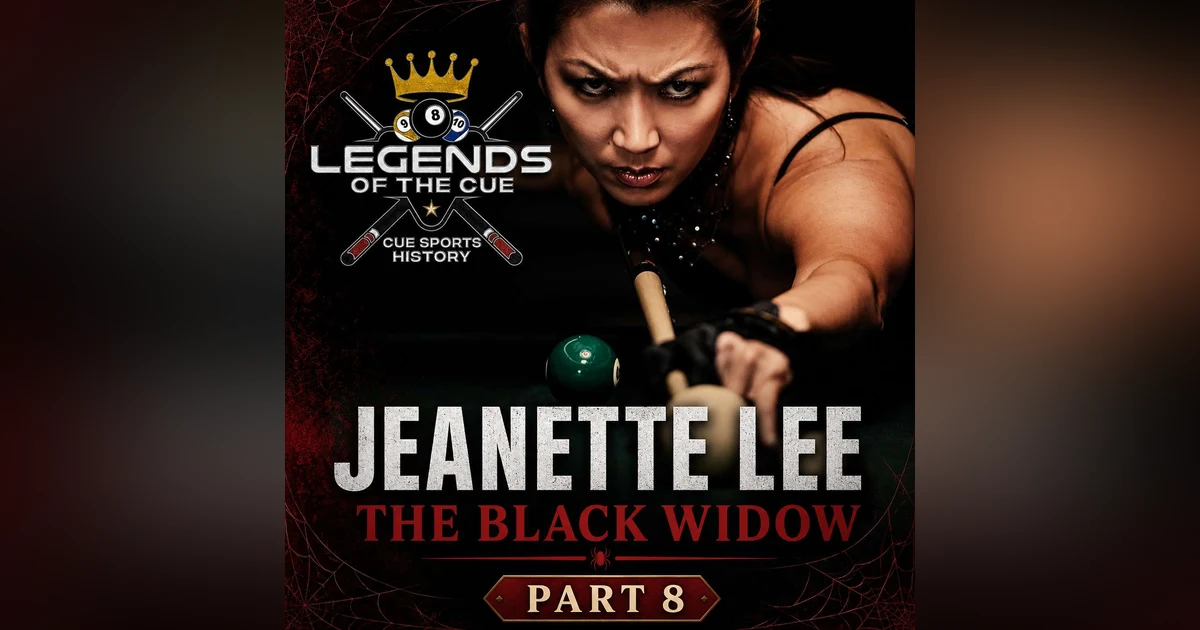

In this penultimate episode of her Legends of the Cue interview, Jeanette Lee shares the stories that transformed her from champion pool player into one of the most famous figures in cue sports history. The conversation begins with her unforgettable trip to the Philippines to play Efren Reyes, a match that became far more than a contest. Jeanette talks about meeting her idol on his home turf, seeing firsthand the conditions that shaped one of the greatest players of all time, and realizing just how deeply pool could connect people across cultures.
That experience also gave Jeanette one of her first true glimpses of her own international fame. Away from the familiar tournament trail in the United States, she encountered a level of fan passion and recognition that opened her eyes to how large her name had become. It is a fascinating look at the difference between being a successful player and becoming a global symbol for the sport.
From there, Jeanette reflects on image, branding, and the complicated perception that followed her throughout her career. She addresses the idea that she wanted fame more than greatness, and explains in her own words why being the best player she could be always mattered most. She also revisits the development of “The Black Widow” persona, how that identity took hold, and why her rise felt so meteoric at the time.
This episode blends pool history, personal honesty, and behind-the-scenes storytelling in a way only Jeanette can. If you’ve ever wondered how a world-class competitor became a household name in billiards, this is the chapter that tells the story.
Give Allison, Mark & Mike some feedback via Text.
Follow our show and/or leave a review/rating on:
Our website: https://www.legendsofthecue.com
Apple Podcasts: https://podcasts.apple.com/us/podcast/legends-of-the-cue/id1820520463
Spotify: https://open.spotify.com/show/4Za0IMh2SeNaWEGUHaVcy1
Music by Lyrium.
About
"Legends of the Cue" is a cue sports history podcast featuring interviews with Hall of Fame members, world champions, and influential figures from across the world of cue sports—including pocket billiards, snooker, and carom disciplines such as three-cushion billiards. We highlight the people, places, and moments that have shaped the game—celebrating iconic players, memorable events, historic venues, and the brands that helped define generations of play. With a focus on the positive spirit of the sport, our goal is to create a rich, engaging, and timeless archive of stories that fans can enjoy now and for years to come.
Co-hosted by WPA and BCA Hall of Fame member Allison Fisher and Mosconi Cup player and captain Mark Wilson, Legends of the Cue brings these stories to life—told in the voices of the game’s greatest figures.
Join Allison, Mark and Mike Gonzalez for “Legends of the Cu...
Jeanette Lee
I didn't remember that it was that soon after, but yeah, I had a relationship with LG Electronics. So Company in Korea was having me endorse the newest flat TV. So before that, all of our TV monitors were slightly curved. And LG Electronics, also known as Lucky Gold Star, had come out with the first flat screen television. Right. So they were still not as thin as they were, but the screen itself was not rounded at all. It was flat. I actually still have one and it still works. But I have a flat screen TV. And so they were promoting it in Korea. And then I'm not sure who got the idea, but eventually they contacted us and wanted to know if I would go to the Philippines to play a challenge match against Efren. And I was like, Yeah. And my agent was, that's a third world country. You don't know what's going to happen. They could grab you and kill you there, you know, blah, blah, blah. And I was like, I'm going to get to play Efren. You know? And if I could go there and any of their Filipino magic juju can rub off on me, you know, who knows how great I could be. So I was really into it. But safety was a factor because of the rumors and what you hear about Philippines being a third world country. And so I got there with 13 bodyguards. I think we just asked for two. My agent did, but we got 13. And that was also probably the most amazing thing going. I've had bodyguards, but I've never had more than six. 13 is a different experience altogether because I get I get there and I get to the airport, and there's three vans with me at all times. There's a van of men in the front, there's men in the van that I'm in, and then there was a van behind me full of men. And they put me in this five-star hotel. Also, the only time that I got into a hotel room, had to leave for the meeting. When I got back, all of my clothes had been unpacked, hung up. My pants had been ironed. My shoes had been shined. My toy trees were unpacked and put, which to me is a bit invasive. Like they went in my stuff and unpacked everything. But all my clothes were ironed. My shoes were shined, and it was like, okay, this is some other level that I'm I'm not. Because it was at the beginning of my career, so I hadn't, I mean, by now I've been to the most beautiful places in the world and experienced, you know, a lot of luxury. But at that time I hadn't yet. And so to go there and get this kind of treatment in the Philippines, when I heard all this horrible stuff, I'm like, I've never been treated better in my life. Are you kidding me? And then right next door to this hotel was this giant international mall. So you go in there and there's Tiffany's and Barney's and all these different, you know, big brand name shops in there. So I wanted to go spend some money, you know, I'm making money. I'm number one right now. Let's go, let's do this thing. And I go and I remember going there, telling them I want to go. And I had my friend with me. And I remember that as we're walking in, there's guys in front of me and behind me. But not all of them. I didn't meet 13 people. I didn't have 13 people. I was comfortable with that. Four, five, six people. I mean, I can't complain. So I didn't see all of them. But what was interesting was as you're walking down the mall, down the hallway of the mall, then there'd be an escalator and I'd want to go down to the escalator. And the guys always had an earpiece and some thing or, you know, they're talking, I don't know what they were talking into. I can't remember. But I remember that earpiece is in either their hand or their watch or something they were talking into. And as I'm going down the escalator, two of my bodyguards are already down there. And I'm wondering, like, I just made the decision. I didn't tell them in advance, hey, we're going to go down this hall and I'm going to go down that elevator. I'm just going to the hall and I'm looking around and I see escalators and I go, huh. All right, let's see what's downstairs. And I get in, and already I'm not even halfway down, and there's two guys already down there waiting. And I'm like, like, how did and I guess they're communicating and they must have flew or something. They weren't, but they were already down there. So I don't, I'm not sure what happened, but the whole experience was very, I felt like a superstar princess with the Secret Service, surrounded by the Secret Service. But another thing is when when we had to go to the event, which was about a 25-minute drive from this hotel, they wanted me in Manila with the best of the best. But the event itself was not in Manila. It was in some other city, whatever. And what I saw the way there was very different. And then also when we did the event, I remember the crowd of people in this Coliseum for two pool players. And I'm thinking, I know why they love Ephren, but they can't possibly know who I am. I've never even been here before. But instead, apparently they must get a lot of ESPN or something because they were literally like, oh, no, no, you know, they're grabbing my arm, they're trembling, they're crying. I had not experienced that because American fans aren't like that in general. Here, all of them were like that. All of them just wanted to touch a piece of your cloth. Oh, sorry. All of them wanted to just touch a piece of your clothing and just be near you and trembling and just unabashedly, unapologetically, like excited and honored, and that was incredible. But then also finding out that they don't even have a hotel for Efren. I'm like, so where are you staying tonight? Do you want to go eat? Maybe we could play some pool. And he made some time for that, but often he had to go home because we were going to play the next day, or we had a conference call in the morning. And I'm like, well, where where are you staying? Are you staying at my hotel? They're like, no, he there's no hotel for him. He has to go home. Like, where do you live? And it was an hour and 20 minutes from where we were. And he had to drive back and forth every day from there. And I'm like, Efren is your star. I'm nobody compared to Efren. Like, what? And then that made me feel I went from feeling very spoiled to kind of ashamed of myself. Because if he's how to do that, then I have no business getting all of this. You know, it's like a weird.
Mike Gonzalez
Yeah, interesting experience.
Jeanette Lee
Yeah. Like at first I was like, yeah, baby, I'm in Hollywood. This is awesome, you know. But then I see, then I see the poverty, and then I see that our friend not only wasn't getting paid, he was having he had some contracts with Puyat, who was one of the sponsors of this LG event. I guess they had partnered with Puyat to get the pool stuff going and make it into a pool event instead of an electronics event. But um, yeah, and I I don't want I'm not meaning to say anything negative about Puyat or anybody else. I was just very disappointed that Efren didn't have a green room, he didn't have a car service, he didn't have a hotel, he had to drive, you know, over an hour just to get to the event. And it I think that changed things for me a bit.
Mike Gonzalez
Yeah. That sounds familiar, Mark?
Mark Wilson
Yeah. And in some cases, it might have been that Efren wanted to be with his family. He's a lot of times like that. But nevertheless, what was the format of your match? I'm I'm curious about that. Did you play rotation, nine ball? What how'd that go?
Jeanette Lee
Nine ball, and I'm pretty sure it was like a I'm totally guessing it might have been a race to seven. And I I think it might have been like seven to three or seven to four, maybe seven to three or six, it wasn't close. He definitely handily won. I did get some opportunities, but I didn't I I made some critical errors. But I also think my attitude was wrong because I didn't go into it with the same like killer instinct that I normally would have. I don't know that I've ever like really been nervous and honored to be playing again.
Mark Wilson
Mm-hmm.
Jeanette Lee
You know what I mean? It was like I'm getting to compete in the Philippines against Efren Reyes, who in my opinion is the greatest player of all time. You know, it's not about it's not even about the titles and the wins. It's his execution, his knowledge, his heart, his personality. Everything makes him one of my favorites. And um, so it was more like I'm getting to do this, and me just wanting to play well in front of him. I want to show him that I can play, and I didn't. I made so many errors, so I felt bad that he couldn't see my best game. Because he's he was my idol. Not idol literally, but you know, he was my favorite player. And I just wanted to show him that I could play, and maybe I would have played better if I didn't think about that, and I just took it like let's go, like a real competition.
Mark Wilson
Yeah.
Jeanette Lee
And normally, whether we're getting paid an appearance fee or prize money, I still shoot to kill, give it my best game, no matter what. But I was too busy like watching Efren and admiring him and getting to play him, getting to experience it and getting into doing it in the Philippines in his hometown, and be and see a little bit about seeing this side of Efren, learning more about him, where he grew up, what he went through, the kind of equipment he had to play on. Because they did take me to a pool room that Efren played on, and those tables are not, we are very spoiled here. Those tables, the pockets, the cloth, the balls, the condition of everything is very, very different. There was no air conditioning. The entry doors were wider. I'm not even sure there was a door. There might have been like a flap or something.
Mike Gonzalez
Yeah. Well, coming out of that experience, uh, did you then become more mindful of the cultural impact you were having globally, maybe even outside the sport, the the sort of fame that uh you might not have been feeling directly in the States, but started to feel that's a very good question.
Jeanette Lee
And that's exactly what happened. Is for me, it was the first glance of how big my name was getting. Because I would say one, I think I might have already said this, in which case you can dismiss it, but the one thing that hurt me that Allison said during the interview of my movie, Jeanette Lee Versus, is she said, well, the difference between Jeanette and I is I wanted to be the best pool player in the world, and she wanted to be the most famous best pool player in the world. And I I I don't think she meant any harm by it. I believe that that's what she believed and maybe still believes. But for me, it was always about being the best player that I could be. It was it was always about wanting to be the best at this game. I ended up being good at those things, but I also worked hard to become good at those things because I wanted to play pool and not be working a nine to five job. And I knew getting sponsors was part of that. And then I had a knack for it, and then of course, you've got more, and you've got more children and more bills and more everything. So you want to make more and you ride that wave, but that doesn't mean that that was my priority. My priority was my pool game, and it wasn't my work that got from my point of view, it wasn't the work that got in the way. It was my body. My body for sure. Because that day to day, even with that work, I still had time to play, but there were too many times I didn't usually get stopped because I had to work. I got stopped because of my body.
Mark Wilson
Yeah.
Jeanette Lee
You know, when I would quit in a day, it almost always had to do with how I felt, not because, oh, I don't have enough time because I have all this work to do. Because I controlled my own time. You know?
Mike Gonzalez
But as it relates to the fame, I mean I I certainly think back to those days. There weren't too many pool players that were getting in Sports Illustrated and Vogue and People and the body issue of ESPN magazine. Jeanette Lee was.
Jeanette Lee
Yeah. I definitely learned how to work it, but I also worked very hard. I mean, I went to a lot of events, and as fun as they may seem, and people are like, oh, you got to do all this stuff, but when I left there, I had 35 business cards in my hand. So I wasn't there just relaxing and schmoozing. I was doing it to network. You know, and either I was convincing someone how they could benefit for me to go do a trade show for them or do some kind of thing, or if it was uh someone in the media, then I would convince them what a good store it would be, you know, what for them to cover me in this and pool or WPBA or whatever it was, I would find an angle and pitch it.
Mark Wilson
Yeah.
Jeanette Lee
And so it looked like a more um fun lifestyle than it was. It was work. I did a lot of work, and I feel or I felt like I didn't get enough credit for that because all I heard was she's only this because she's pretty. And I just kept saying, I earned the right to be here. And all those interviews, they've there's a million women prettier than me, zillions of women prettier than me. It's not just that. You have to make yourself position yourself to be in the right place at the right time and have the ideas. They're not thinking for you, they don't care about you, your future. You have to make them care. You have to come up with an angle that makes sense for them so that you can fit their agenda and their by wanting to do something with you.
Mike Gonzalez
Yeah. And so it was You continued to let your Q stick do the talking for you as you had continued success competitively. Uh uh 2003 won the tournament of champions uh at multiple ESPN challenge events that you were participating in. Um, but it goes on the long list of wins, which we're not absolutely don't have time to cover all the wins that you continued to rack up. As as success sort of evolved for you, and fame sort of evolved for you, how did your goal setting evolve? Because once you reach number one, then what do you do the next morning when you wake up and say what's what's the next thing for me?
Jeanette Lee
To be honest with you, I went through when I became number one. It's funny because before I was number one, that's all that mattered. Being number one in the world, being number one, being the best in the world, best in the world. But when I actually and I was getting there, and I was getting there, and I was excited and I was working hard, I was working hard, but when I actually became number one, I went through probably a two-week period of depression, believe it or not. Because, and I don't mean heavy depression. I mean I was confused and bummed out because I really believed that by the time I became number one, I'd be good enough to beat Tony Robles consistently. You know, he was a local pro in my area. I'm number one in the world on the women's tour. I can't beat your ass, you know, a guy here locally. What am I doing? And I realized that I had to stop worrying about being number one and focus more on being the best I could be. And that had changed for me then because up until that point, it was all about being number one. But when I got to number one, I wasn't nearly the player that I thought I would be by the time I got to number one. I got to number one a lot faster than I expected, even though it is what I wanted. I thought it would take a lot more and that I would be a much better player than when I was by the time I got the number one ranking. But here I am, number one in the world, and I hadn't even at that point I hadn't even run a hundred balls yet in straight pool. There were a hundred men in New York, New Jersey, and Pennsylvania that had run a hundred. Average non-pro men, or maybe not average, but yeah, that's pretty good. You know, running a hundred and I'm number one, it it was I felt very disillusioned, very like it was just a letdown. And so from that point, it was I just gotta become the best player that I can be. That became my new goal. And then between that, it was it's funny because it sounds like there was all this, I never had a strategic plan or anything written up, but in my head, it was I need to work on the mental game, the mental toughness of competition. So I was working on building the competitive mindset. I was always looking at anything I felt weakened. When I would play you, if I had trouble on this bank shot, I would shoot that bank shot 400 times. 400 to the left, I mean 200 to the left, 200 to the right. If a match cost me a shot that next morning, I'd shoot that shot 200 times to the left, 200 times to the right. My number was 400, it still is. But the whole idea to in terms of my pool game, my my main goal was to turn all my weaknesses into weapons. And if you can focus on being honest with yourself about what your weaknesses are, and if you can go into improving that with the mindset of not just making it on par with the rest of your game, but make it the strongest of anyone on the planet. Make it to where even on a bad day, even while you're in a slump, even when you're sleeping, you're drunk, you're high, you're whatever, you're gonna make this in your sleep. You know what I mean? That that's the level because that match cost me, that shot cost me the match. That's gonna be my head forever, unless I deal with it. And if I deal with it to the point where it's now a strength, then it gives me more confidence going into the match that there is no mountain I cannot conquer. There is no thing that can't be worked out, and that I'm handling them. I deserve to make this because I put in the work. And so I I I feel like that all my goal settings started becoming. I mean, I I still want to be the first woman to run 200 balls. If anyone has, they sure haven't made it public. And I didn't publicize my run, my straight pull high run. But to this day, no one in Europe or anyone else contests that that's the high run. Because it was witnessed and it was 150 something, 54, and the against Sumatana in New York on the Amsterdam main table in front of like a zillion witnesses. I think somebody would have mentioned it, but my day-to-day is like right now. Right now, my goal is to build my strength back up because I don't feel stable over the table. My stamina is not there, I get weak and tired very easily. Uh, my flexibility is not there, certain positions really strain it. So get your body fit, get your mindset fit, get back into it. Right now, I've been trying to do the pre-shot routine, and I'm fumbling all over the place. I just forget or I don't do it thoroughly. And so I've got to start putting the work back in. But my most important thing is just really trying to perfect my stroke, my stance, my grip, my aim, my everything.
Mark Wilson
Yeah.
Jeanette Lee
And and my health. So again, I'm only talking about my pool game. I'm not talking about my children or other aspects of my life. Right. But when it comes to my pool game, it is build my body, strength, flexibility, everything. Get back into the competitive mindset with the pre shot routine and building in those physical things. Um, and then working on myself mechanically.
Mike Gonzalez
Yeah. So speaking of health, so at some point in your career, you decided to sort of move away from competition. Share with our listeners. What was it? Was it a recognition that that the body wasn't letting you compete at the level you wanted to compete at anymore? Was it family and other interest getting in the way of you putting in the time? What what what was it?
Mark Wilson
Well, I will add uh the the women's tour broke apart there for a while. There was an events, and that kind of coincided with that saying health too.
Jeanette Lee
So I I will say that throughout my career, my back has continued to deteriorate, as well as my shoulder, my hips, my knees, my elbows, my everything. So it got more uncomfortable. I also had towards the end six children. I now have, you know, I have six children and five grandchildren. So some of it is just life, right? It's your your body, your pain, your responsibility to actually make money. 2004 is when Cheyenne was born. So I would say between my health and having children, it took my focus away from putting in the kind of time that I was putting in. And I think that if I had a different mindset, my game might have stayed strong. But earlier in my pool journey, everything was about quantity of time. And I thought as long as I'm playing pool more than anyone else, they can't deny me, I will become number one. But then I learned that my like when I had Cheyenne in 2004, I fell in love. And that's all I wanted to do is spend time with her. My passion to work in my pool game wasn't there and at all. Until I would play pool in a tournament and lose, and I would get so angry and so hyped up, and I'd go home and I'd start practicing again. And then I would see her face and they'd go, oh, and then I'd go back to focusing on her. So I would say part of it is motherhood. My priorities started changing. But when you have their own your own from an infant stage, and you get to watch it, it is different. And I wanted every minute of that. So I do think that that was partially distracting on top of by that point, you know, all the stress and everything had gotten pretty bad. And uh by the time I would say maybe more like 2012, 2013, I was really playing less and less. And then I would say that was kind of the beginning of the end. I mean because let me see, my youngest daughter was born August 2010. Savannah, who's 15 now. She's gonna be 15 in a couple of months, a few months. And I just remember just the I would say a large part of why I stopped competing was certainly there were less and less tournaments every year. So when you're not playing in tournament for another four or five months, and you've got y these adorable kids and all this body pain, I just wasn't as inspired. I was living in Indianapolis, there wasn't a ton of competition. At least not they were there, but I didn't get to compete with them very often. There weren't a bunch of weekly tournaments or even monthly terms. They had them once in a while, but um, I had been traveling so much that when I got home, I just wanted to stay home. You know, I didn't really want to be out in the pool room, so I didn't get to play a lot of people, so that competitive bug wasn't getting like, you know, nudged. Nobody was prodding the lion, you know. And so I was just kind of like there doing drills and playing some players that were, you know, a little bit below my skill level and going through the motions, but that fanatical passion was dissipating. Yeah. And that doesn't mean that I didn't love the game or that I still don't love the game. But you can't compare that to having your own children. Right. You know, there's it was just more distracted, and certainly my body was taking taking a beating at that point. So when there were less and less tournaments and they were even down to like one or two tournaments in the whole year, I wouldn't say I officially retired, but if the next event isn't for nine months, what am I practicing for? When I have all this work to do and my body's aching and I've got to pay the bills and do these exhibitions.
Pool Professional
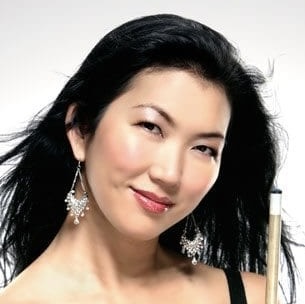
Jeanette Lee did not simply become one of the most famous players in billiards history; she changed what a pool champion could look like, sound like, and mean to the wider world. To sports fans everywhere, she became known as “The Black Widow,” a magnetic champion in black, a fierce competitor with movie-star presence, and one of the rare cue-sports figures whose fame broke far beyond the poolroom. But behind the iconic image is a far deeper story: one of pain, resilience, rebellion, craft, and relentless self-invention.
Born in Brooklyn, New York, on July 9, 1971, to Korean immigrant parents, Lee grew up straddling cultures while trying to find where she belonged. In the stories she shared on Legends of the Cue, she speaks candidly about racism, loneliness, and the emotional toll of feeling like an outsider from an early age. She also describes the values that came from her Korean upbringing: discipline, respect for elders, family obligation, and toughness. Those tensions, between rebellion and duty, would shape much of her life.
A defining challenge came in childhood, when Lee was diagnosed with severe scoliosis and underwent major spinal surgery. The physical pain was immense, but the emotional impact may have been even greater. In the podcast transcripts, she describes how the surgery, body brace, and feelings of isolation darkened her view of herself and the world. Yet those same experiences also forged the stubborn will that later became her trademark. Long before she was a champion, Jeanette Lee was already learning how to endure.
She atte… Read More