

 Apple Podcasts
 Spotify
 John Schmidt w/Bob Keller - Part 1 (The 820 Ball Run: Why He Came Back)
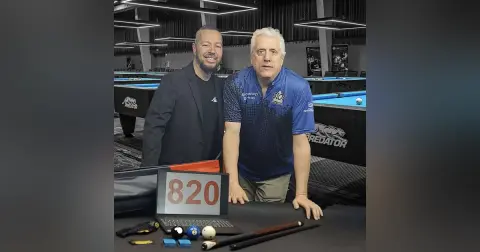
On this special five-part series of Legends of the Cue, we welcome straight pool great John Schmidt back to the show after his stunning 820-ball run, with Bob Keller joining us as the man behind the camera, the rack, and the support system that helped make it happen. In this opening episode, John explains why this run almost never happened at all. After the emotional weight of his 626, the backlash that followed, and Jayson Shaw’s run past his number, John says there were many days he wished he had never played straight pool in the first place. Then came the table, the setup, the dry Wyoming air, and the feeling that he owed it to himself to find out what was still possible.
John shares the doubts that crept in as he got older, the surprising role Bob played in getting him to believe again, and why this attempt felt so different from his earlier chase. This time there were no announcements, no pressure campaign, and no desire to prove anything to the world. Instead, it became a private test of pride, endurance, and unfinished business. Along the way, Mark Wilson and Allison Fisher help frame just how rare an 800-ball run really is, and why straight pool remains one of the purest measures of cueing excellence.
This episode sets the emotional foundation for the entire series: the frustration, the motivation, the friendship, and the quiet belief that one more great run might still be in there. Before the balls ever started falling, the real battle had already begun.
Give Allison, Mark & Mike some feedback via Text.
Follow our show and/or leave a review/rating on:
Our website: https://www.legendsofthecue.com
Apple Podcasts: https://podcasts.apple.com/us/podcast/legends-of-the-cue/id1820520463
Spotify: https://open.spotify.com/show/4Za0IMh2SeNaWEGUHaVcy1
Music by Lyrium.
About
"Legends of the Cue" is a cue sports history podcast featuring interviews with Hall of Fame members, world champions, and influential figures from across the world of cue sports—including pocket billiards, snooker, and carom disciplines such as three-cushion billiards. We highlight the people, places, and moments that have shaped the game—celebrating iconic players, memorable events, historic venues, and the brands that helped define generations of play. With a focus on the positive spirit of the sport, our goal is to create a rich, engaging, and timeless archive of stories that fans can enjoy now and for years to come.
Co-hosted by WPA and BCA Hall of Fame member Allison Fisher and Mosconi Cup player and captain Mark Wilson, Legends of the Cue brings these stories to life—told in the voices of the game’s greatest figures.
Join Allison, Mark and Mike Gonzalez for “Legends of the Cu...
Welcome to another edition of Legends of the Cue and Mark Wilson. This guy needs a new handle.
Mark WilsonYeah. Well, you know, in the annals of pool, you hear people talk about a hundred ball run, and everybody apparently has done it, but I never see him. So many people claim to have done this. Today in History of Pool, we've had two people run 800 balls. Today's guest is one of those people. It's my good friend John Schmidt. John, tell us a little bit about our other guest.
John SchmidtWell, as you see on the screen there, Bob Keller, Robert Keller, a good friend of mine. I've known him for years, and he's a great player. Bob, haven't you run 100 over 30 or 40 times now? 62 now. Okay, there you go. And the really neat thing about Bob is he has a YouTube channel totally dedicated to straight pool, and it's one of the best channels I've ever seen for learning and getting better. And and Bob is 64 years old, and I believe he is playing the best pull of his life. He managed to finally run over 200. And I'm not sure most people know how much ability and skill that takes. To run over 200 is truly I mean, you're you're a you're a badass on a pool table if you can do that. So so Bob has now ran over 200, which is a professional caliber run. And uh to do that at 64 years old, I think is impressive and encouraging for people. Because even for me at 52, I told Bob, I don't think I'm I don't know if I can do this. I my game might be diminishing. I'm getting older. And Bob's like, I'm 64 and playing the best pool of my life. So that might encourage some people at home that start to doubt themselves when they get a little older. We're not weightlifting here, it's pool. Bob has proven that you can play world class at 64. And the Viagra apparently helps you, Bob. I don't know what's going on with you, but but uh but you really are playing great, and it's an honor to have you uh be part of this, and you're instrumental in me breaking this or you know, running 800 because you came up and racked for me and did all the video, and and I couldn't have done it without you, so thanks, buddy.
Bob KellerMy pleasure. I always want to remember that Irving Crane won a championship at 76 years old. So pool is something you can keep playing as long as you can walk around the table.
Mike GonzalezYeah. There you go. Bob welcome, of course, better known as Short Step on Pool. But you've got a book that you wrote as well about uh straight pool.
Bob KellerI wrote a book in 2019 on Straight Pool, real excited to do that. And right when I was writing it was was when John Schmidt visited Denver. So I I got I I talked him into to uh writing the the preface to my book, and that's the that's the first time we met. And now, since working with John last year, we put together a program called The Right Way. So now we've got two educational materials that uh people are going crazy for.
Mike GonzalezGood, good. And I suppose then at age 70, there's hope for me, too, huh, John?
John SchmidtThat's right.
Mike GonzalezWell, I've been looking forward to this because as Mark alluded to at the top, you have just run, I think it was March uh what the the 10th or 11th of this year, just recently, 820 balls. So we've already talked about Mr. 600 and your previous uh high run. But here we are again after telling your life story. We said we got to get you back because we got a whole nother thing to talk about, right?
John SchmidtYeah, yeah. It's something I'm obviously very proud of. And it's funny having such a legend, Allison Fisher here, a snooker world champion and a full world champion. So if anybody can talk on this subject, it's her. But something that people have said a lot, they compare straight pool and the big pockets and snooker, and I try to explain to them that, you know, in snooker, if you run a rack, it's an amazing accomplishment. I mean, I've played some snooker, you know, I'm not not as good as Allie, but I've run many centuries. I'm pretty good at it, and I understand how hard it is. But we're not running one rack of straight pool, we're running 58 here. So I think people, if they use their logic, they'd say, well, you know, there's some skill going on here, and they're different games. But I think straight pool is very underappreciated. When Ronnie O'Sullivan runs a 147, the world goes crazy, and I run 800, and people tell me it's easy, and like I just don't understand that thinking, but I do feel that straight pool is the foundation for pool, and it's the way to learn how to play great nine ball, eight ball, one pocket, everything. I really do. I think Barner would tell you the same thing, Hopkins. So yeah, I think I think it has a place in everybody's pool game. You should practice some straight pool. I'm not saying it's the only game, but it's the foundation for all my nine-ball wins in my career. It it was really built off the straight pool, if that makes sense.
Mike GonzalezYeah. Well, but before we jump into the story, I I do want to have Allison and Mark sort of weigh in because you know they both come from their perspectives. I know Mark, you know, going back to his upbringing in Pool, of course, that was when there was a lot of straight pool being played in America, you know, not so much today, but so you know, he more than anybody would have an appreciation for the accomplishment. Allison, you know, came along a little later in to the U.S. where it's probably after a time when straight pool wasn't quite as popular. But Allison, you've been around the game long enough to fully appreciate what 820 is all about, right?
Allison FisherThat's an absolutely amazing feat. It's a privilege to be here to listen to this whole story with Bob and John today. It's crazy. Ron, you talk you mentioned Ronnie O'Sullivan just now. He just made a new world record of 153, which is insane on a snooker table. But what you've done is amazing, and it just it's incredible to I think hold the focus for that long. That's what gets to me in like management of how you do that, and I we're gonna hear that today of what made you try to go for the like the record. You know, I want to know if a thousand balls is in you. Obviously, it is if you've got leapt from six hundred and something to eight hundred and twenty. Is that something that's in the future? But it's an incredible feat, and I'm really looking forward to today.
John SchmidtSo thanks for joining us. Thank you, Allie. It's an honor to have you here. You're one of my pool heroes.
Mike GonzalezThank you. Mark, you've been around this guy a lot. You've played the game a lot. You know what it takes to run a hundred. For a guy like me, it's really hard to fathom eight twenty. How about for a guy like you that's played this game professionally for a long time?
Mark WilsonWell, it was unheard of. So when I first began in pool, if we said let's go to the pool room tomorrow, it's unspoken what we're playing. And when we get there, every table in the pool room is having straight pool games. And once someone reaches a run of 30 or 40 balls, everybody puts their cue down and we watch that run to the end. And then after three hours, if we have 10 minutes left, it's eight ball or nine ball. But we really didn't care about the outcome of those things, but the straight pool was a measurement. And then when I went to the US Open in Chicago, it was 32 elite players, and I saw Miserac and Jack Calavito, Ray Martin, Dallas West, uh, all the elites, and the young guys, the cannon fodder, the guys that couldn't possibly win was Allen Hopkins, Jim Rempey, and Mike Seal. And so it was just fascinating to me, and I had no calling for any of their attention, but you would see, you know, 100 ball runs. But then when I go to the pool room, everybody always tells me, yeah, yeah, I ran a hundred, I ran a hundred, but I never see a hundred. I guess it's possible, but you know, so so many people in their brain, they get it fixated that I can run a hundred. Well, I probably could run a hundred. I didn't really try to run a hundred, but I know I could run a hundred. And so finally they issue it as like an edict, like they did run a hundred. They even deluded themselves into thinking this. And so I don't really argue with them, but I know better because if you run a hundred one time in your life, you can consider yourself a life master of pool. And then, you know, when we talk about someone like Bob and John, Bob's got 60-some runs over a hundred. Uh, that's incredible to begin with. He's got a 200. Well, now you're a double life master. There's very few, that's rare air, you know, to be in. And then John, you know, he he was Mr. 400 for years, and so I was fascinated by that. And then he says, I'm gonna, you know, try to go after Moscone's record. Well, in all my time with all the other elite pros, never once did they say we're gonna make an assault on Moscone's high run. And it was it was assumed that that was impossible. And so because that's what I heard, I never heard anyone say it until John. I just assumed, no, that's unassailable. You couldn't possibly run 526. That's impossible. And then John completed that. And so that was interesting, and then now he's returned and then passed that by almost 200 balls. And did you say it's 58 racks, John?
John Schmidt58 and a half racks, yeah.
Mark WilsonAnd I got a and so when when you got to 626, that was 44 racks and plus eight. Is that correct? Okay, 44 racks. I talked to Nick Varner about it, and he said, Mark, I cannot believe someone made 44 consecutive brake shots. I can't believe that. Because it's it's a very trying thing. Yeah, I mean, most of the time you're gonna miss the first break shot, you know, let alone 44 in a row, and now 58. So incredible. Well, thank you, Mark. Yeah.
Mike GonzalezWell, let's jump in. And I guess probably, John, my first question would be when did you decide to make this attempt, having done the 626?
John SchmidtWell, it's funny you bring that up because I'll be honest with you. Well, when I ran the 626, I felt like I got more acclaim than I deserved, and adulation and hate and all of it. And it to be honest with you, it was almost I mean, there's many days where I've said, I wish I never had played straight pool. All I get is hated on for it and bashed for it, and I just, you know, and so it was like kind of a daunting thing. And and I remember when Shaw broke my record, and I mentioned this last time, but I I remember this day so vividly, my Bitcoin had dropped down from 69,000 to like 3,000, okay, in case you think my day was starting off good. Then I took a COVID test and I had COVID, but I couldn't care. I didn't, that wasn't no big deal. The Bitcoin was a real problem, right? And then, and then I opened my phone the next day and my buddy texted me, is it true? And I went, Let me guess. Shaw broke my record because I knew I was the only one who really knew this because I've played it so much and I understand the magnitude of using master chalk. When I saw Shane Van Boning trying to break my record with the master chalk, I looked at my family. I said, He has no chance. And they're like, What? It's Shane Van Boning. I'm like, he has no chance with this chalk because you get three skids a day, and his high run was 308 after a week. I turned on the TV and I saw Shaw run like a 407, and he was using the town chalk. And I told my family, I said, he's gonna break my run. I'm telling you, it's breakable with the donut rings and with that chalk. So I had COVID, I was going broke, Shaw was breaking my record. So I kind of, I kind of was like, I'm like, I'm so sick of straight pool. Everybody hates on me for it. I don't know if I'm ever gonna play again. And I didn't, you know, most people think I played eight hours a day and all that. No, the last six years, I haven't played it. I haven't played it three times. I haven't gone to any tournaments, I've just had enough. Shaw's the best. I'm gonna go down a history as the bum that couldn't run 800, whatever. You know, I'm just trying to get over COVID and look at Bitcoin. But then I got this table and I got it from a guy. He said, Look, I'm gonna give you two sets of rails with four and a quarter pockets and five-inch pockets, in case you get in the mood to play straight pool. And I said, Dude, I live in Rock Springs, Wyoming. Nobody's gonna play, you know, I can't do it by myself. I don't know how to set up cameras. I probably don't need the big pockets. He goes, just take them. You know, you're Mr. Straight Pole, just take them. You might, you never know. So I set up the table last year and I had it for like three days, renew cloth, and I have the dry Wyoming air and the town chalk and all the stuff. And I managed to run 391 the second day, and I scratched on the break. I had a couple buddies here watching. I was like, damn it. And then I didn't play it for a year because I messed up the slate by moving the table and all that. So my friend Barry Emerson came through town a month ago and he re-leveled the table. And I said, Barry, I want you to really level it best you can. I'm gonna take a one-week assault at trying to. I don't know what I just don't want to be 80 years old and wonder how many I could run because I think I could threaten 800. I'm not saying I can do it. I'm not that arrogant. Many would disagree, but I'm not that arrogant, but I would like to just know what I'm capable of. So he sets it up. I call Bob. I said, Bob, get your ass up here. We've got the dry winter air. I've got brand new cloth. I've got the modern predator pure chalk, and I've got these little donut rings. I think I could do some damage if you could come up here and rack for me and pump me up a little bit, give me some support. And here we are. And it didn't start off pretty. The first couple days, I looked at Bob. I said, Bob, I'm too old. I I don't play as good as I used to, maybe. I don't have the confidence. Can I borrow some of your Viagra? I don't know what is going on here. But like, I can't, I just can't play good enough to run 800. Forget all that. And so, you know, and then here we are to have Mark Wilson and Bob and who hero Allie here talking about it is surreal for sure.
Mike GonzalezYeah.
John SchmidtYou never know what you can do if you just try, you know.
Mike GonzalezWhat was going to be different about this attempt than prior attempts? A couple things I picked up on because you talked about the donut rings rather than the uh the magic round.
John SchmidtThat's a great question, Michael. Let me touch on this for a second because here's what happened. When I ran the 626, now obviously I'm biased here, but a lot of people said, well, John tried to break the record for four months, and then a real pro, a much better pro like Shaw, just comes in on a week and does it. What they don't understand was the first three and a half months that I tried to break the 626, I was hand racking with a normal rack. So I'm getting gaps, and I'm using master chalk, and I'm getting three, four skids a day. My friend called me, use the use of Sardo tight rack, which is close to a template, and this new town chalk. Now you imagine I played 30 years master chalk, I'm gonna change chalks, but I trusted him. He's a smart guy, Jerry McWerder. Within 12 days, I ran the 626, and then I quit for six years, and here we are. So my point is in the last 19 days, with this town chalk and what you would call template racking, I was able to run over 490 six times, 19 days. So my point is I know now what I know. If I could have gone back in 2019 with the donut rings, this chalk, I think I could have ran 600 within the first couple of weeks. I hate to diminish the run by saying it's easy. It's not easy, but if I get everything like I want it and I learn all this stuff, and then I learned how to break the balls different and better. Maybe I've talked about that before, but but that's what was different about this time. For one, the monkey was off my back because my record's been broke. I don't have any bonuses coming or any rewards, nobody cares. Shaw's the best, I suck, and all that. I've come to grips with it, right? And so this time was a little different in that I wasn't going for Moscone's record, and there wasn't really any fanfare. I wanted to do it quietly so that when I failed, which I figured to, I didn't have to hear from the masses. And so this was a completely different thing. And and it's really an honor that anybody cares to talk about it, that you guys would take time out of your busy days to let me ramble on about how great I am. It is really an honor that you guys are here to let me talk about it.
Bob KellerThank you. That's a different table than the 626, so that mattered too, right?
John SchmidtBut that's not conducive to breaking a world straight pole record on. That's why I did it on a gold crown. Yeah, for people wanting to.
Allison FisherLet's talk about Willie Moscone. What was the table like that he did it on?
John SchmidtWell, you know, 70 years later, it's hard to get it exact, but from what I understand, it was an oversized four by eight with about five-inch pockets and new cloth and you know, good conditions and all that. And it was in the little uh Rico Sporting Goods up on the upper deck above the sporting goods store in 1954. And he absolutely the the biggest rumor about that run was that he got tired and never missed. He missed a six-ball behind the rack. He documented that himself in his autobiography. And believe me, use some thinking, folks. There's no pro in the world that's gonna be on the biggest run of his entire life and go, you know, let's just go to a movie. And like, you're gonna shoot till you miss. I mean, that's the most absurd thing to even assume that he, you know, so so there's that. But what's cool about it, Allie, is his entire run and the affidavit is in the Smithsonian. And I think that's neat, you know? Yeah, that is neat. Yeah.
Mike GonzalezI didn't hear you talk about your shoes this time.
John SchmidtWell, well, the shoes, I'll tell you, Bob did something for me when he was here last time, none months ago. He bought me fatigue mats because my pool table's in a shop, it's in a garage on a cement floor. So we got fatigue mats, and I'm wearing these hocus shoes. And I don't even want to give up this information because I'm sure the other pros will just play even better. But I have this secret powder called Thrive that my buddy Danny Kaikadal gave me, and it's like an AG1, it's like this health powder. I never use it because it's like $4 a bag. I just save it for stuff like this. So Bob gets here and I start drinking my little magic protein shake or whatever it is with all these nutrients in it. And I was in ketosis. Everybody's kind of familiar with that now where you eat no carbs. So I was super in ketosis. I've never felt better. And then I have the shoes, the chalk, the donut rings, the rack. I got a 200-ball runner as a racker. I don't I don't deal with none of them 30-ball runners to rack my balls. I bring in the 200-ball runners, right?
Mike GonzalezAnd so you traded in Doug for Bob.
John SchmidtIt's like it's like bring in the right hander, you know. So I so I got everything perfect. I was eating right, doing the ketosis, and then the thry powder. And the last day, I figured this is the last day, Bob's leaving. I'm gonna double up my dose. And I was so jacked on energy that when I played the last day, I think I ran like 54 the first shot, screwed up. Then I run 109, screwed up, then the next shot was 196, scratched, the next shot was 197, scratched, and I look at Bob and I go, I feel like I could just flip this pool table over barehanded. And he's like, What? I go, I'm not even tired. And then I said, I'm gonna run 400 the next inning, and I ran 820 the next inning and had a ball skid on me, which is ironic because I haven't had three skids in the last 500,000 shots with this modern chalk. I've estimated I've shot four or five hundred thousand balls. I've had three skids, and what ended this run was a straight in little one-footer with an inch of angle and inside English. And when it skidded, I just couldn't believe it. Like, not now at 820. So anyway, anyway, so that's that's all the ingredients and all the things that I did, and how you got to boil it down to I have to have the dry air, I have to have the new cloth, the donut rings, the polished balls, a racker that's fast and knows what he's doing. Believe me, Bob played a big role because he racks great and he racks fast, and then I had to have my diet right, I had to have my motivation right, my COVID went away, Bitcoin came back, like everything had to be right there.
Allison FisherThe stars were aligned.
John SchmidtYeah, the stars were aligned, Dolly.
Allison FisherSo which leads into a lot. Next question is about physical preparation. Your diet is sleep, flexibility, cardio, any of that going into this.
John SchmidtI mean, I'm not a strong guy. I'm not really what you'd call a health nut. I mean, I eat Rocky Road ice cream and pizza, but I have tried to cut that down the last five years. I I'm probably I weigh I weigh like 180 right now, and I've been 190. I look at pictures of myself, I'm like, I'm too fat. So I've been trying to do a little bit healthier, and it helped me on this run. But between the intermittent fasting and the thrive, like I've never felt energy like this and so good. But also, you got to remember the adrenaline that you'll feel when you get on a three, 400 ball run can get you. Now, now this sounds arrogant, but I don't mean it this way. But I've done, I've run over, I don't know, I I've run enough big runs to where I don't freak out as much. And I'm gonna allude to what you said earlier, Allie, about focus. And people where they get this wrong about me, they say, Man, to focus for that many balls and what it what I'm able to do, and what Shaw is able to do, and I knew this about Shaw, is that I mean, especially for me because I played straight bowl so much, I know the game so much, I've played it so much that I don't have to focus. I literally break the balls and I literally just know what to do without putting much mental focus in. And my focus just it ebbs and flows, and then I get to the break ball and I focus and I take a couple practice swings, and then all the rest of the shots in my mind are like bit, bit, bit, bit, bit, bit, and I'm not really I'm not focusing as Much as like Fedor Gorst might to run 300 balls where he does the whole pre-shot routine and he's thinking, Yeah, I've moved the chess pieces so much that I can run 200 balls with a bag over my head. Like I don't even have to like look. I know that sounds cocky, but it's just a byproduct of I've done it so much that I don't have to waste any mental or physical energy. Like that's the case. Like you have the skill, Allie, to run three or four hundred playing straight pool, but you would have to look at the balls and think more because you haven't seen the the racks as much. Um and I can just just race through them and not burn up as much mental and physical energy. So that the whole focus thing for me is not an issue at all. That's why I'm able to run 800 because I know what I'm doing and I play fast and I'm in ketosis and Bob's racking quick, and it was all just it was just all.
Bob KellerCan I say something to support that? Yeah. I I played a lot of street pool and I've watched a lot of street pool, and I'm gonna just say there's only two players that I know who can see the rack that way, and Thorsten Homan's one of them, and John Schmidt's the other. Yep. You know, I I rack the balls for the whole thing, and immediately after the break shot when the balls separate, John can scan the table and he knows the options. There, there's more than one way to run, but he knows he can tell where his break ball is and what the options for the key balls are and which balls need to be removed first. I've never seen anybody who can see through the entire rack all the way to the end. And like John said, he just looks at the table and knows what to do, and then he just goes, It's like Allie.
John SchmidtIf you watch Allie playing snooker, she just knows as soon as the reds move this way, she's gonna do this, and she's gonna attack the black that way. And as soon as the reds nudge this way, now she's gonna attack into the black into the you know, I mean, just she's done snooker like I've done straight pool. Now, if I played snooker, I've I've run a 146, but it was uglier than Maxine Waters, okay? And I guarantee Ali, if she'd have watched it, went, this guy's retarded. Like, because I I was doing it wrong. I was doing it the harder way. And so, you know, when here's the thing about experience. I flew the other day out of Rock Springs. Both of my pilots were like 23 years old. I was pissed. I mean, I want to see a guy in there that looks like Bob Keller, about 64, some gray hair, right, an 800 Spargo flying that plane. It was a couple of 23-year-olds, I almost got off the plane. I mean, there's experience. You know, you want a guy that's doing heart surgery, flying a plane, working on your car, running 800. Experience is a real thing. When I was 25 years old, I shot every bit as straight as I do now. I was dumb as a rock. I could have never ran 800 because I didn't know what I was doing to, you know, to take out all the gambling at uh in the runs. I just experience it.
Mike GonzalezSo just continuing on with the preparation theme, then you talked a little bit about your physical preparation. Anything specific relative to getting in the right mindset mentally to prepare for this?
John SchmidtOh, it's just like when I go into marriages, just expect the worst, expect, expect everything to go wrong, and that's how I play straight pool. I've had so many big runs that I've told Bob, I go, here's the trick to this. You have to be able to run 408 and miss a ball that you could shoot in with your face, and just not even blink and rack them right up and keep going. Because if you're gonna pout and throw a fit and break your cue and cry about it and tell the world how unlucky you are, you are not gonna be able to do this. I mean, I you know, Bob, you saw how many times I run 280 and the ball just kisses my cue ball right in the side. And I just, I just mosey over and chalk up my cue, keep going. Because we're gonna play for one week, hell or high water, go after it. And then at the end, I like I haven't hit a single pull ball since you left my house, Bob. So I'm able to compartmentalize and shut off that part of my life. But once I'm in there and we're in straight pull mode, then it's kill or be killed. Let's go. And then once I'm done with it, then I'm done with it. And I just go do other stuff, if that makes sense. That's the best way.
Allison FisherYeah, makes perfect sense. Thank you for listening to another episode of Legends of the Cue. If you like what you hear, wherever you listen to your podcast, including Apple and Spotify, please follow, subscribe, and spread the word. Give our podcast a five-star rating and share your thoughts. Visit our website and support our Paul History project. Until our next golden break with more Legends of the Cube, so long everybody's gonna be able to do that.

Pool Professional
John Schmidt is one of the most compelling figures in modern cue sports, a champion whose story blends Midwestern toughness, road-warrior grit, and an almost monastic devotion to the craft of running balls. Known around the world as “Mr. 600,” Schmidt is the man who authored the historic 626-ball straight pool (14.1) run, eclipsing Willie Mosconi’s legendary 526 mark that had stood for more than six decades. But the number only hints at the journey.
Born April 12, 1973, in Keokuk, Iowa, Schmidt’s beginnings were humble, blue-collar, and formative in the way they taught him to compete and endure. In the Legends of the Cue conversations, he comes across as a kid shaped by small-town life, everyday responsibilities, an early understanding that nothing is given, and a stubborn desire to earn what he wanted. That toughness shows up later in his pool life not as bravado, but as an ability to keep going when the money is low, the rooms are hostile, and the pressure is real.
Before pool became the obsession, Schmidt was also deeply connected to golf, a thread that never really leaves his story. It isn’t merely a footnote; it’s part of his identity and, at key moments, a refuge and reset button when the pool road took its toll. In his own telling, the competitive instincts and self-discipline required in golf, managing emotion, committing to a process, staying present over long stretches, translate naturally to what elite pool demands.
Schmidt didn’t grow up as a junior prodigy with a formal program and a sponsor pipeline. He came to pool later than many … Read More
Pool Instructor and Influencer
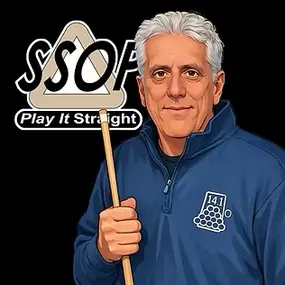
Bob Keller, widely known as “Shortstop On Pool,” is a professional billiards instructor, author, and content creator dedicated to the art of Straight Pool (14.1). Based in Colorado, Bob has earned a reputation for his deep technical understanding of the game and his ability to break down complex patterns into clear, actionable instruction. Bob is an expert player with over sixty 100-ball Straight Pool runs to his credit including a high run of 206. His expertise was notably recognized when he assisted John Schmidt during his historic 820-ball run, acting as the primary witness, racker, and analyst for the feat.
As a teacher, Bob focuses on helping players of all levels master the nuances of pattern play, break shots, and cue ball control. He has successfully bridged the gap between traditional pool wisdom and modern instructional methods through his YouTube channel and his comprehensive book, A Shortstop On Straight Pool. His approach emphasizes a structural and analytical view of the table, proving that with the right discipline, players can continue to reach new personal milestones at any age.
For those looking to elevate their game, Bob offers a variety of specialized training tools at his website, www.shortstoponpool.com. “The Right Way” is Bob’s presentation of John Schmidt’s mastery of Straight Pool in an online course of 13 videos that also includes a shot-by-shot analysis of John Schmidt’s historic 626 ball run. Bob’s “Ghost” products - Ghost Align, Ghost Aimer, Ghost Bridge and Ghost Target – are popular among pool players of all skill levels… Read More