Pool Instructor and Influencer
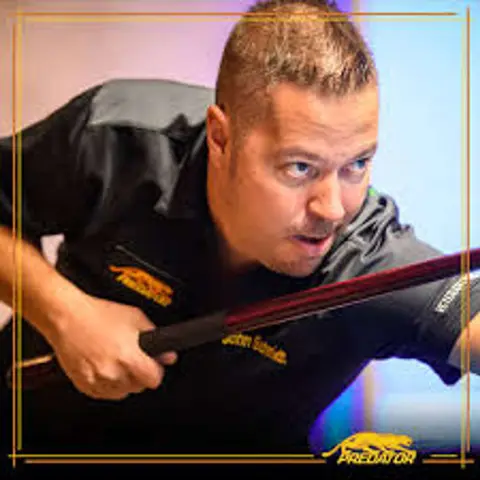
Bob Keller, known throughout the pool world as “Shortstop on Pool,” is one of the game’s most dedicated modern champions of straight pool, a player, teacher, author, and content creator whose work has helped preserve and promote one of cue sports’ most demanding disciplines. He is more than a talented local player or a YouTube personality. Keller has become a respected voice for 14.1 continuous because he combines real playing experience, deep technical understanding, a gift for explanation, and a genuine passion for the history and architecture of the game. On Legends of the Cue, John Schmidt describes him as a great player, praises his straight-pool instruction as among the best available, and points to Bob’s own continued improvement as proof that a player can keep growing long after many assume their best days are behind them.
Keller’s story begins in Wisconsin, where he started playing pool in 1980 at a bowling alley. Over time he developed into one of the better “shortstops” around Denver, a nickname that eventually became his brand and identity in the cue-sports world. His background is unusually rich and varied. In addition to being a serious pool player, he has also been described as an architect, woodworker, author, and YouTuber. That blend of analytical thinking, craftsmanship, and communication shows up clearly in the way he talks about pool. He does not approach the game in vague or mystical terms. He breaks it down structurally, patiently, and visually, helping players understand not only what to do, but why.
Bob’s importance in the straight-pool community comes largely from his role as a teacher and advocate. Through Shortstop On Pool, he has built a meaningful following among players who want to understand 14.1 more deeply. His YouTube work has become a trusted resource for students of the game, especially those interested in pattern play, break shots, cue-ball routes, end-pattern decisions, and the many subtle choices that separate a decent run from a great one. Straight pool has long been revered by serious players but underappreciated by the wider public, and Keller has helped make it accessible again. He teaches it not as a dusty relic from the past, but as a living, breathing discipline that sharpens every part of a player’s game.
That teaching mission found lasting form in his book, A Shortstop On Straight Pool, a detailed instructional work built to help players improve their understanding of 14.1 and raise the level of their overall game. The project also reflects Keller’s credibility within the straight-pool world. When he was writing the book, John Schmidt wrote the preface, a fitting endorsement from one of the greatest straight-pool players of the modern era. The book is known for its practical, detailed approach, blending diagrams, explanations, and examples in a way that makes high-level knowledge usable for ordinary players. That is one of Keller’s great strengths: he is able to translate sophisticated pool ideas into something teachable without watering them down.
What makes Keller especially compelling is that he is not merely an observer or historian of straight pool. He is a player in his own right. John Schmidt notes in your podcast series that Bob has run 100 balls many times and had recently broken through the 200-ball barrier, an accomplishment Schmidt calls truly professional caliber. That matters. In straight pool, the difference between understanding and execution can be vast, and Keller clearly has both. He knows the pressure of preserving a run, the importance of a single break ball, the challenge of reading clusters correctly, and the discipline required to keep going when things are not breaking perfectly. His teaching carries weight because it comes from lived experience.
His progress later in life is also part of what makes his story so inspiring. In the Schmidt interview, Keller mentions Irving Crane winning a championship at age 76, underscoring a truth many lifelong pool players cherish: this is a game you can keep playing, learning, and mastering for decades. Schmidt himself points to Keller as an example of someone in his 60s playing the best pool of his life. That detail is important because it says something about who Bob Keller is. He represents growth, persistence, and the idea that cue sports reward knowledge, discipline, and experience as much as youth and raw firepower.
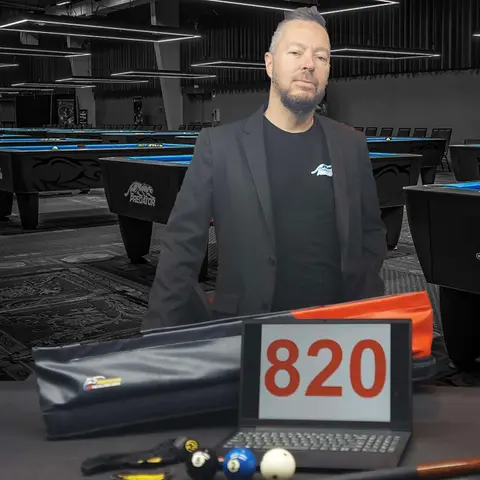
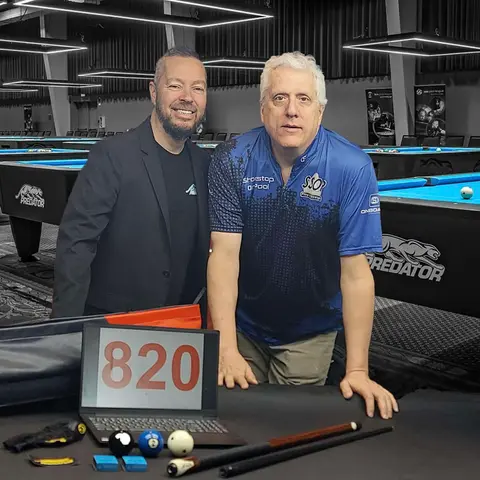
In the five-episode Legends of the Cue series centered on John Schmidt’s 820-ball run, Keller emerges as far more than a guest or side character. He was integral to the attempt and to the successful completion of the run. He was the man who filmed it, racked the balls, helped maintain tempo, provided morale support, and served as both witness and analyst. Schmidt makes clear that Keller’s role mattered enormously. Bob was not just present; he was part of the infrastructure of the achievement. In a discipline where rhythm, consistency, and environment mean everything, having the right person in the room can make a real difference, and Schmidt credits Keller with being exactly that person.
Keller’s contributions during the 820 run reveal a great deal about his temperament and value. He handled the practical side with care, from racking efficiently to helping keep conditions right. He also wore gloves while handling the balls to reduce oils and preserve the slickness and consistency John wanted. He tracked statistics, including ball-per-inning averages, and offered analytical observations that helped put the run in perspective. He was not simply a helper; he was an informed collaborator who understood the significance of every detail. Just as importantly, he seems to have brought the right emotional tone—steady, supportive, and knowledgeable without being intrusive. That balance is rare.
One of Keller’s greatest strengths, both on camera and in conversation, is his ability to recognize and articulate excellence. During the Schmidt series, he offers high-level observations about how John sees a rack, how quickly he identifies break balls and key balls, and how rare that kind of pattern vision really is. Those insights are fascinating not just because they illuminate Schmidt’s greatness, but because they also reveal Keller’s own depth of understanding. It takes a knowledgeable player to truly see what another knowledgeable player is doing. Keller consistently demonstrates that kind of eye.
He is also a bridge figure between eras. Straight pool was once the dominant measure of excellence in American pool, then gradually receded from public view as other games took center stage. Keller belongs to the group of players and teachers who have refused to let that knowledge disappear. He honors the game’s traditions while embracing modern tools—online video, digital instruction, and direct access to students around the world. In that sense, “Shortstop on Pool” is more than a nickname. It is a mission. Keller stands in the gap between old-school wisdom and modern audiences, making sure the game’s language, strategy, and beauty remain alive.
That makes Bob Keller an ideal guest for Legends of the Cue. He embodies the things the podcast celebrates: history, craftsmanship, learning, reverence for the game, and the stories behind meaningful accomplishments. He is thoughtful without being pretentious, knowledgeable without being inaccessible, and accomplished without losing the voice of a student. Whether he is teaching from a diagram, discussing a great player’s pattern choices, or helping document an 820-ball run, Keller brings seriousness, clarity, and love for the sport.
In Bob Keller, listeners encounter not just a teacher or a straight-pool enthusiast, but a true custodian of cue-sport knowledge. He is a player who kept learning, a teacher who kept sharing, and an ambassador who helped ensure that straight pool still has a strong voice in the modern game. For anyone who loves pool history, values thoughtful instruction, or simply appreciates the quiet mastery behind great cue sports, Bob Keller is exactly the kind of figure worth knowing—and listening to.
Check out Bob's work at https://www.shortstoponpool.com
Part three gets inside John Schmidt’s head, and it may be the most revealing episode of the series. John talks candidly about self-doubt, aging, criticism, pride, and the internal switch he flips when it is time to chase a gi...
What does it really take to run 820 balls? In part two, John Schmidt and Bob Keller pull back the curtain on the conditions, equipment, routines, and tiny details that made this historic straight pool run possible. This is th...
On this special five-part series of Legends of the Cue , we welcome straight pool great John Schmidt back to the show after his stunning 820-ball run, with Bob Keller joining us as the man behind the camera, the rack, and the...