

 Apple Podcasts
 Spotify
 John Schmidt w/Bob Keller - Part 3 (The Mind of an 800 Ball Runner)
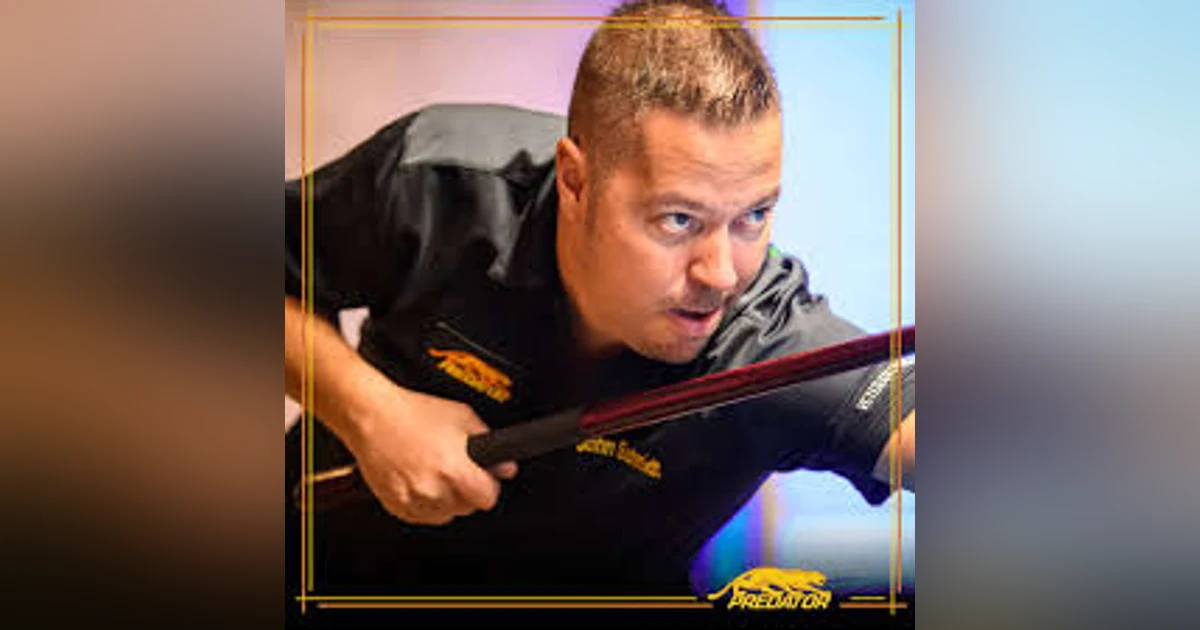

Part three gets inside John Schmidt’s head, and it may be the most revealing episode of the series. John talks candidly about self-doubt, aging, criticism, pride, and the internal switch he flips when it is time to chase a giant number. He explains that for him, straight pool is no longer about trying harder or focusing harder. It is about seeing the game so clearly that entire racks begin to unfold almost automatically. Bob Keller confirms that point in unforgettable fashion, saying there are only a few players he has ever seen who can read a rack at that level, and that John is one of them.
The conversation also explores what separates players who flirt with big runs from those who can survive the emotional grind of repeated failure. John talks about missing a ball, not blinking, and getting right back into the next inning. He describes why experience matters more than pure shot-making and why, at 52, he may actually understand the game better than the younger version of himself ever did. It is a fascinating look at how mastery evolves.
There is humor, honesty, and vulnerability throughout, but the central theme is unmistakable: the run started long before 820. It started with the ability to withstand disappointment, block out noise, and keep coming back. If you have ever wondered what elite cue-sport confidence really sounds like, this episode gives you a rare and deeply human answer.
Give Allison, Mark & Mike some feedback via Text.
Follow our show and/or leave a review/rating on:
Our website: https://www.legendsofthecue.com
Apple Podcasts: https://podcasts.apple.com/us/podcast/legends-of-the-cue/id1820520463
Spotify: https://open.spotify.com/show/4Za0IMh2SeNaWEGUHaVcy1
Music by Lyrium.
About
"Legends of the Cue" is a cue sports history podcast featuring interviews with Hall of Fame members, world champions, and influential figures from across the world of cue sports—including pocket billiards, snooker, and carom disciplines such as three-cushion billiards. We highlight the people, places, and moments that have shaped the game—celebrating iconic players, memorable events, historic venues, and the brands that helped define generations of play. With a focus on the positive spirit of the sport, our goal is to create a rich, engaging, and timeless archive of stories that fans can enjoy now and for years to come.
Co-hosted by WPA and BCA Hall of Fame member Allison Fisher and Mosconi Cup player and captain Mark Wilson, Legends of the Cue brings these stories to life—told in the voices of the game’s greatest figures.
Join Allison, Mark and Mike Gonzalez for “Legends of the Cu...
And so, Mark, you know, I've talked over you the whole time, but you know I love you. And the thing is, people, when they're your friends, they say they love you and they care about you, but it's only words. They do nothing to support that. Mark Wilson, over the years, has done so much to help my career behind the scenes. You have no idea, folks. Literally bent over backwards to put money in my pocket, to help me, to introduce me to the right people. And he's done things to show me he actually loves me. He doesn't just say it. And he's been like family to me. And I just I love the guy to death. Now, Bob, you're a sweetheart too. But Mark, for the last 20 years, has gone out of his way to make my career and life better, not just talk about it. And so I want to thank you, Mark, on camera. You know, outside of this run, that I mean, just everything you've done and let me be in your clinics, teaching me how to teach pool, talking with me when I'm on tilt or whatever. So, yeah, you've been a real, real good friend.
Mark WilsonWell, let me interject just a little bit. That's it's not all about being nice to John. He's so damn funny. It's so much fun to hang with him. We'll be going down the road, and the navigation lady, uh he's got me laughing so hard, and now she's saying, Turn around, you missed your turn, and I'm like, Will you shut up for five minutes? You know, and so, but nevertheless, what I like about John, I met him through Bobby Hunter, and Bobby assured me he's a great guy. And we were in Las Vegas, and then there was an opportunity that I could slide John in on ESPN for a thing. So we did that, and that was our first time. But some guys don't have the personality, they just don't have the capacity, you know, to be entertaining at all, where John is totally entertaining. And so I've always been, you know, that's endearing to me because so many of my constituency is so damn boring, and they never have any fun. So so me and John, and then we relate, and he's always encouraged me. You got to have a gun, you got to do this, a Bitcoin, get Bitcoin, you know, and all these things. And and sometimes I do it and sometimes I don't, but he's all good with that. John is an eccentric artist, and he has to be inspired. He's got these little manic tendencies, and he's got it, and he's very defensive. I mean, if if an APA3 criticized his 400-ball run, he wants to fight. And I'm like, my God, they never run a rack. You know, I mean, like if anyone ever criticized my 400-ball run, you come talk to me when you get to 400. Until then, I'm above the law. You know, I mean, there's just nothing gonna bother me. And so, but nevertheless, and I've learned to deal with him, and he can go negative on you, but you know, that's what comes with high upside, is also you got some downside. It's like Bitcoin, I'm volatile, you know. Yes. I I could tell you many stories. He used to own Litecoin, and he had 97 Litecoins that he bought of the oh, $90 or a little more. And then he'd wake up in the morning, and like in the knit width, he looks at his phone right away. And then he's like, Oh my god, I've lost $30 a coin. I mean, Mark, how much is it? Because he can't think. And so I have to do the math. I go, if you had a hundred and you lost thirty, that's three thousand. But then, okay, twenty nine hundred and ten dollars you lost. And he's like, I just slept at six hours and now I'm down, and suddenly the whole day goes bad. So then, so then we're on the road and we each make some money, and he he's saying, 'You gotta you gotta buy this gun.' I go, John, I can't. I bought spend all this money on a book, and uh, I can't, my wife will kill me, you know, but I want one. He says, Now I know you got the money, you got four thousand dollars. Come on, buy this. It's a perfect rifle for me. So I do. Well, anyway, then after I bought it, I was thinking about it. I was thinking, and now you got to buy three more light coins, so every morning when I wake up, I don't have to struggle to figure out how much you've lost or as we slept. It'll be a hundred even. So that's our relationship. And so with John, we've had some of the best times ever. And so when he says I did a lot for him, he's done a lot for me as well. And and when we do a clinic, he's one of the few guys that will actually give to the students. Allison's one, John Schmidt's one, Jerry Bryce's one, Nick Farner's one, and Jeanette, when she's good, she's great. Other than that, I'm not really interested in working with anybody else. Well, thank you. Yeah, yeah, that's great.
Allison FisherI noticed he wears hookah shoes now, too.
Mark WilsonOh, yeah. And there you go, Allie. John used to wear Crocs, and I couldn't go that far.
John SchmidtRemember that, Johnny? I went, I Allie, my first time bear hunting here in Wyoming. I'm standing around the campfire with all these badass dudes. They all got cowboy hats and guns on their hips and four-wheel drives. And I'm standing there drinking a white claw with shorts and my Crocs on. That's my buddy, but they love me because I'm a pool pro and they're all pool blur, so they accept my retardedness, but they're just like, bro, you only the girls are drinking the white claw. Like, you gotta put that down. I was like, really? I like this a grape, it's a great one, tastes pretty good. So yeah, they they kind of Wyoming me up. And I yet, you know, the funny thing is, and Charlie Williams just said this to me the other day, he goes, you know, a lot of people don't know this, but in 05, I'm playing the U.S. Open nine ball, and I'm second round. I'm playing Shane Van Boning, and and I'm at I'm having a bad time in my relationship, and people owe me money. So I'm in one of my kind of manic phases where I'm not happy with life and I'm on tilt, and I and I self-destruct, I don't take it out on others, but I just I do things that are make my life harder because that's what I like to do. And so Shane has me 7-0. I mean, he's lucking in balls, he's missing and hooking me, and I look at Shane and I go, Shane, I got I gotta take a bathroom break. So I set my $5,000 cue down that Bobby Hunter gave me as a wedding gift. I set it down, and I walked about three miles to my hotel room and I watched golf, and I never came out of my hotel room. So I come back to the tournament three days later, and Bobby Hunter's like, what happened? I turn off, I go on tilt, I turn off my phone, somebody pulled my cue out of the garbage and gave it back to me because I actually threw my cue in the garbage, which was not ideal. It was a nice wedding gift. But I was on tilt. Well, here's the thing. Now, with a psycho like me, here's what you get. You know what I did the next year? I went to the US Open and I won the whole tournament. Now you might say, man, most people that throw their cue in the garbage and walk away second round could never win the tournament. Well, I'm the kind of guy that does that, throw a cue in the garbage and I can run 800. It just depends on how life's treating me. When I'm in the right mood, I can do great things. And when I'm on tilt and my Bitcoin's down and I got COVID, I just I can go, I can just go negative and I don't want to leave the house. I don't want to talk to people. I hate pool. I hate my life. But that's that's kind of like when Mark says I'm eccentric. It's a polite way of just saying he's a lunatic. He's a nice lunatic. But there's something wrong with him. And to be great at anything in life, I almost maybe think there is something wrong with me, but I've learned to deal with it. You know, I I don't get in trouble with the law, I pay my taxes, I take care of my home. I'm not crazy, but I have a I have a tendency to self-destruct when I'm not happy. Not totally self-destruct, but just enough, you know, to be cannon fodder on Facebook. But it but at the same time, that's how I've won all the tournaments and gambled good and ran 800 balls because I'm just crazy enough to make it all work when it's working. And I'm just crazy enough to tell Shane I'm gonna go to the bathroom and not come back for four days. And that's okay. That's who I am, and I accept it. I'm not perfect. But as long as you have more good days and bad days. Yeah, I have more good days than bad days. Yes. Yes, I do. I do.
Bob KellerWell, I was just gonna say, uh, early in the week when John was getting warmed warmed up, he was on a big run, and for whatever reason, a a person whose name we won't mention came up, and John started fuming about that a little bit, and the next rack he missed an easy shot. And I was like, okay. So I realized part of my job is to keep keep John focused. And I so I I you don't want to give him too much input, but I I want to I I I realized it was my job to say, hey, nice shot. Good shot. Keep it going and just keep everything on a positive tone. Mark can attest to this.
John SchmidtI don't I don't want this to come off like, oh, John's some kind of difficult mean person. Mark will tell you, I am the nicest guy you ever met if you're just reasonably nice to me.
Bob KellerYeah. Yeah. But John, you do have legions of fans in the media and elsewhere who support you and want to see you run a lot of balls. Thank you.
John SchmidtI try to I try to remember that because I know all the friends I've made over the years and and but I do focus on the naysayers too much. That's one of my main faults that I wish I was better at.
Allison FisherRonnie O'Sullivan's a prime example. He goes through that all the time. People love him or don't like him. It's it's you know. And he's himself, and that's all you can be.
Mark WilsonYeah, that's all you can be.
Allison FisherNot everyone's gonna love you.
Mark WilsonI really think that contributed to John's success, though, was that his he's got those that propensity to just stay fixated on straight pool, straight pool. I and then, you know, like for most of us, you run 127 and something goes wrong, and then you're like, oh God, now I've got to start over. No, he's completely energized, and he now he's gonna break this record. He's tired of this, you know. Yeah, and it really helped him a lot.
John SchmidtI people told me my whole career, you're a good player, John. That's what they say. Oh, you're a good player. You're not on Moscone's level. You could never run 526. Well, I think breaking his high run by 300 balls, I mean, they'll come up with something else to diminish me, but it's like my haters did fuel me. Like one of the most common ways to get me into a money game, because I I'm too nice. I don't want to bark at anybody. I don't want to play money games and piss nobody off. But a guy might walk up to me in the pool room and say, Hey John, you want to play some? And I, well, you know, I wasn't really looking. Well, if you're scared, say you're scared, and then I go, I can get unscared real quick to play you some. And then we play it set. That that's how most of my money games happen. They have to slap me first and piss me off, and now the nice guy facade goes away, and we can just get it on to the death. I'll just play you set lose or dies. Is that good? You know what I mean? But I try to start off nice. I I do. But as soon as they start insulting me, then I'm like, all right, well, we can just play some. I I thought we were gonna be polite to each other, but so you know, anyway.
Mike GonzalezLet me ask one more question before we jump into the run. We you got you two guys can kind of walk us through it. Uh how was 2026 John Schmidt better prepared approaching this attempt than 2019 John Schmidt?
John SchmidtWell, a lot better prepared, and for a simple reason. I think most people could relate to this. My pool career wasn't really prepared. I wasn't playing much, to be honest with you, but but my life was simplified. I went through a horrific uh losing my father and a divorce and a bunch of money and a public divorce and humiliation and all the stuff that goes with all that, and I'm the monster and all that stuff. And so I really didn't want to be in the public eye anymore, but enough time has passed, and I bought a house, and so I've been working on the house, getting it like I wanted, and so now I felt more comfortable in life. Like, this is where I'm gonna live, this is what I'm gonna do, this is who I am. Before, when I was did the 626, I was living in a motorhome. Like, you know, and I love motorhome life. I actually like it, it's fun, but it's a sort of a feeling of like you don't know where you're gonna be in life, you don't really know where you, you know, my stuff was all stashed at my dad's house, and I'm in the motorhome. And it was just it was a feeling of kind of like a frantic life, and I don't know where I'm gonna be. And so now I'm completely single. I own my own home. Like my life is sort of like peaceful and structured now, and I think it was the right time to maybe try to play some straight pool because my my mind wasn't just all over the place. Like I gotta, you know, in 2019, man, I was not doing good in life, believe me. I had a lot of problems financially, and my dad was dying of cancer, and you know, and I woke up every day realizing my wife hated me, which wasn't ideal. So like I just I had problems going on, and and now my life just couldn't be simpler. I literally make up stuff to do. I just look around and go, what am I gonna do today? Like, my life is so simple, that's that helped me on this run for sure.
Mike GonzalezAll right, guys. Well, let's jump into this run then, and uh and uh we've got some video clips we're gonna show that will uh be illustrative of some of the situations that John had to negotiate, and Bob probably had to mentally coach him through at some point. And and to that end, John, how did having Bob Keller there change the experience?
John SchmidtOh, it was great because he's such a good player that it's and I don't mean to insult, I mean, but like if somebody's can't run 30 balls playing straight pool and they're watching me play straight pool, it's like Bob was like a security blanket because he understands, like when I nudge a ball, oh no, now he's straight in. Like he understands all the little problems I'm going through. Yet he never said a word. He never was like, I'll do this or do that. He never interrupted me, which I would respect if he saw something, I might go, Well, you know, what do you see? Do you see a dead ball or something? But he just never interrupted me. But we were so in tune because I might make a great tough break shot and he'd just go, nice shot. Or, or, you know, like a caddy would do. Just like, hey, hit this foreign, make a good swing. I like it, go with the number. And he didn't get in my way, but he like pumped me up just the right amount at the same time. Yeah, he was instrumental, believe me. So if there was talking, did it happen between the racks, guys? Oh, yeah. Oh, I was doing impressions and making fun of people and telling stories. That's why everybody thinks this whole focus thing. No, I don't do that at all, huh?
Bob KellerLike I just Absolutely. He's got to stay relaxed. Uh-huh. And and and and yeah, he'll make jokes about a shot, whether you shit it bad or hit it good, he'll make a make a joke about it. And yeah, like it, like you said, just keep it all positive. That was the goal. Yeah.
Mike GonzalezYeah. And the first F-bomb occurred on what rack?
Bob KellerProbably number one.
John SchmidtOh, I cut. Well, the thing is, the thing is, when my right side of my brain takes over, or whatever side takes over on stuff like this, I swear like a sailor because that's me really relaxing. And that's how you know I'm your friend and I like you if I swear around you, because I'm being pretentious and fake right now because we're on video. Like my body's already starting to overheat because I haven't got to say the F-word like 6,000 times. So I I'm not pretentious and refined, as you can imagine. So when I played the straight pool with Bob, the things I said on video we could never play. But but I do think it's kind of funny because the first thing Bob would probably say is like the guy's on a 400-ball run and doing like impressions of people. Like, yeah, John's crazy, man. But that's how I do it. I can't be all serious and super, you know, focused. Like, how can you play pool like that? You know?
Mike GonzalezYeah. Bob, were there any times in this run where you look at the situation, you're looking at what he's about to play, and you're like, what's he doing?
Bob KellerOh, yeah, like as a straight pool player, I'm watching the racks, and I'm thinking to myself, okay, he's probably gonna do this and then that. And most of the time he would, but sometimes he wouldn't. I'd be like, what in the world is he doing? But nine, 99 times out of a hundred, after he shoots the shot, I'd be like, oh, that makes sense. Okay, so I'm learning while I'm watching him. So I'm paying attention to every single rack. And yeah, but there were times when he's facing a shot and I'm like, ooh, he could miss this shot, and he would just spear it in, and I'd be like, good shot. And I don't want to get I don't want to push myself on him too much, but just give him a compliment and let him keep rolling.
John SchmidtYeah.
Mike GonzalezSo John, you make 820 decisions out there during this run. Did you make any wrong decisions in retrospect?
John SchmidtOh, I'm sure if I well, okay, and again, this will be misconstrued as arrogance, but what happens is when you've played the game as much as me, I'm able to make these decisions on the fly to where they might not be perfect, but none of them are gonna be terrible. And so I'm able to tie in 800 decent decisions because if you make a bunch of great decisions and then throw in a couple real bonehead moves, your high runs, you know, gonna be much less. What I'm able to do is probably not do anything that is full-blown stupid. Now, looking back, if I watch this run again, there's gonna be many racks where I go, you know, I could have done that or that or that, but there isn't one time in the run where I go, what was that? And when I watch, you know, I mean, this sounds kind of abrasive, but when I watch some of the modern players play straight pole, I mean, I'm like, this guy ran 127. He has no idea what he's doing. Like that his BPI is gonna be like 40. And that's a good run. But that 127, I mean, you shot like 80 shots that were wrong, that were too hard, that were too risky. I mean, that that just is a byproduct of I mean, imagine this, Michael. Bob and I did this for seven days. Now, in that seven days, I made 9,300 balls or 8,900 balls just in one week. In my life, I've probably shot in five or six hundred thousand balls playing straight pool. So, you know, like when I say I make the right decisions, that that sounds arrogant, but like I would have to be completely stupid to not understand the game pretty well by now. As much as I played it, right?
Bob KellerYeah, I think you should you should contrast the 626 with the 820, because the 626 is literally one of the cleanest runs I've ever seen. Your cue ball never gets out of trouble, but the 820 wasn't as clean. Well, that's fair.
John SchmidtThat's fair, but I'll tell you, Bob, there there's only two shots in the 820 that I'm not sure I would have shot in a maybe only one shot in a match. And the 626, there was only one shot that I would not have shot in a match, I would have taken a foul. To me, you know, I watched some guys run four and five and six hundred. There's like 30 shots that you would never shoot playing a human being. You would, you just but you're on a high run attempt and all that. And to me, that's kind of the way the game should be. If you run 600 balls and you only shoot one or two shots that you wouldn't actually play in a match, you're doing it right. Now, the 820, I made that. Well, we're gonna show that and talk about it. That shot's higher percentage than you think, but I wouldn't have shot that in a match for sure.
Bob KellerYou had a bit you had one bank, I think there was one or maybe two.
John SchmidtI made one bank, but it was like a bank I could shoot with my face. I mean, if I miss that bank, I ain't beating nobody anyway. That was a hangout on five-inch pockets.
Mike GonzalezThe other thing that ought to that's gonna come up at some point, we might as well just address it now, and that's a matter of style, style of play, because there's a way to play straight pool. There are different ways to play straight pool. And why don't you talk and Bob uh weigh in too on John's style, perhaps how it's evolved over the years, but his current style versus what has been more traditional, sort of just, you know, bang them and spread them kind of thing.
John SchmidtWell Okay. Okay, now that's an interesting thing, because here's the deal. It's your job as a player to play the golf course a certain way. I'm gonna play a five-inch pocket new claw table with donut rings different than I would a diamond with some humidity and all that. So there's that, like the way you break the balls. But there really isn't different ways to play great straight pool. People say, what? No. If you take Jim Rempi and his prime or Varner or Mark Wilson or anybody that was a great player, there's gonna be similarities. Now they might go 7, 9, 11, 9 or ball or whatever, and I might do it in a different sequence, but there'll be similarities of not running into the balls, the balls are going in pocket speed, and the cue ball is not getting away from me. And I can tell you what shot I'm gonna shoot next almost every time. So people will argue about the old timers did it this way. No, no. All you got to do is tell me a guy's high run, and I can tell you what his straight bull looks like without ever seeing him play. But guy's got a high run of 300, he's doing everything right, his cue balls tidy. I mean, he's nudging clusters with insurance. Now he might shoot the pattern a tad different sequence than than me, but there are gonna be similarities there if that makes sense. But but then at the same time, one last thing is now we're on a table with these donuts. You want to break the balls different, and I learned some things there that maybe Irving Crane wouldn't be privy to because they didn't get to use the donut rings. Does that make sense?
Bob KellerSo I would just express it very, very simplistically, just to make a point. You know, your average player learns to play straight pool, and they're like, oh, you shoot a ball and run into the balls to open them up. And then they think that's it. That's the strategy. Smash the balls as hard as you can, spread them across the table. Now I can use my nine ball skills and just clean them up. Well, that's not how you play straight pool. The correct way to play, as John said, you always know what your next shot is. Never leave it up to luck or chance where that cue ball is going. And that takes a completely different mindset. And that's what I I I coined it the right way. The right way. And that's the way that the pros, the top pros have played straight pool for a hundred years.
John SchmidtAnd one and one last thing I'll add to that, and I don't I can't prove this, but I believe it's true. I believe grip pressure is one of the main components to playing great straight pool because it's a game of really hitting some shots soft. And if you're hand fisting it with a death grip, you got no chance to play real delicate, intricate positions where you're where you're making the cue ball move an inch to the left and an inch to the right and stunning forward three inches and all those little micro positions. You can't do that with heavy grip pressure. Now people might argue with me on that but I think I'm right on it. Other games you can use more grip pressure but in straight pull there's so many times where I'm delicately just nudging the ball in and I need my cue ball to just turn over one half a revolution or I don't have the right angle for the next nudge. And I can't do that with heavy grip pressure. So take that for what it's worth.
Mike GonzalezYeah okay so let's jump into the run and Bob why don't you pretend to be a radio commentator think you know just with with the mindset that hey we do have listeners that aren't seeing what we're seeing. Okay.
Bob KellerPeople watching the video later perhaps will enjoy seeing the clips we're going to go through but sure we're going to go to rack three this is sort of our first clip and uh and you can kind of set it up and then John can comment as well okay I chose this one because if you look at the table John has an obvious break ball in the 10 ball and anyone else is going to try and maneuver around these balls in a different fashion and preserve that 10 ball but this is what a master does. They realize that what is important is not an ideal break shot. What is more important is an ideal pattern to a break shot that is guaranteed to get you there. And so this is not a conventional end pattern or key ball in any respect. So John shot off a break ball that was right near the rack but he did it because it gave him instant position on two balls that were kind of close together. Now he's got a brake ball that's high and outside but by by being a master of the cue ball he's going to get the get the cue ball right where it needs to be and then he's got to play a delicate speed control shot but it's a it's closer to a hundred percent shot than what he might have had if he tried to do a pattern that that was trickier. That's right.
Mike GonzalezAnd just what you did John here with this little cut shot to uh go high right and off a couple of rails to position yourself perfectly for that three ball I mean you couldn't have been off an inch on speed right well okay I I made a good shot there for sure but the thing is right off a plane right off a plane on a table I'm not used to and I'm not dialed in I wouldn't have played that and if I was on a 500 ball run there I wouldn't have played that there were two reasons I did it that way.
John SchmidtOne was to impress Bob a little bit because he's sat there watching I'm like watch this Bob I'm going to flash gang signs and twirl under the tree and hopefully you'll like clap there was that okay the second reason was I was on a run of like 40 and I wanted to see if I could do it because I know later I'm going to have to come with some very difficult, intricate shots and I'm just practicing for later if that makes sense. That pattern right there we're not going to go through it again and take too long but the way to do it would have been to cut the first shot off the in rail go back upstairs and get on the ball the three ball and unlock the rack and all that but it but it was just I'm on a run of 40 so you might look at that and go, that was a dumb way to play it. That was the two reasons. One was showing off and two was warming up because I need that kind of stuff later if that makes sense.
Mike GonzalezYeah yeah so so now let's go into rack eight. So you're over a hundred balls now so you're you're getting into it you're getting your groove on here still a long way to go but this is one that I've got a couple of questions about we'll let we'll let uh bob kind of set it up again but just uh just amazing precision that you used to kick just to nudge this little ball out to to to be a to be a break ball.
Bob KellerOkay. Yeah this is what impressed me about John many times during this run. There's no real clear break ball that eight ball is in the rack. So he plays for a combination and I he might be hoping that the the one ball kind of squirts to the right of that combination and becomes a break ball. So here's one shot to try and make a break ball didn't work and and now he what are you going to do to open the rack?
John SchmidtWell what you do now is I've got to go into this ball obviously and I'm going to take a nibble at it and if I mess this up and with it then I'm going to use one of the balls in the side and come down two rails and I I know I can still get out here. It's not ideal but but I I also know just the percentages on a table this easy that I can still make it work. But that was one of the racks where uh I just had to you know just use my cue ball control and my precision. And I mean Bob you saw me nudge nudge at a break ball probably a hundred times that week and I probably only mess it up once or twice. I mean when I go after a break ball and I try to nudge it I usually can hit it and move it around and so you know that you're going to have to have great cue ball control to be a two three hundred ball runner. There's just no way around it.
Mike GonzalezYeah I mean you know for for for a guy like me if I make contact with that one boy that's a that's a big win for me for you to hit it on the right side of the ball at the right angle with the right speed to get it where you want it is just I I just marvel at that uh at that precision.
Allison FisherThank you for listening to another episode of Legends of the Cube. If you like what you hear wherever you listen to your podcast including Apple and Spotify please follow subscribe and spread the word give our podcast a five star rating and share your thoughts. Visit our website and support our Fall History project. Until our next golden break with more Legends of the Cube so long everybody

Pool Professional
John Schmidt is one of the most compelling figures in modern cue sports, a champion whose story blends Midwestern toughness, road-warrior grit, and an almost monastic devotion to the craft of running balls. Known around the world as “Mr. 600,” Schmidt is the man who authored the historic 626-ball straight pool (14.1) run, eclipsing Willie Mosconi’s legendary 526 mark that had stood for more than six decades. But the number only hints at the journey.
Born April 12, 1973, in Keokuk, Iowa, Schmidt’s beginnings were humble, blue-collar, and formative in the way they taught him to compete and endure. In the Legends of the Cue conversations, he comes across as a kid shaped by small-town life, everyday responsibilities, an early understanding that nothing is given, and a stubborn desire to earn what he wanted. That toughness shows up later in his pool life not as bravado, but as an ability to keep going when the money is low, the rooms are hostile, and the pressure is real.
Before pool became the obsession, Schmidt was also deeply connected to golf, a thread that never really leaves his story. It isn’t merely a footnote; it’s part of his identity and, at key moments, a refuge and reset button when the pool road took its toll. In his own telling, the competitive instincts and self-discipline required in golf, managing emotion, committing to a process, staying present over long stretches, translate naturally to what elite pool demands.
Schmidt didn’t grow up as a junior prodigy with a formal program and a sponsor pipeline. He came to pool later than many … Read More
Pool Instructor and Influencer
Bob Keller, widely known as “Shortstop On Pool,” is a professional billiards instructor, author, and content creator dedicated to the art of Straight Pool (14.1). Based in Colorado, Bob has earned a reputation for his deep technical understanding of the game and his ability to break down complex patterns into clear, actionable instruction. Bob is an expert player with over sixty 100-ball Straight Pool runs to his credit including a high run of 206. His expertise was notably recognized when he assisted John Schmidt during his historic 820-ball run, acting as the primary witness, racker, and analyst for the feat.
As a teacher, Bob focuses on helping players of all levels master the nuances of pattern play, break shots, and cue ball control. He has successfully bridged the gap between traditional pool wisdom and modern instructional methods through his YouTube channel and his comprehensive book, A Shortstop On Straight Pool. His approach emphasizes a structural and analytical view of the table, proving that with the right discipline, players can continue to reach new personal milestones at any age.
For those looking to elevate their game, Bob offers a variety of specialized training tools at his website, www.shortstoponpool.com. “The Right Way” is Bob’s presentation of John Schmidt’s mastery of Straight Pool in an online course of 13 videos that also includes a shot-by-shot analysis of John Schmidt’s historic 626 ball run. Bob’s “Ghost” products - Ghost Align, Ghost Aimer, Ghost Bridge and Ghost Target – are popular among pool players of all skill levels… Read More