Laurance, Mitch
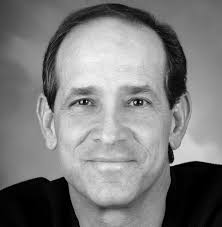
Actor, Sports Broadcaster
Mitch Laurance is one of cue sports’ most recognizable and trusted voices, an entertainer, storyteller, and broadcaster whose career has traveled an uncommon path from legendary television comedy to the pressure-packed arena of championship billiards. He’s the kind of presence audiences immediately feel: warm, quick-witted, and steady when the moment gets big. And whether he’s calling a final rack under bright lights or swapping stories about the personalities who shaped the game, Mitch has built a reputation on one essential skill, making people care.
Long before pool fans knew him from the booth, Mitch was developing the instincts of a live performer in the most demanding classroom imaginable: "Saturday Night Live". In the show’s formative years, he worked inside that famously fast, chaotic, and relentlessly creative environment, learning firsthand how timing, preparation, and teamwork turn a rough idea into something electric. Those early experiences weren’t just a résumé line, they became a professional foundation. Mitch has often reflected on what it means to operate under pressure with a clock running, an audience waiting, and no margin for hesitation. It’s a mindset that later translated seamlessly into live sports television, where a single shot can flip the story, and a broadcaster has to be ready to capture it in real time.
That blend of performance and discipline carried Mitch into a full on-camera career. After moving to Los Angeles, he worked his way into television roles, earning early credits that opened the door to a long run of appearances across popular series and productions. His acting career exposed him to every kind of set and every kind of pace: episodic storytelling, dramatic turns, comedic beats, and the constant requirement to deliver, take after take, until the moment feels true. Along the way, Mitch accumulated the kind of experience that sharpens an entertainer’s instincts: how to listen, how to react, how to stay present, and how to keep the audience with you.
A memorable part of Mitch’s journey is that it’s also tied to family. He shares a unique connection with his identical twin brother, actor Matthew Laurance, two performers moving through the same industry, each finding his own voice and lane while sharing the uncommon bond of twinhood. That dynamic shaped Mitch’s sense of identity early on: the importance of being recognizable for your craft, not just your name; the challenge of standing out while still staying true to who you are. It’s a theme that echoes through Mitch’s later work in broadcasting as well—he never tried to sound like anyone else. He built his style around authenticity, clarity, and respect for the moment.
For cue sports fans, though, the most meaningful turn in Mitch’s story began when he met Ewa Mataya Laurance, known around the world as “The Striking Viking.” Their relationship wasn’t just personal; it became a bridge into the culture and community of professional pool. Mitch has spoken candidly about entering that world as an outsider, someone who didn’t grow up inside tournament pool, but who fell in love with the game by paying attention to the people. He learned the sport through its stories: the toughness required to compete, the grind of travel, the mental strain of pressure, and the way greatness is built not only on talent, but on composure.
That perspective, part fan, part student, part storyteller, turned out to be exactly what the sport needed when the opportunity arose for Mitch to step into broadcasting. He didn’t arrive trying to prove he was the strongest shooter in the room. Instead, he arrived with the skills of an entertainer: he knew how to frame a moment, how to build suspense, how to let a scene breathe, and how to bring the viewer along. Just as importantly, he brought humility. He respected the craft of the players and the depth of the game, and he did the work to learn what mattered, patterns, percentages, safety exchanges, the psychology of decision-making, and the way confidence can rise or collapse on a single miss.
Mitch’s pathway into televised pool expanded steadily. Early opportunities gave him a foothold, and from there he grew into one of the sport’s most familiar voices, especially for the women’s professional game. Over the years, he became deeply associated with the WPBA, calling matches that showcased not only shot-making brilliance but also the fierce competitive spirit that defines world-class women’s pool. His commentary has always balanced two truths: this game is beautiful, and this game is hard. Mitch doesn’t talk down to viewers, and he doesn’t inflate the moment with empty hype. He explains what’s happening, why it matters, and what it costs mentally to execute under pressure.
One of the most fascinating aspects of Mitch’s career is that he has often worked in close proximity to the very people he’s covering, not as a detached outsider, but as someone connected to the sport’s inner life. Being married to a world champion brings a unique perspective, and Mitch has navigated that with a professionalism that’s earned him genuine respect. He understands that pool isn’t just a highlight reel, it’s a day-to-day test of resilience, preparation, and emotional control. That insight shows up in the way he calls matches: he notices nerves, tempo changes, and decision points that casual viewers might miss, and he frames them in human terms that make the game accessible without oversimplifying it.
As the sports media landscape evolved, Mitch evolved with it. He’s lived through the shift from tightly produced segments to more immediate coverage, from traditional broadcast models to remote commentary setups, and from niche sports programming to the modern era of streaming and digital communities. Through all of those changes, his approach has stayed consistent: honor the players, honor the audience, and honor the moment. He’s especially skilled at giving the game its proper drama without forcing it. When a match turns into a tactical battle, safeties, two-rail escapes, chess-like control, Mitch leans into the story rather than apologizing for it. He treats strategy as entertainment, because at the highest level, it is.
What makes Mitch stand out isn’t just knowledge; it’s voice, both literally and stylistically. He brings humor when it’s appropriate and restraint when it’s required. He knows when to speak and when to let the room go quiet so the tension can live. He can celebrate brilliance without making the broadcast about himself. And he has the rare ability to make a viewer feel like they’re not just watching shots, they’re watching people.
That storyteller’s instinct extends beyond the pool table. Mitch has long been a natural host: the kind of conversationalist who asks questions that actually land, who listens for the detail that reveals character, and who understands that the best stories aren’t always the loudest ones. He’s comfortable around legends, but he doesn’t treat anyone like a prop. He treats them like humans with a journey, because that’s what he’s always been drawn to: how someone becomes who they become.
In the cue-sports world, Mitch Laurance has become more than a broadcaster. He’s part of the fabric. His voice is linked to memories, classic matches, signature runs, emotional victories, devastating misses, and the steady rise of champions who changed the game. He has helped give women’s pool the stage presence it deserves, not simply by covering it, but by caring about it. He understands that the sport is built on more than titles, it’s built on stories, relationships, rivalries, and the private battles no one sees.
At his core, Mitch is a bridge: between entertainment and sport, between casual viewers and dedicated fans, between the pressure of the arena and the living room where someone is learning the game for the first time. He is proof that great broadcasting isn’t about sounding smart, it’s about making the audience feel something real while helping them understand what they’re seeing. And after decades of performing, producing, acting, hosting, and calling world-class matches, Mitch Laurance remains exactly what every sport needs: a voice that respects the craft, elevates the moment, and never forgets the people behind the game.

Mitch Laurance - Part 6 (A Life Well-Lived: Gratitude, Golf Getaways,…
In this moving final chapter of our six-part Legends of the Cue conversation, Mitch Laurance brings his remarkable journey full circle—through gratitude, reflection, and the relationships that have shaped a life squeezed for ...

Mitch Laurance - Part 5 (From Hollywood to the Booth: Mitch Laurance,…
In Episode 5 of our six-part life-story series with Mitch Laurance, we pick up where his improbable second act really takes flight—behind the microphone, on the biggest stage pool had at the time: ESPN. Mitch takes us back to...

Mitch Laurance - Part 4 (“There’s Ladies Here”: Mitch Laurance on Ava…
In Episode 4 of our six-part conversation with actor, producer, and longtime billiards broadcaster Mitch Laurance, the story turns on a single moment in Winston-Salem that changed everything. Mitch takes us back to 1990—sent ...

Mitch Laurance - Part 3 (From Balboa to “Bula Vinaka Beachside”: Mitc…
In Part 3 of our multi-part life-story conversation with American film and television actor—and longtime sports broadcaster— Mitch Laurance , we detour through the worlds that shaped him long before pool took center stage. Mi...

Mitch Laurance - Part 2 (From SNL to the Spotlight: Mitch Laurance’s …
In Part 2 of our conversation with actor and sports broadcaster Mitch Laurance , Mitch takes us deeper into the improbable zigzags that turned a behind-the-scenes job at Saturday Night Live into a front-row seat to entertainm...

Mitch Laurance - Part 1 (From Queens to Studio 8H: Mitch Laurance’s W…
In this opening chapter of our multi-part conversation, Mitch Laurance takes us all the way back—before the bright lights of television, before the broadcast booth, before the roles that made his career a near-constant highli...