

 Apple Podcasts
 Spotify
 Jeanette Lee - Part 1 (Brooklyn, Belonging, and the First Battles)
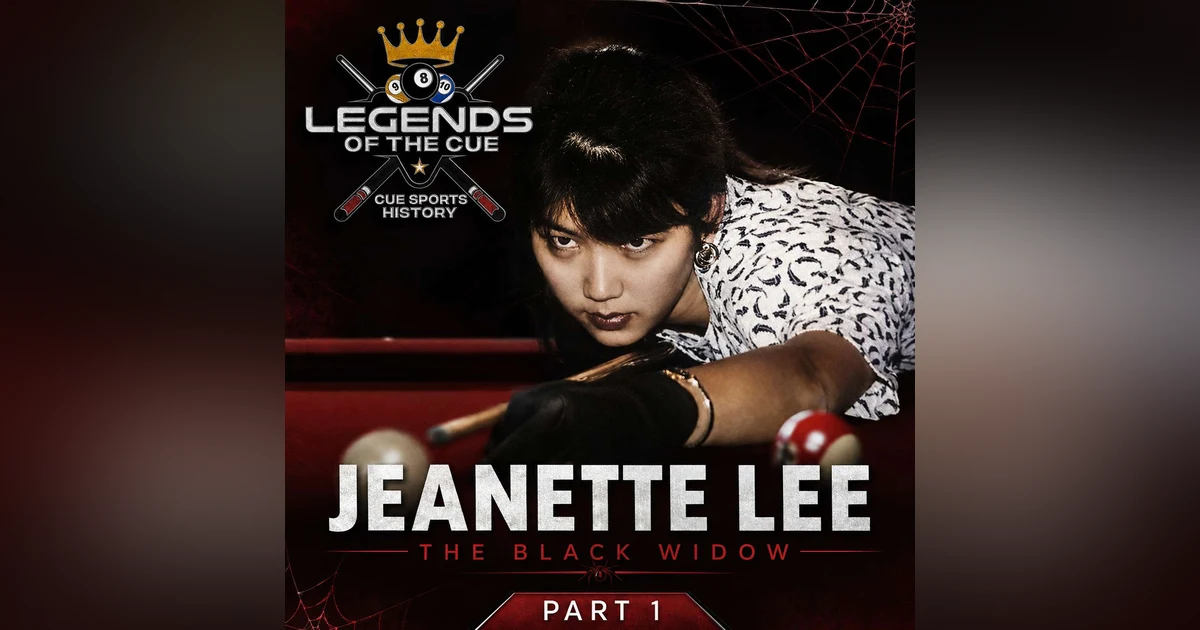

In Part 1 of our conversation with Hall of Fame champion Jeanette “The Black Widow” Lee, we begin where all great life stories begin: at the very start. Jeanette takes us back to her childhood in Brooklyn, where she grew up as a Korean girl in a predominantly Black neighborhood, trying to find where she fit in while navigating racism, loneliness, and the feeling of always being different. She shares vivid memories of Korean school, family expectations, church, discipline, and the cultural values that shaped her, even when she resisted them.
Then comes the life-changing diagnosis that altered everything. Jeanette speaks with extraordinary honesty about scoliosis, the devastating surgery that followed, the pain, the body brace, the emotional trauma, and the deep sense of isolation she carried as a young girl. It is a raw and moving account of how physical suffering, shame, and silence began to change the way she saw herself and the world around her.
But even in the darkest moments, the fierce spirit that the pool world would one day come to know was already there. Jeanette describes how anger, hurt, and humiliation slowly hardened into defiance. She was not going to go quietly. She was not going to be easy to break. This opening chapter of her story is heartbreaking, revealing, and essential to understanding the resilience, fire, and toughness that would later make her one of the most recognizable figures in cue sports history.
Give Allison, Mark & Mike some feedback via Text.
Follow our show and/or leave a review/rating on:
Our website: https://www.legendsofthecue.com
Apple Podcasts: https://podcasts.apple.com/us/podcast/legends-of-the-cue/id1820520463
Spotify: https://open.spotify.com/show/4Za0IMh2SeNaWEGUHaVcy1
Music by Lyrium.
About
"Legends of the Cue" is a cue sports history podcast featuring interviews with Hall of Fame members, world champions, and influential figures from across the world of cue sports—including pocket billiards, snooker, and carom disciplines such as three-cushion billiards. We highlight the people, places, and moments that have shaped the game—celebrating iconic players, memorable events, historic venues, and the brands that helped define generations of play. With a focus on the positive spirit of the sport, our goal is to create a rich, engaging, and timeless archive of stories that fans can enjoy now and for years to come.
Co-hosted by WPA and BCA Hall of Fame member Allison Fisher and Mosconi Cup player and captain Mark Wilson, Legends of the Cue brings these stories to life—told in the voices of the game’s greatest figures.
Join Allison, Mark and Mike Gonzalez for “Legends of the Cu...
Allison Fisher
She's one of the most well-known fool players ever. And I know we've played some incredible matches over the years, and she's a killer competitor. I'm so happy she's here to tell her story. Mark, would you like to introduce her, please?
Mark Wilson
We have a tremendous interview coming to you now as only two players have ever transitioned from pool into mainstream America. Minnesota Fats did it, and our guest today, the Black Widow, Jeanette Lee. This will be an absolute delight and welcome, Jeanette.
Jeanette Lee
Thank you. I'm really excited about this. It it you know to have both of you, Michael, I'm just getting to know you, but Allison being just suffering such an incredible, like a tough nemesis, but also incredible ambassador for our sport. And the knowledge and history that she brings in with her personality. And Ed Mark, you know, one of the best billiard instructors, great player, but also instructor, and his passion is contagious. You know, when just you're around him, you're just automatically up. You're like, you know, and it it's just great to be able to spend this private time and talk about pool and and be able to share my story. So thank you for this opportunity.
Allison Fisher
Thank you very much.
Mike Gonzalez
That's very kind of you. Yeah, great to have you, Jeanette. I don't know what I'm doing here, but I know these two have been a very important part of your life, haven't they?
Jeanette Lee
You helped make this happen. So you are important, and I thank you for it. Yeah. Somebody that brings it all together. You need people like that.
Mike Gonzalez
All right. Well, anyway, you know by now that uh we always start at the very beginning and telling your life story. So I guess the first question I'd have is what was it like growing up as a little Asian girl in a black neighborhood in Brooklyn?
Jeanette Lee
You know, what I've basically learned is there's good and bad people everywhere you go. A lot of it is how you choose to look at the world. And when I was young, I was a very happy, outgoing child that loved to please, wanted to be liked. I have those kinds of memories. And again, good and bad people. So I had, you know, a few friends, but none that I would say like long-term close schoolmates. They were just kids that went to the school that were nice to get, you know, maybe hung out in class. But the neighborhood in the area, every day on the way to school and at school, there was always a lot of racism from from on my part, not, I don't know, at me. So there were a lot of racial slurs. Very common would be Ching Chong Chaliwang. I don't know who came up with that phrase, but there were a lot of people that knew it, or Chinese or China Gal or Chink, do you eat dog? You know, just things that made me feel like I was an outcast and that I didn't fit in, I wasn't welcome. And that's not to say that there weren't other nice people that brought joy to my life, but my memories, unfortunately, and I don't know what makes a person like that, but most of my memories from my childhood were not happy. The things that I can recall. But I remember when I wrote my memoir, the Black Widow Memo with Triumph Books with Dana Ben Bell, and she, when we started talking about my life, and I'm looking at all these stories, and I'm like, you know, man, it just sounds like all I'm doing is complaining. But when I go over the stories and I talk to my sister, she's like, Yeah, because Jeanette, you also had a lot of happy times. But I want to remember them. I mean, I think I want to remember them, but I I have a lot of difficulty remembering any fun time. You know, even just like a play date, which we didn't have play days. I mean, the Korean Christian family, you know, you talked to each other in class or at school, but you didn't after school, you were home, you know, practicing piano or studying math or, you know, doing something Korean.
Mike Gonzalez
But tell us about your folks. Your mother, Sonia, right? And your dad was named what?
Jeanette Lee
Bo Chun Li. Well, my my birth father was John Tuck. So my original name is actually Tuck T-A-K. Okay. But when my mother remarried, I was nine years old. We didn't have a choice or a say in the matter. Uh and I think it's just our culture. We didn't dare to have try to have a say in the matter, but we were adopted by him and immediately changed our name on the birth certificate to Jeanette Lee. And I remember he was Catholic. I was raised Protestant, Presbyterian, always went to a Korean church. And that's, I guess, the the first and main and only real connection to my heritage, just being around other Korean people, was my mother slowly, my mom had seven brothers and sisters, and all of them, one by one, immigrated, my mom being the oldest, immigrated from Korea to this little co-op apartment building in Flatbush Crown Heights, Brooklyn. And so I would see them a bit, but on Sundays we'd go to this church and learn Korean songs and listen to a kid's sermon in Korean, which I didn't understand because I was like, we're in Brooklyn. Whenever we need Korean, why do we need to learn Korean? It's ridiculous. But I think the main resentment was on set on the weekends, I would have to drive like 35, 40 minutes from Brooklyn to Flushing, where they had Korean school, which was all day, and it starts at nine in the morning. So we have to get up at seven, you know, to get ready and then drive an hour, you know, to get over there and get settled and start all day. So I never could do anything else. I couldn't sleep in or watch cartoons or so I was not happy as a young kid, I remember. And I also remember that in the school, there's also activities where the boys would immediately go to Taekwondo, which is what I wanted to do. I mean, I'm in Brooklyn, I want to karate chop someone, you know? That's the way I'm thinking as a kid. And and as a girl, we were never allowed to. We were only allowed to do Korean dance. Except to wear this floppy hat that has a long, you know, string that flies around, and I had to do this fan dancing and wear this big, huge Korean humbug, you know, which was this sweaty, heavy. Well, obviously, this isn't the way I think of it now. It's beautiful. But as a kid, I'm like, what? I gotta wear this big bulky dress. It's so hot and sweaty, and you know, it's like fat, flat in the chest, and then it billows out, you know. I could have five kids underneath this thing. It was just angry. Uh, everything was so unfair, unfair, unfair. And but I was glad to have it because our culture is very much about respect. We cherish and respect and give a lot of attention to our elders. And I think that's missing more and more in America, you know, the stories that I hear and the things that I see, the way that teens some teens treat seniors, you know, when they're around nearby. And, you know, you always serve them first. If they're coming in, you stand up, you know. Certainly you give up your seat if they don't have the main seat. You start eating when they lift their fork, you know, when they start eating first. And there's a lot of unspoken things, but it gives you, as you're growing up, oh, this is someone to really like appreciate and learn from. And when he's speaking, it's like, you know, even though I didn't have to be told that, just the way everyone was around the elders made you automatically feel kind of like you're with royalty. Yeah. So a lot of love and respect and compassion. I'm I'm grateful now that I got that extra bit of Korean culture in my life, you know, when we're young.
Mike Gonzalez
Did you ever have to learn the language?
Jeanette Lee
That's what Korean school was for. Okay, so you did study the language. I had to learn, yeah, I had to learn reading and writing the alphabet, my penmanship. I'm like, when am I ever gonna need to write Korea? We're in Brooklyn. Yeah. And so I had to learn all that. Yeah.
Allison Fisher
You still know you still know the dance moves.
Jeanette Lee
No, no. I mean, I was seven. I was, you know, I was a child five, seven, nine, you know. By the time I was eleven, uh, I don't know. I think things really changed after scoliosis. You know, we we go to Jones Beach out Long Island, and you know, when you're young, your parents bathe you, but after a while, you're showering and bathing yourself. So they're not seeing your body. And in New York City, you know, we don't go all the way out to Long Island Beach that often and put on a swimsuit. It's often cold, the water's cold. But this day, she took us all the way out there, so I'm wearing a swimsuit. So she's kind of seeing my body without all these clothes on for the first time in years. And I remember taking off my shirt, Doris, and we're getting ready to run in the ocean, and she's like, come come back here. And she's just studying my back and having me bend and twisting whatever. And I just remember having to pack up, and the next day, my mom was in RN for, you know, 50 plus years at Kings County Hospital. So at the time, yeah, she was a registered nurse, so she had some connect, was able to get me in kind of quickly. And the only thing they really told me was that your your back is very crooked, it's 58 and 56 degrees curvature, and it was a double curve. Some scoliosis is just bent on one side. Mine was bent the top and bottom, creating an S. And so they had to put in two of the Harrington rods. But I think preparation was the key. And I was watching an interview just the other day. Somebody sent me one of the interviews that I had done, and I had said something about that there was no, you know, me having scoliosis and me sharing what I went through for a long time, I kept it very privately because it's my business. And I didn't want people thinking I was making excuses or trying to draw attention, which is what people always think that I'm trying to draw attention. And I didn't want anyone feeling sorry for me. I don't need your pity. And I just had a lot of pride and and protection, you know, protectiveness. And so I kept it to myself. But then once you start sharing, I feel like your own healing begins. You're inspiring others. But by inspiring others, one, you realize that, you know, sometimes there's a greater plan that you may not understand, but something good could come from this. But if you're too busy staying in bed and feeling sorry for yourself, you'll never realize it. But if you can continue on just by continuing on, people say, oh, you're so brave, you're so strong. And I tell them, I never feel strong or brave. I have a lot of insecurities. I feel broken all the time. I feel like I'm struggling all the time. I'm late, my ADHD, I'm disorganized. I'm always so frustrated by it. I leave things everywhere I go, but now that I'm older, I have to go around and pick up everything instead of just putting it away as I go, you know, finishing it as I go. I have 50 tabs open all the time. So I'm just always a battle, you know, battling, battling, and never always feeling broken because my sister doesn't have ADHD and she, I'm not saying that she didn't work hard, but things she would start and finish projects. You know, she could manage her time. She could remember that, you know, we have to do all these things, and she did things as we went. And I tend to push to the last minute because you procrastinate. You don't want to do it because it's overwhelming. So you push it and push it until the last minute, and then you have to do it. And you know, it just it's it's a horrible vicious circle, but it's not as easy to just change. Sounds like so. Then it looks like you don't care or that it's not important when in fact it is. It's just a struggle to manage yourself, and it it's just difficult. And so you don't get a lot of understanding. And for scoliosis, I didn't know anyone with scoliosis, and my family didn't, and all the doctors told me was, little girl, your back is crooked, and we're just gonna make it straight. You know, you're gonna be in, you'll be asleep for all of it. Don't worry, no problem. And I just remember waking up, and I have very few memories from back then, but I remember waking up and just wanting to scream, just the pain. I hadn't experienced that level of pain. Before that, I only had a tumor in my neck. I was four, don't remember that. I had a big thing going on with my leg, leg surgery, you know, a year and a half before that, but it was still contained. It was in that one area. This was my entire body and being mass. I mean, they cut my entire back open, they broke every vertebrae to put within it a bone, you know, these rods, and then they scraped bone marrow from your hips and your lower back to cover it so that it'll heal around it. And then they have these m metal, you could see it in the x-rays, these wire ties that held it to, you know, it's like a butcher. I mean, it just was not uh my whole back was mangled and it was it was very invasive, traumatic, and I remembered wanting to scream, but I was on so many drugs that I was just like and just tears streaming down my face. Because back then the pain medicine, it just drugged you, but it didn't help the pain as much as it just dulled you. So inside I was just really, I don't understand what's going on, and now I have this huge scar of a monster, no one's ever gonna love me, no one's ever gonna like me, I'm ugly now. I mean, it's it was just and I just became very dark. My life became very dark.
Mike Gonzalez
You probably wore a back brace immediately after the procedure, I would guess.
Jeanette Lee
Yeah, they had to do a I'm sorry, I haven't cried about this in a long time, but Yeah, they they there was giant white casts like when you break your arm. It was so big, it was so heavy, I could barely stand. And I was laid up for so long that my legs actually feed and I actually had to learn how to walk again. And the whole time I just felt like such a monster. And then eventually, I'm sorry, I don't it was just a really bad time because I was very alone. You know, we didn't get to go to friends' houses or anything like that, but I never bonded with anyone close enough that I would have done that anyway, but we wouldn't have been allowed, and you know, our our families, you know, my aunts and uncles, they all had their own hardships, and I don't feel like I could go to them because we just take things on and keep going. You don't talk about it, complain about it, you know, we stay positive and we just keep going. But sometimes you need to talk and you need to share it. And anyway, they eventually put on this, made a brace, you know, they make a mold. And this brace was, you know, I'd say uh a half inch thick. And there was a front plate and a back plate, flat as can be, no figure, you know, and it's and it's big. It went up, you know, up this high. So I would wear button-downs all the way up to here to try to cover it, but it would shafe you so bad, so you had to wear an undershirt. They were saying they were gonna make it my skin color, but it ended, it's just bright yellow. It was not skin color at all. It's supposed to be like camouflage as skin color. And uh it was so uncomfortable, but it was more how I felt. I felt like everyone seeing this big air balloon walking by, you know, just felt so massive to me. And I felt like everywhere we're going, people were just disgusted and staring at me when they probably weren't, but it's just the way that I felt at that time. And I wouldn't say mis, I didn't feel misunderstood, just very alone, you know, and no hope. And I grew up with my older sister who was two years older, and I was in all the gifted classes. I was very bright, things kind of came a little bit easy in terms of learning things and stuff like that. But in comparison to my sister, she was valedictorian, you know. I'd ace all the tests, we topped my class. Well, she was the first person in 17 years to pass the 100 test, came in first place in the school dist the class and the school and the district spelling B, and the state spelling B, and then the New York Times spelling B. She came in second. I mean, just a very which made me look dumb. You know what I mean? When actually I was still in all the gifted classes learning, you know, several languages, and and I never actually thought I was pretty.
Mike Gonzalez
You you come off the diagnosis of scoliosis, you have some pretty major surgery, two 18-inch rods inserted into your body. They create this monstrous cast that you would have been wearing around and and and a brace. And you know, kids aren't that nice with those kind of situations, are they?
Jeanette Lee
No. No, and at some point in the middle of the night, you know, I you always had to have the casts on. They wanted me to have it on for like a year and a half. This big plastic brace. And it it was a front side, a backside, and there were metal rings on the side with velcro straps to tighten them together. But when you went to sleep, we were allowed to take it off and slide it off and sleep. But in the morning, you had to slide it back on. My mom would have to help me. When at some point in the middle of the night, I had to go to the bathroom real bad. I woke up and just went. And then it dawned on me I didn't have the brace. And I think I thought that like if I didn't have the brace and I was upright, like my back would collapse on itself or something. I I just I would have never dared to like risk and not have it on. But because I just kind of ran without, I realized I don't have more pain. I don't have like I feel fine. I don't even need this thing. So I started when I would go to school once that discovery happened. When I went to school, I just took off the brace and stuck it in my locker. And so I think part of my recovery and part of the reasons why I continue to have problems after that is because I never properly followed through. My mom didn't know about that until I wrote the book that I had been thinking of. And she's like, What? She's like, Oh, and then of course immediately she's killing herself, going, I should have made sure it's my fault. I'm like, mom, it's not your fault. She's like, I should have made sure you were wearing it. I said it was at school, you can't be with me 24. It's not your fault. Oh, it's my fault. I'm like, oh my god.
Allison Fisher
So how long were you supposed to wear it for then? You didn't wear it for?
Jeanette Lee
Year and a half, and I would say like the last year. I wasn't wearing it. I was wearing it like just not when I was in school in class, you know. As soon as I could get away and take it off, I would take it off. Because I had to wear triple extra large men's pants and like wear these big men's button-down. My mom didn't get me cute larger women's shirts, she just gave me dad's shirt. So that was what I was wearing, you know, to cover it up. And and so you'll see pictures of me with like big lung button-downs on, you know, trying to cover it, and then you'll see the shirt with like a tint of yellow, which was supposed to be camouflaged by being skin color, but didn't work.
Mike Gonzalez
Yeah. Yeah. But well, you know, it it's it's it's at this age where life is tough anyway, right, for kids. Yeah. You mentioned, you know, you're you're yeah, your your life kind of went kind of went dark. You you've you've you've described yourself as a bit of a rebel. I that's probably an understatement, probably, at this time in your life, yeah.
Jeanette Lee
Yeah. Like I didn't the bullying and the racism really affected me, but I didn't shy away from it. Like, if you piss me off, I'll just jump you. You could be a big, tall black man with dreadlocks and whatever, and I don't give a sh. I was always in fights, and we were in the hood, and you know, in middle school there, I think at one point she was coming into school for some reason. There was like used condoms in the hallway and like bloody tampons in the staircase, and you know, it just was not a good experience. Every time I would go into homeroom, because black women they're fuller fit, you know, figured curvier than I was. I was just really skinny, just because. I mean, I was just really skinny. And when I stand up straight with my feet together, my upper thighs, there's a gap between my legs. You know, they're not like my inner thighs don't all touch each other when I'm standing. So whenever I would get to homeroom in the mornings, they would all chant, fall into the gap. And they basically, I have that big bat gap because I'm sleeping with so many guys. You know, it's 12. It was 11 or 12. And yeah, and I'm not even gonna go over like kids, yikes, mugging and molestation and all those different things that happened during that year. So I never really talked about it, but they affect you a little bit. But anyway, so you know, we go into this kind of stuff, and then she takes me out of that school and puts me in Elizabeth Irwin High School, which was seventh through twelfth grade. So all the way through high school.
Mike Gonzalez
Is this the Bronx high school before? Gotcha.
Jeanette Lee
Bronx science was high school from ninth through twelfth grade.
Mike Gonzalez
Yeah.
Jeanette Lee
This was basically I finished sixth grade. I go to seventh grade at IS 391, there in Crown Heights, Brooklyn. And I'm in fights on the streets and in school because, you know, well, I just I wasn't gonna just take. I could take so much, but after a while, I wasn't afraid to if I think something's wrong, I'll say it. I'll fight for it. I will, you know, wasn't weak. I mean, I was weak mentally, but I don't know how to explain it. But I just I didn't get bullied without a fight, you know? And I never won a fight. I got the crap kicked out of me all the time. I never won a fight. It wasn't because I was strong or thought I would win. I just, you know, you just can only take so much sometimes. So anyway, my mom is coming to the school. I can't remember why she told things, and she makes the decision to take me out and put me in a private school. She said it was the worst decision of her life because she's trying to get me out of that. So the only other choice is to put me in a private school. And she puts me in a private school, we're still living in Brooklyn, called Greenwich Village. She doesn't know, just sounds like a nice city in New York City, you know? She doesn't know anything about Greenwich Village, neither do I. And but she was driving me, but I also learned to take the subway. Because my sister took the subway. She was the first person involved by years to pass on. So from Brooklyn, she would take the subway into the city to go to Hunter High School, which was my school was one of three of the most prestigious public high schools for gifted children. You had to take like a long test to qualify to get in. And it took like an hour and a half when we were leaning by side to get to that school in in the Bronx.
Mike Gonzalez
Yeah.
Jeanette Lee
There was Stuyvenson, yep. There was Bronx Science, Brooklyn Tech, and Stuyvesant High School, which was in the city in Brooklyn Tech and whatever. So but I can tell you this when I took the Hunter test, I practically like started bawling at how tough the test was. Because I pretty much breeze through most tests. It was that tough. Of course, my sister gets in, I don't get in, I'm devastated. I don't know why. I think just I don't even know why. Because not like I knew anything about the high school to want to go there. I was just just not being good enough, you know. Because all the other tests I, you know, to qualify for anything for gifted, I blew through it, no problem. This was like, nope, you're with the big boys now kind of thing. But anyway, going back to Greenwich Village, this was where I learned to smoke cigarettes. This is where I wanted second, third. I've got three holes on my left ear and only one on the right. And I just basically took a needle and shoved it through my ear. That's how I got these holes. And I remember I cut my wrist 28 times with a razor blade with a girl named Lori. I didn't intend to, I was just gonna do a few times, but the razor blade's very thin, and I would cut it because we were gonna be blood sisters. So she cut her wrist, started bleeding right away. I'm cutting it. There's no blood. I'm squeezing it, trying to get it's like a little glimpse of red, but so I'm going and going, and we're we're laughing, we're thinking it's kind of funny. And I just keep going, like, man, when's it gonna start bleeding? I'm like squishing and slicing and slicing my whole, it was my right arm. The whole, like about this, this much was just razor blades. I learned to smoke cigarettes, I was doing things like that. I was cutting classes, I just learned to do all these things because, and and the high school had a smoking alley. They called it the smoking alley. And so you go out the back door, but it's still on school grounds. Like you couldn't leave to go out rowing around New York City. So it's in school ground, but you can go down a back door, and there was literally an alley, and it had graffiti, like nicely the smoking alley, and all the high school kids would sit there and smoke. And I learned to blow smoke rings and learned to cut class, and I made my first friend, and it was Lori, and she was a punk rocker, huge mohawk, like 15 piercings, you know, all this kind of stuff. She dressed hardcore rock, you know, huge black combat boots and lots of bracelets, and I thought she was so cool. And I just hung out with her a lot, and then sometimes cut out. And from me, she was my best friend. We were friends forever, but I think from her point of view, I was like her pet. I think, you know, like I was just kind of hanging out with her, you know, basically do what she wanted to do, go where she wanted to go. And actually, I had a huge crush. It was the first time I liked a boy. I had a huge crush on this guy, Matthew. And I just thought he was so the way he'd smoke a cigarette, it's like James Dean, you know. I mean, at that age I didn't know who James Dean was yet, but to me, it was that kind of cool, you know, that I saw him at the end. I'm like, you're just some pimppy-faced geek dorp, you know, because we're hanging out, and he calls her, and I was like, ask about me, you know, like telling her, and she was like, because he and I started hanging out, and then like he kissed me. I'm thinking I'm his, mine, but but he was definitely pressuring me sexually, like hard. I was still only 12, you know. I was still very young, and I I I was not at all ready, but these were the first friends I ever had, ever. In terms of like, again, I'm not saying that because I don't want to hurt anyone that I went to elementary school, but there were kids that we like got along in class and we were friends in that way, but it's not like we ever met outside of school or had conversations on the phone after school or anything like that. It was just, you know, in class, and I and I like them and they were nice because we I was in the gifted classes, so it's a different level of kids that were just nicer in general. So I'm going to this Elizabeth Irwin High School, and he says, Yeah, my little China doll, you know, and he just called me like his China doll, his little whore bitch, and he was talking about, you know, how he was having sex with me, like all this different stuff that never happened. I had not had sex with him. He was pressuring me, and we were doing other things, but we didn't actually have sex. But he was spreading that we were having sex and that I was having, and I I'm on the other line listening in. I'm like, you know, like because we're we're seeing each other, and I just want to hear what he says because he doesn't really compliment me, but obviously he's hanging out with me, he wants to kiss me, he must really like me, and yeah, that kind of sucked. That was they were my first friends, you know. So, anyway, after we get off the phone, she's like, I'm sorry. I think she was a friend, like she was kind of hard, but at the same time, I think she kind of looked out for me because in a way I think she sensed I was a good person. I wasn't, you know, I was kind of a nice person. I didn't bother anyone, I didn't hurt anyone. But anyway. So we we do that, and then when eighth grade is coming around, we have to take those specialized tests.
Mike Gonzalez
So why don't you why don't you take us uh through the transition to Bronx?
Jeanette Lee
I'll get into high school, but the last little bit I'll say about middle school. And I wrote this in my book and then found out it was a lie. I don't want to say a lie because that shows intention, I would say a mistruth, an untruth. I distinctly so in seventh grade, eighth grade, rebel and staying out and sleeping over. I'm not even bothering calling my mom. I was just so angry, and I basically took it out on my mom. Like to me, everything was her fault. When I think I was just an angry called my mom through the ringer. Anyway, I remember that in eighth grade I I was running away a lot, and I got my my first job at a dentist's office, like alphabetizing filing cards and you know, stuff like that, and I lied about my age and but I got the job. My second job was Pizzeria and Ono Uno. I think I was 13. I told them I was 18. I gave them the fake social security number, and I basically just walk into the front where you're waiting. You're waiting to get Taylor Nights. Oh, I'm waiting for my friends, and I just basically watched what all the I needed a job. I needed money. I wasn't gonna ask my mom for money, but I needed money, I needed money because I wanted to be be able to freedom. Like, if I'm gonna go hang out with my friends, I don't want to always be broke. But they had parents that gave them money. I was not gonna ask my parents for money. And I'm running away all the time. Why would you give me money? But like school bus fare, subway fare, like just things come out where you need a little money. So I get this job, and I just all I do is just watch and study what they say, how they do it, whatever. And I mean, my heart was pumping. I apply for the job, tell them I got experience. I was just about to turn 19. And, you know, it's a it's a mainly cash business. It's a mainly cash business. So I gave him facial security number, but I didn't care about the checks. I was getting the cash. And I don't even know he checked because I never got busted for it. He never like came out, but I also couldn't open a credit card, like a checking account and deposit these things. I didn't have ID at that age or whatever. But I remember just winging it and then getting through the back and basically telling her that I worked at some other place and their system in the back is like totally, oh wow, this is really different. My last couple of jobs. Can you just walk me through what we do back here? And so that's how I learned the back end of the job. But that's really the way I kind of approached life. It was never the door wasn't locked, it was how do I figure out how to pick it? You know, it was it was like you you just you gotta figure it out. There's life, you gotta figure it out, and that's it. And so, yeah, those are two little bits that happened in middle school.
Allison Fisher
Thank you for listening to another episode of Legends of the Cube. If you like what you hear, wherever you listen to a podcast, including Apple and Spotify, subscribe, and spray the five.
Pool Professional
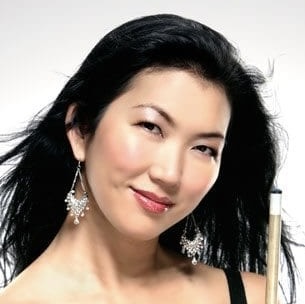
Jeanette Lee did not simply become one of the most famous players in billiards history; she changed what a pool champion could look like, sound like, and mean to the wider world. To sports fans everywhere, she became known as “The Black Widow,” a magnetic champion in black, a fierce competitor with movie-star presence, and one of the rare cue-sports figures whose fame broke far beyond the poolroom. But behind the iconic image is a far deeper story: one of pain, resilience, rebellion, craft, and relentless self-invention.
Born in Brooklyn, New York, on July 9, 1971, to Korean immigrant parents, Lee grew up straddling cultures while trying to find where she belonged. In the stories she shared on Legends of the Cue, she speaks candidly about racism, loneliness, and the emotional toll of feeling like an outsider from an early age. She also describes the values that came from her Korean upbringing: discipline, respect for elders, family obligation, and toughness. Those tensions, between rebellion and duty, would shape much of her life.
A defining challenge came in childhood, when Lee was diagnosed with severe scoliosis and underwent major spinal surgery. The physical pain was immense, but the emotional impact may have been even greater. In the podcast transcripts, she describes how the surgery, body brace, and feelings of isolation darkened her view of herself and the world. Yet those same experiences also forged the stubborn will that later became her trademark. Long before she was a champion, Jeanette Lee was already learning how to endure.
She atte… Read More