

 Apple Podcasts
 Spotify
 Jeanette Lee - Part 5 (Becoming The Black Widow)

In the fifth installment of our conversation with Jeanette Lee, the legend begins to take shape. This is the chapter where the player becomes the persona, and Jeanette explains how “The Black Widow” was born — not as a carefully engineered brand at first, but as an image, an impression, and eventually an identity that captured the imagination of fans far beyond the pool world. Her reaction to the nickname is as funny as it is revealing, and the story behind it is pure Jeanette: skeptical, sharp, and unforgettable.
Jeanette also talks about trying to bring more women into the game, offering free instruction during ladies’ nights, and doing what she could to make pool more welcoming and visible. She recounts memorable moments around Gabe’s room, Willie Mosconi, promotional photos, and the strange experience of seeing herself presented to the public in a new way. Bit by bit, the image grew — and so did the opportunity.
But as this episode makes clear, the fame was built on far more than image. Underneath the nickname was enormous sacrifice, pain, determination, and work. By the end of this fifth chapter of her life story, what comes through most powerfully is not just why Jeanette Lee became famous, but why she mattered. She changed how people saw pool, she changed who they imagined could represent it, and she did it with style, grit, honesty, and heart.
Give Allison, Mark & Mike some feedback via Text.
Follow our show and/or leave a review/rating on:
Our website: https://www.legendsofthecue.com
Apple Podcasts: https://podcasts.apple.com/us/podcast/legends-of-the-cue/id1820520463
Spotify: https://open.spotify.com/show/4Za0IMh2SeNaWEGUHaVcy1
Music by Lyrium.
About
"Legends of the Cue" is a cue sports history podcast featuring interviews with Hall of Fame members, world champions, and influential figures from across the world of cue sports—including pocket billiards, snooker, and carom disciplines such as three-cushion billiards. We highlight the people, places, and moments that have shaped the game—celebrating iconic players, memorable events, historic venues, and the brands that helped define generations of play. With a focus on the positive spirit of the sport, our goal is to create a rich, engaging, and timeless archive of stories that fans can enjoy now and for years to come.
Co-hosted by WPA and BCA Hall of Fame member Allison Fisher and Mosconi Cup player and captain Mark Wilson, Legends of the Cue brings these stories to life—told in the voices of the game’s greatest figures.
Join Allison, Mark and Mike Gonzalez for “Legends of the Cu...
Jeanette Lee
And this was Ava's debut in the New York Times magazine.
Mike Gonzalez
Right.
Jeanette Lee
And so I'm in it. I don't remember how I got to see it, but I was devastated because in the article, it it talks about the tournament, you know, it shows all these beautiful pictures. You're like, wow, and then it gets to my part. And the photo has me against a wall, and I was there. But the way the photo came out, I'm standing there with a serious look, with the cue, you know, holding it in front of me, but just looking like a miserable, mean person. Just and the lighting was very dark with this orange tint, which I don't remember our background being like that, and it definitely wasn't that dark. So somehow they edit it and cast it in a way that was like this. Well, the way they described me was this bad. Okay, before I tell you when it came out, the last thing I was going to tell you is when we're I'm playing matches and I end up losing and getting my second loss to Joanne Mason, with that part point was engaged, but not Mason Parker yet. And we play, we battled. Now I'm familiar with Joanne because in New York, in our we have local weekly tournaments, but there were also these ladies' regional tours that was going on. Every once in a while she'd play in it and win it. So she was a great player. I knew that she, you know, everywhere she went, she carried these eight by ten photos in a frame. Hi, I'm Joanne. You know, she's very bubbly and girly, and would just give her photo framed and signed, you know, make a big display, and they would end up putting it on their wall. And I was like, okay, someone that's definitely promoting herself. And funny, it was this little thing, but at some point I put down my chalk and I just kind of slide it, and she's like, I'm only telling you this because I'll probably be retired or dead by the time you're actually a pro. That's literally what she said. I can believe that though, from her. And she said, uh, she said, I'm only telling this, but professionals don't just put the chalk down. We place it like this, and she takes it, chalks up, and places it. And I guess however way I was chalking up and put it down was not professional. So she was gonna help me out. And anyway, I was just anyway. So that was my first, you know, real experience around a pro. And yeah. But every time we had an event, so so anyway, in this tournament, right, so in the tournament, I end up drawing Joanne. I don't know if she watched it or not. I didn't get to that. We did the interview, I saw her around, I didn't suspect anything or think anything. But I end up playing her, and it goes hill hill. I was down eight to two. She just played great. But I came back and made it eight, eight, and then I broke dry, meaning I broke, nothing went in, and she ran out. So I lose nine, eight, but it was, I can't feel bad about, of course, you know, every miss is heartbreaking. Oh, I could have won, shoulda, woulda. But I was still proud of the fact that I went nine to eight with the number two ranked player in the world, you know, and she was known as this great, great player. So it was a big deal that I went nine-eight with her. I never think about it, talk about the article comes out. And in it is, you know, then Jeanette Lee, the self-proclaimed black widow with her leather and lace and her fake Bond, bad Bond girl image, self-stylized bad Bond girl image. And it was something to the effect of, like, with all these different things that I'm trying to do, I still couldn't get there and managed to get trounced. Use the word trounced, nine to two against Joanne Mason Parker, basically saying something I can't remember, but basically, who, you know, quickly put her in her place. You know, something like that. And I'm just, it's in my head, bad Bond girl. I remember that word for word, leather and lace. I didn't own any leather or lace. And I've never liked lace. And what'd you say? Yet. Yes, yet, yes. Well, I for me, again, where I was financially, I didn't think I was ever, I didn't even have plans to buy leather. That just was not on my radar at all. Clothes or fashion, I just didn't have a good self-image at all. Which I know is hard to believe, but if you knew me, I I really did not want to think about or focus on. It was just ponytailed, tank top, black jeans, go play pool, be comfortable. That's it. And yeah, bad bomb girl, leather and lace, trounce, who still enjoyed her favorite cocktail of choice, The Mudslide.
Mike Gonzalez
At the bar, yeah.
Jeanette Lee
Because she's like, try that. You know, I said, no, that that's what I was trying to get at when I gave you that Carrie Hartsville story. She said, try this, you know, have a drink. And I was like, no. And she's like, well, try this. You'll like it. And I said, no, I don't want to drink. And she's like, at least taste it, because you're gonna want it someday. This is my favorite, whatever. And I was like, oh, so I taste it. And I was like, oh, it is good. It tastes like a chocolate milkshake. All right, listen, I'm doing this interview. Okay, and I hand it back to her. The article made me sound like an alcoholic, you know, or something. I mean, not literally, I guess to that point, but it was, you know, sitting back with her cocktail of choice, and you see this picture of me, like, you know, with this dark cat, the whole thing, like all these other pictures were colorful professional players, and then they have an image of me with like this orange background with black, you know, it fades to black out. It's just very dark cast, shadows everywhere. It was a terrible picture. I wasn't even like looking at happy or nice or pretty, but just someone that looked miserable, you know, just angry. That the way that it was, the photo was shown was in because the the actual we were in the pool room, so the actual background wasn't the way that it looked in the photo, if you know what I mean. It just was a very dark, like dismal, whatever. And then it's you know, saying leather and lace. And I was like, I'm not even wearing leather and lace. And it was like a black suit who's very conservative, you know, and the shirt was all the way up to here. So from the turtleneck neck to right where where this is, which was well above anything, was sheer, but I had a jacket on, so only this part was sheer, which I still wouldn't call lace because I never liked lace. Now we're sometimes again underneath something, but it was terrible. I couldn't even show my mom, which she ended up seeing, but traumatized you this article. Oh, I remember her name. I remember. Well, it was the thing that put me on the map. I mean, her on the map, but also me. Yeah. Otherwise, why would I be in the and now I'm in Pull Billiard magazine, now I'm in Billiards Digest.
Allison Fisher
Well, that's the article that inspired everything, really. You've got to look at it like that. That word trounced really got you going.
Jeanette Lee
When I I lost nine-eight, but apparently she must have only watched to eight two and assumed I lost nine to two. No, that was at one of the regional tournaments, but it prepared me. It prepared me for the chalk.
Allison Fisher
For that moment, for that moment to place the chalk.
Jeanette Lee
That was critical at that point.
Mike Gonzalez
So, Jeanette, I think it's fair to say that uh our listeners have the idea that you weren't yet too crazy about the moniker, and and uh that comes through loud and clear. So, when did you transition from you are the black widow to I am the black widow?
Jeanette Lee
Yeah, that's an interesting question because I I'd have to think back because I pretty much I certainly never called myself Black Widow, announced my name as the Black Widow, volunteered my nickname in any interviews. There was never any of that. But the way that they had gotten it, it was sometime during the weekend. It was like she was digging, but again, it was as far as I was concerned, not on camera, not part of the interview. You know, everything it was so innocent from my perspective. You know, I mean, I learned a lot from that interview about what people can do and with no shame at all. She even had the interview at some point, she's like, Did you like the interview? And I was like literally just imagining myself like psycho. And you said, Yeah, it was lovely. Because I'm I'm, you know, as far as I'm concerned, I was up and coming. Something like this could make a big difference, you know? And I didn't know anything about getting sponsors at the time of this magazine. My very second event, I was invited, or I heard, I wasn't invited, I was heard about the Willards Open. It was in St. Charles, Illinois.
Mike Gonzalez
Pheasant Run, maybe? Was it at Pheasant Run?
Jeanette Lee
Yeah, actually, it was. But I I never heard of it. Or again, I was not in that world. I just played in this one pool room and then go play in weekly tournaments. But well, there's 96 of the, the way they put it, 96 of the top players in the world. So I'm playing in it. I come in third place. You know, I lose to Lord John Jones. Third place out of 96. This is my second pro event ever. And I think by the by that finish, it started turning heads, people started talking. I mean, again, my rise was literally what people would call, which I would agree was it was meteoric. And it I don't mean to sound to brag or anything, but it was it was that quick. So it gained a lot of attention because it's we have a lot of players that come in that's at that 24 to 32 skill ranking skill level, you know, that you know, pretty good, but not really. But for them to actually make it to the top 16 from that, a lot of our players they stay around there and they just keep coming for years, not making money. I don't understand it, but it's it's not usually that quick for someone to come from nowhere and then boom, you know, come in third place in a tournament. Someone had seen me somewhere, you know. That's the kind of thinking is if you see someone that good, they, you know, more people are curious. But normally you've been in the industry in the world somewhat, but I wasn't. And I think it was I think it was the magazine and then me coming in there. And I remember that one because that one I had somehow done well. I started gambling. All I could afford was either playing for table time, which saved me a lot of money because I was spending in New York, it was like $16 an hour. Yeah, to really see that it wasn't a flashing pen. I'm I I could play and I because people were curious, what's this girl who'd never heard of doing in this major article? Such a big piece for the industry. It got Ava on the David Letterman show, it got her on this. She was doing a tour in Australia, doing all these things from this article. Who's this nobody that's coming and getting all this attention? What has she done to deserve it? Uh, I heard Flash in the Pan, you know, I heard that, well, some mean things, you know, is using like sex uh work my way up to the top and get-I'm like, pretty doesn't make the nine ball go in. I'm I'm playing, I'm practicing, I'm I'm earning this. Like, you know, people are saying this thing, and it was confusing because at that time, again, not wearing makeup, not really looking at I just always compared myself to my sister, and yeah, so it was just all just stupid as far as I was concerned. So the article comes out, that happened. So for me, really bad experience, you know, just with the WPBA, everyone, that first event, everyone was friendly enough. Nobody was warm, there were a lot of clicks, but that's to be expected. I didn't know what to expect anyway. I didn't think of it negatively. But every event after that, like at Pheasant Run, you know, I was just playing. But I think some of the women were like, how did she get in that article? What did she do to get in that that big article? Because there were only 12-page spread, and there were about 12 photos, but all of them were of the top best men, and then there's this chick, you know, and the picture again doesn't look friendly, doesn't whatever. And this tournament, I didn't actually ask Gabe for his support on this, which I guess I could have, but this one I saved up for, knew it, and I went and bought my first peach button-down blouse completed khaki slack dress slacks. I wanted to fit in. I just I just wanted to be accepted. I wanted to fit in, and I was so uncomfortable. I felt like I was in a straitjacket. I just didn't feel hungry and loose. I felt like I had to be appropriate at all times. Like I was very self-conscious because someone said something about during a match, like I had I was hot and I'd like flipped my hair and whatever, but they were saying like I was doing it intentionally, like for the match to distract or to do whatever. And I'm like, what no? And I wouldn't move when someone's like playing or do you know, I would not do that intentionally, if anything, but I must have done it and not been paying attention because I did it and people were talking about it. So I'm already like hearing these things, and for me, what a dream to be able to play like cool was my world, it was my passion, it was my happy place. And I can't even get accepted there, you know, and here I'm not competing with my sister or anybody else. It's you put in the work, you get what you put in. You know, there's no you don't get lucky to get to a ranking, you earn it. Like I loved how simple that was, you know, and that it didn't have to be about any of that. And like I could feel it, I could feel all the doors closing in. Like I just got there. I just got there, I just got to the WP, like and then they're saying things about that, and I got lucky to win. What am I doing here? Anyway, right after that, I was in a horrible car accident. Based on coming around the bend on the highway, and I got I guess there were two cars kind of like into each other, so when we came around the bend, it was storm, it was the kind of storm where you have to look at your headlights to see the dotted lines. Like you couldn't see the car in front of you. And I guess we smashed right into it, and but there was nowhere to go, and then we got hit again because the cars were like hitting us and bouncing off kind of thing. And Greg, my boyfriend at the time, was took off his seatbelt and was trying to get me out. But as he opened the door, another car came and like ripped the door off and snatched, he broke his leg. Thankfully, only in one place. But anyway, he then had to run to get help because he couldn't get on the other side. We didn't know what was coming. So I end up getting hit six times, trapped in that car. And it really messed me up mentally.
Mark Wilson
Mr.
Jeanette Lee
McCorreck, I play in Willard's, and just those two events coming in 17th and third. Suddenly I'm on tour. I I'm ranked high enough from that that it put me at like 28th in the world. So now I get automatic spots. I'm not having to win state tournaments to get in. So I can play in whatever the next event was. And during this period, I was not involved with it, of course. I was an amateur, but during this period, I guess the WPBA and the MPBA, the Men's Professional Beard Association, the Women's Professional Build Association, were working towards having the PBT, the Pro Billiards Tour, which would include be the umbrella over those two, but then it kind of blew up. So then the women split off from them and decided to have their own tour. And so when I did the WPB Nationals at Row Mines in Milwaukee, Wisconsin, and then I do Willard's, I don't remember which tournaments I started playing in, but I started traveling and going to oh, I remember, after Willard's, this was key. I could qualify to play in these things, but I couldn't afford it. And so it was at Willard's that I met John Lewis, who was this just very nice man, and I must have stood out, or maybe people were talking because I was in that New York Times article, and I was doing well in the tournament. I kept winning, I couldn't believe it. I was like, this is awesome, I can compete, you know, because I didn't have anything to I had only seen the men play mainly in New York, and the acustats videos, I was getting all the men's things. I don't know why I never got a women's. I think I just didn't even think of it. But I was getting like Earl Strickland versus Mike Siegel and you know, like these great players, Jim Redby versus Kim Davenport, whatever. And he's the one that told me about something called the BCA trade show. Because I was telling him my predicament, you know, after this, he's the one that told me about BCA and that I can go there and get sponsors. And he's also the per person that told me to, because they came in third, he was like, you have to buy something nice. Every time you have a good finish, you have to buy something like, and I was like, Well, I'll go shopping. He was like, No, one thing that's a total splurge for that, and that you're gonna keep, that you're gonna value, and you're gonna do it every single time till eventually your entire home is has memories of great accomplishments. Like, oh, that these shoes, like these, I bought these like $300 boots, which was insane to spend $300 on a pair of boots, but they were like the coolest boots ever, ever, ever. And I bought that, and that was when I won the US Open. And so all of my top finishes, I started getting things, and then eventually I only got things when I'd win win a tournament. I'd buy myself, you know, a nice purse or just something that was totally splurgy. But anyway, I I remember saving up the money for the airfare in the hotel. And I would think now I must have been terrified, but I don't actually remember being terrified. I remember being on a mission. This is my goal. I'm gonna save up money. I looked in the white pages, and well, originally the yellow pages, because I thought you'd find it there, but you find a resume writer in the white pages, and I paid, I brought the little New York Post clippings and the daily news clippings that because when they did that Hard Beach Boiler Club Grand Opening, they had press there. Some of these events there were press, and some of these events I stood out because I was one of the only women playing in all these men's tournaments. So they'd do little write-ups, and I brought it all to the resume writer. I was like, Can you make me some kind of resume with this? And you know, I was somebody pro so how much, you know, I won this little tournament, this little tournament, because I'd already started playing in a lot of the women's regional events there in New York City. Don Hopkins or Muren at the time had something called the All About Pool Tour, and we also had the Tri-State Tour. And so they were mainly men's events, but because of her and several other people, they started having these women's only events, and I was going and I was winning them. If I didn't, it was usually to Don Hopkins or Joanne Mason Parker. They were like my stronger, I wasn't as good as them yet. And aside from them was Billy Billings and Fran Krimy, which I had kind of edged them out by this point, you know, improvement, which they did not like at all.
Mike Gonzalez
But so you paid the resume writer $30.
Jeanette Lee
Yep. And there was a guy at the pool room at Amsterdam who was a known professional photographer. His name is San Stan Schaefer, and I learned that he's actually world renowned. He has like this beautiful coffee book full of like images of Marilyn Monroe and just all. These Hollywood and all he does all the Victoria's Secret photo shoots and all this other stuff.
Mike Gonzalez
And you've got this cool black jacket photo, right?
Jeanette Lee
Yep. He Stan is the one that did that one as well. But that was not expected. We were actually going to eat, and he always had his camera with him. And we were going out into the street, and he was like, Hold on a second, and he took this big leather jacket off and said, put this on, and like and he's like, gave me a rubber band and pulled your hair back. And I had a t-shirt and jeans on, like a Amsterdam Bird Club t-shirt on, and he just stopped traffic and out of his pocket, he tossed me a nine ball, and he's like, throw this up in the air and do that. And since then, everyone said that is the best poster of me ever. Because it's just this edgy kid just going for it. So I liked it. Anyway, and I had no makeup on. I was just I was just a kid, but it was a it's a cool picture. Anyway.
Mike Gonzalez
What did you do armed with that resume and that photo?
Jeanette Lee
Yeah, so he ended up whenever he did a photo shoot. One of the times he called me and said, Can you get here by this time at this place? And then at at a big photo shoot, and then he'd ask the makeup artist to do me, and whenever there was a break doing whatever, he'd have me come and he'd take a bitch pictures. And that's what I had. I had a photo and a resume, and I got my dressed up, whatever. I wore this white, just trying to fit in, right? So I wasn't getting black, I was trying to wear like business-y attire, and I clip-clopped wearing heels, which I normally never wear because I'm always in sneakers, ready to run, you know, a thousand balls. And yeah, I just went to every single booth. And I didn't know since then I learned that's what made me stand out. Is they've never seen a single pro ever do that. Go literally from booth to booth and talk to and seek out every single person, do the research and find out exactly how they work, what makes them tick, what are the things that matter? How can I do a show at this place? Can I do this? Can I sell this? What can I do? I'm gonna be, you know, number one, I'm gonna be the best, and I just need your support. And by the time I was done negotiating, getting all the business cards, it took me about two weeks to close all the deals. And I was I had negotiated over $28,500 in sponsorship plus full medical life and dental.
Mike Gonzalez
Which was big, right? Because you you you couldn't get you probably couldn't get insurance with your conditions at that time, right?
Jeanette Lee
Exactly. I I was only on Cobra for a short time, but then after that, with my health history, no one would insure me. So everything would come out of pocket. And by working out with Imperial, I was able to convince them to put me in as an employee so then I could get under their group insurance. So that was a huge deal to my mom.
Mike Gonzalez
Oh, yeah.
Jeanette Lee
Because my illnesses were always a huge part of my life, and I wasn't really thinking the impact financially it had on her. And so for me to actually have medical insurance with my medical history was a huge deal. She I think she was happier about that than the 28,500. And for me, it was a lot, but it was like all that money is just going to tournaments. Like I wouldn't touch that money. I would try to earn enough locally gambling and side jobs to live on, but that was going to be used to play and you know, travel and play in whatever pro tournaments that I could. But before that trade show, I'd only been to the WPBA Nationals and Willard's, where I met him, and that was like in April or May, and the trade show was in July, I think. So it was just like a month and a half later that I had to save that money and go. And I just convinced them all, and years later, you know, you become friends with everyone in the industry, and they're like, No, you were on a mission, and we'd never seen a pro just try to act so like it made them want to sponsor. They're like, they're so used to pros just coming up, asking for a handout, thinking that they're entitled because they're a great player, and they didn't understand this is what I can do for you. You know, how can I make this work for you so that this is a long-lasting relationship? How can I underpromise and over-deliver? And I think part of that was a little natural in me, but also that started me really learning about marketing and speaking publicly because I wanted to be of value to them, but I had no skills. I mean, I wasn't a good enough, I wasn't a great player. I was good enough to do some trick shots, but I didn't know trick shots because I didn't care about trick shots. I wanted to be a great player. But I learned that if I want to be of value to them, I have to be able to speak well. I have to be able to sell, you know, whatever weirds and product we're promoting, or I'm not going to be able to have the sponsorship. So that's where I got a lot of my experience, which then later helped me build my brand. But what sparked it was wanting to get sponsors so they didn't have to work a job so I could just play pool all the time. Oh, you know, it was like that was that was the dream. And it was like realizing the dream. If I could get sponsors, that's where he gave me the idea. If you could get sponsors' endorsements, you're just gonna get free money. And I was like, that's it. And they're like, Yeah, and and then that will cover your expenses. And I was just like, oh my God. So I was willing to do whatever work it took to learn how to do that so that, and with that, with Imperial being my biggest of them all, because it was 28-5, because there was a lot of like $300 and $500 and a thousand sponsors, and the way I negotiate was how much money I wanted a month.
Mike Gonzalez
You know, and so are we in are we in 1993? Is that kind of the period we're in right now?
Jeanette Lee
Yeah, by the time 93 the classic tour began in 1993, the full out WPBA, separate from the M MPBA and the PBT on its own, it stood and had its first classic tour. So I guess I'm a founding part of the WPBA's classic tour thing was in '93. And but going into that, I'd already had full sponsorship. And trying to have a little money to afford to buy some clothes, but again, just always being an outcast, always being bullied. I never had confidence in my style or how I dressed. It was just easier to just wear black because then I don't have to worry about matching, I don't have to worry about I I can just blend in the background and disappear. Is the way that it felt. I felt like if I'm wearing black, I'm not drawing any attention to myself. Back in the day, you wouldn't see me with anything that like sparkled or stripes or any anything that would cause you to look at me. And I didn't know how to wear makeup, I didn't do any of that. It was becoming number one and and getting more interviews and all these things, and having professionals do my makeup is where I learned to do makeup. But until then, I mean, my parents never bought me makeup, and I never saw the reason to wear makeup because I'm just gonna be a pool player, you know. So all the things that actually became the Black Widow brand, it developed on its own as I went. I didn't come on knowing how to dress, knowing how to do makeup, knowing how to speak. It was all learned from my passion to be the best pool player and to be free to just play pool. But I ended up being good at negotiations and marketing doing stuff. But I was thinking to myself, I'm doing this so that I don't have to work and I could just play pool. But I spent a lot of time on the phone. So it actually still was a job. You know, it's it's a job having to negotiate and having to call and trying to make deals and put together proposals and do the research, you know, on the companies and be someone that they're gonna want to repeat, have you again and again. And and there was just a lot of studying. There's a lot of things that I I didn't just naturally know. And I think people sometimes it bothers me a little bit, but not too much, how little credit, oh well, she just was naturally have this, and it's all because she's pretty. And I'm like, you don't know how much work was involved in actually learning how to do all this. And I mean, I would get invited to, you know, sometimes 18 to 30 of these celebrity billiard events, you know, where you're flying to LA or flying to Chicago to doing this thing with all these celebrities. And I didn't care about celebrities, and I didn't care about doing all that, but I cared about my sponsors so they could just play pool. And so I would do that, but also I learned that's an opportunity. By the time I went to any of those, I'd come out with 30 to 50 business cards. I mean, I would go through that whole room, and I don't know where I had the courage to do it, but I was so focused on being able to make pool my career, being able to just play pool for a living and not ever have to worry about other jobs. And so that was, you know, driving me to actually work, but it was a lot I I wasn't getting paid. In fact, if I think about it, I don't know that I ever got paid to play in a charity event. I would now, just because I can't play in 50 of them. So, but back then it was the more I'm on TV, the more I do all this other stuff, the more I can make from my sponsors, the more I can just play pool and not worry about it and get them to re-sign. Because just because you get a deal doesn't mean it's gonna last forever. You know, back then, well, even from the beginning, I I wouldn't do a deal with anyone that wasn't a minimum of a three-year contract. I'm I'm saying from the very first go, they would want to do one-year deals, and I'm like, you're not gonna see what I can do for you in one year. You know, I need to know and I need to have the confidence that you can have my back and that this isn't a short-term deal. You're not experimenting on me. I want to feel like you're all in with me because I'm gonna be all in with you. And after the three years, if you don't make them feel like you're giving them value, they will drop you. So it was this ongoing thing that I just had to keep getting more promotion, publicity, more branding, more whatever, so that I could get. So it was really backwards. Just, you know, when I hear people talk about me and how it was all well, she just was natural like this, and she just got it all because she was pretty. There was plenty of pretty girls on the tour, but they didn't win tournaments.
Allison Fisher
You worked really hard, and I've seen it, I've witnessed it at events where I watch her go around getting all these business cards. I'm like, wow. It takes a lot to do that, but she's she's working it, and you work really hard to do what you've done. Thank you.
Jeanette Lee
Thank you. But I feel like a lot of people they don't they don't realize that, they just think, oh, she's pretty, so everything's just fallen in her lab. And it could be a compliment, but for me, it was always like insulting how hard I really did work to get there. There's plenty of pretty girls that play pool that didn't become a brand. You gotta also be able to back it up and win. You still gotta be able to do that and be willing to fly across the nation, all these celebrities and where there was a ton of press. Because the the business cars weren't just about getting exhibitions. It was also about I'd meet somebody from HBO Real Sports and oh, nice to meet you. And I'm like, well, did you know? Let me tell you a little bit about my story. It'd be really cool, and I would have to convince them, but I would. I would be able to convince them with my story that this is something worth doing, and this is something that I could then go to my sponsor and go, look, this is what I'm doing. Okay, she's really we're we're we're betting on the right horse. You know what I mean? We're betting on the right horse. And that was that was really my mentality because outside of doing it for sponsors, I didn't see the value in becoming famous because it had nothing to do with me getting better at pool. It didn't help me get better at pool, and that's all I cared about was in terms of what I cared about, was getting better at pool. But the working thing you you gotta do because pool alone at that time, and maybe even today, you can't make enough just playing pool without sponsors. You you're just not gonna make enough. There's too much talent, it's too inconsistent, you just have to be first, second, or third to even make consistent money because all the others are kind of up and down, you know, a little bit more, and you can't bank on the money because of the expenses. Expenses are unless you're willing to room with three or four people, which I did back then, but I I wouldn't do it now.
Allison Fisher
Thank you for listening to another episode of Legend of the Care. If you like what you care, wherever you listen to a podcast include five, subscribe and break the four.
Pool Professional
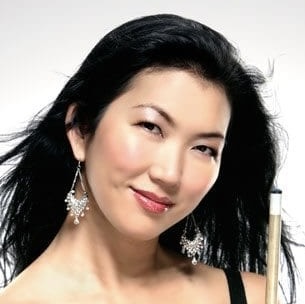
Jeanette Lee did not simply become one of the most famous players in billiards history; she changed what a pool champion could look like, sound like, and mean to the wider world. To sports fans everywhere, she became known as “The Black Widow,” a magnetic champion in black, a fierce competitor with movie-star presence, and one of the rare cue-sports figures whose fame broke far beyond the poolroom. But behind the iconic image is a far deeper story: one of pain, resilience, rebellion, craft, and relentless self-invention.
Born in Brooklyn, New York, on July 9, 1971, to Korean immigrant parents, Lee grew up straddling cultures while trying to find where she belonged. In the stories she shared on Legends of the Cue, she speaks candidly about racism, loneliness, and the emotional toll of feeling like an outsider from an early age. She also describes the values that came from her Korean upbringing: discipline, respect for elders, family obligation, and toughness. Those tensions, between rebellion and duty, would shape much of her life.
A defining challenge came in childhood, when Lee was diagnosed with severe scoliosis and underwent major spinal surgery. The physical pain was immense, but the emotional impact may have been even greater. In the podcast transcripts, she describes how the surgery, body brace, and feelings of isolation darkened her view of herself and the world. Yet those same experiences also forged the stubborn will that later became her trademark. Long before she was a champion, Jeanette Lee was already learning how to endure.
She atte… Read More