

 Apple Podcasts
 Spotify
 Jeanette Lee - Part 6 (The WPBA, 1994 Breakthrough, and the First Mosconi Cup)
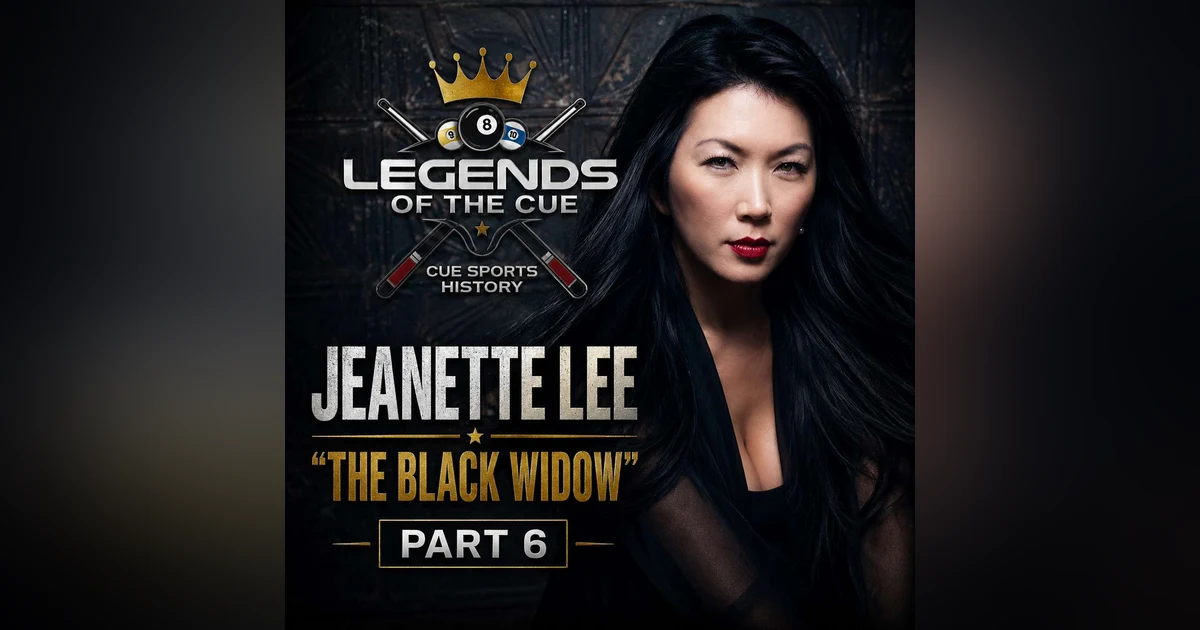

In this sixth episode of our interview, Hall of Fame pool legend Jeanette “The Black Widow” Lee takes us inside one of the most important turning points of her career: the moment she arrived on the professional scene and changed women’s pool forever. Jeanette reflects on the early years of the WPBA, the tensions she felt as a rising star, and the unforgettable “Yertle the Turtle” story that revealed just how unwelcome she sometimes felt among her peers.
But if the reception was cold, her game was anything but. Jeanette walks us through her remarkable 1994 season, when she broke through in spectacular fashion with a string of major wins that established her as one of the most dynamic and recognizable players in the sport. She shares what it felt like to go from climbing the rankings to suddenly becoming the player everyone was chasing.
The conversation also explores the inaugural Mosconi Cup, where Jeanette represented Team USA in one of pool’s most historic events. She recalls the trip to England, the unusual format, the atmosphere, the personalities involved, and the significance of women being part of that first edition. Along the way, she offers honest insight into confidence, competitiveness, and the sacrifices required to succeed at the highest level.
This is a revealing, funny, and deeply candid chapter in Jeanette Lee’s story — one that captures the grit, talent, and determination that powered her rise from breakout contender to global star. For fans of pool history, the WPBA, and the early Mosconi Cup years, this is an episode you won’t want to miss.
Give Allison, Mark & Mike some feedback via Text.
Follow our show and/or leave a review/rating on:
Our website: https://www.legendsofthecue.com
Apple Podcasts: https://podcasts.apple.com/us/podcast/legends-of-the-cue/id1820520463
Spotify: https://open.spotify.com/show/4Za0IMh2SeNaWEGUHaVcy1
Music by Lyrium.
About
"Legends of the Cue" is a cue sports history podcast featuring interviews with Hall of Fame members, world champions, and influential figures from across the world of cue sports—including pocket billiards, snooker, and carom disciplines such as three-cushion billiards. We highlight the people, places, and moments that have shaped the game—celebrating iconic players, memorable events, historic venues, and the brands that helped define generations of play. With a focus on the positive spirit of the sport, our goal is to create a rich, engaging, and timeless archive of stories that fans can enjoy now and for years to come.
Co-hosted by WPA and BCA Hall of Fame member Allison Fisher and Mosconi Cup player and captain Mark Wilson, Legends of the Cue brings these stories to life—told in the voices of the game’s greatest figures.
Join Allison, Mark and Mike Gonzalez for “Legends of the Cu...
Mike Gonzalez
You talked about how as you were coming on the circuit uh you you found the need to promote yourself and work the trade shows and create a brand and hire a resume writer and so forth. So anyway, you you end up turning pro in 1993. And uh I suppose from what you've been telling us, uh you maybe didn't feel like just one of the girls day one. No. So I remember in your memoir, The Black Widow, a memoir with Dana Benbau. And you reflected back on that time joining the tour when you didn't feel quite as welcome as you would have liked. You had a little story about Yurtle the Turtle.
Jeanette Lee
Yeah, so I remember when I first got on the tour, it was that Christmas, I get a gift in the mail, and it was a gift-wrapped book. And it said, um Saw this book and was thinking of you, and uh thought you could appreciate it since you have so much in common or something like that. Hugs her name. And I opened up the book and it's a Dr. Seuss Yurtle the Turtle book, which I'd never seen. But the story as I'm reading is this little fish who's with a group of um turtles, which are with a group of other turtles, and he wanted to be the biggest, the best, the most powerful turtle. So he would make other turtles pile up so he could climb up on top of them because he felt like he could be the rule, all he could see. So he needed to keep stepping and climbing on top of all these other turtles to be able to be ruler of more and bigger or something. I I don't remember word for word, until towards the end of the book, he got so tall, he was so desperate to see so much that he toppled down to the ground, face in the mud, all gross, poor turtle, full of mud, and learned that you know, if you keep stepping on people, you know, on your way up, eventually you're gonna cry. Something like that. And that was that was the end of the story.
Mike Gonzalez
And I'm like, Welcome to the WPBA.
Jeanette Lee
Wow.
Mike Gonzalez
Yeah.
Jeanette Lee
And this is this is after three or four times that I was called by the other women on the tour to fight for dress code, fight for not expanding from 48 to 64, fight for, and each time no one had my back. And each time I was asked to help. And it's like it was time, and that was the last time after that. I was basically done. Anytime anyone asked me to join the board, get well, I was actually trying to, even at that time, we were working on working with anyway, a couple major companies to try to build something new. And I was like, because I really felt like the WPBA was dying. The top women weren't making money, we weren't being packaged properly, the women needed to be blown up. We had stars, they were being underutilized. But I was so tired of being alone, and I was done after that. Yeah.
Mike Gonzalez
Well, you certainly weren't having to climb on anybody's back when uh you broke through in a in a big way. First of all, runner-up of the 1993 U.S. Open Nine Ball Championship, and then boom, 1994, you win the first event out of the box at the Baltimore Billiard Classic, and you kept winning and winning.
Jeanette Lee
Yeah, it was uh it was a lot of fun because I I'd worked hard. I had a couple of really good finishes. My second pro event ever, I came in third place out of 96. And then I remember going to the World Championship the month before. And at that point, it had been about a year, just a little over a year, and now my finishes went from being 17th through 24th to being fifth, sixth, fourth, seventh, eighth, fifth, sixth. I was creeping, and then finally I get into the finals, but it was not in America, it was at the world championship. My 11th place ranking, again, I was kind of going that direction, had given me enough points to be invited to the world championship in Konigsminster, Germany. And I went and I thought, all right, all the women, you know, on the airplane were at the hotel, you know, maybe this will be a bonding moment or something like that. And I go there and every match, a handful of women made a point to watch the match and boo me. Even when I was playing other countries, like I'd play other Europeans, and then later on I'd be at the bar because I was dating uh Bobby Hunter at the time, and they're like, What's it? Why are your own countrymen booting against you? And I'm like, they hate me. And they're like, why? And I'm like, I'm still trying to find out since I haven't even had a conversation with them yet. Like, I don't even know these people, and they're just so so that was my experience. They would boo me, and then I ended up playing Lori John Jones in the final. I had like a hanging eight ball, but it was too thin to cut. And I I kept trying to like clip it with inside, do one of those curvy things, but I just wasn't very experienced. You know, I was a good shot maker and all that, but I could have just kicked it one rail. It was a huge ball kicking one rail. But I kept like, I was so clean. If I could just cut it a little bit more, and I ended up losing the match, having to play some safety because I knew I wasn't gonna kick it in. And later on, they're like, why don't you just let I'm like, oh my God. Because right there, this is the finals of the world championship. So it's me and Lori John. Lori John was one number one when I was coming on, right? Vivian was right there at second. And so I was starting to beat her and Laurie John uh Lori John and Ava and Vivian. I don't think Ava was, at any way, she was somewhere in the top six or something like that. But anyway, like I was getting all this heat, but I was also getting really frustrated, getting tired of just it was just felt very unfriendly, unfair, very disappointing. And I'm at this match, and every time like Lori John would do something, they'd be, yeah. And then every time I wouldn't, it would either be silence or it'd be like, boo, and their wooden lips wouldn't move, but their mouth was like ridiculous. Like they were so unsubtle. Um but I just felt like I felt like they were so shameless because even you couldn't even pretend to be. There's two Americans in the finals, you know what I mean? It was that petty, but getting in the finals and going hill to hill, really, it went down to that one shot where the eight ball was kind of hanging. But so it was very, very painful, but it was a great lesson learned. However, it did a lot for my confidence because you know, you're always right there, but coming in second means you're a breath away, you know. So then the following month is when I I turned it on and I just started really trusting myself a little bit more, and it paid off. And I think five months later I was number one.
Mike Gonzalez
Well, you win the Baltimore Billiard Classic, uh opening up the season. The next tournament you go back to back, win the Cats on, and then you you go to San Francisco, win the BCA Classic, you go to the U.S. Open Nine Ball Championships and win. And then you finish the season with the Connolly PBA National Championship. So what are some of your best memories from 1994?
Jeanette Lee
Best memories. That was probably one of my most painful years just because of the drama. Unfortunately, that's what I tend to remember. Let's talk about the good stuff. Yeah, I'm I'm having to think about it.
Allison Fisher
Hoisting that trophy.
Jeanette Lee
I think winning it, it's just before that year I had watched, including you, Allison, when you first came. But I had watched when somebody wins, usually the other women will watch, maybe they'll hang around, maybe they'll all go get something to eat. Uh to this day I've never been invited to eat with anyone after a win. To this day. Um, but back then I was thinking, oh, maybe if I win I'll get accepted, you know, or something like that. But nothing changed. But it was hard because I'd already seen what happens to the champion. You know, they get trophies, they get uh flowers, they get pictures taken, all the media, and then a group of people, they all go eat, groups of people. Usually there's one or two restaurants, not like there's a million of them. So often they're in the same place, especially back then they weren't casinos, they were in the host pool room, which had their host restaurants, so we'd eat there, right? And so it it became an even bigger separator as far as I was concerned, because when I was done, by the time I was done in interviews, there were no players waiting for me or left or whatever, until I built this really close friendship with Helena, which case she was there. And I did get invited by her. It's just I think she wanted to bridge the gap and I didn't want to go somewhere I was hated. So I tried a few times, but clearly I wasn't wanted there, so I didn't go. But yeah, it was just more painful than it was. The win itself was exciting. Yeah. But the things that happened after never happened for me. And then I would watch new people come in, do the same thing, win, get all the attention, get the support, get the dinners, get the hangouts, get the everything. And it didn't matter. And it didn't matter when they even asked me to fight for them, and I did successfully or not, which usually successfully nothing changed in terms of the way I just never became a part of anything there.
Mike Gonzalez
Well, now you're gonna make me feel guilty, Jeanette.
Jeanette Lee
Why? It is what it is.
Mike Gonzalez
You can't people after you trounced me playing nine ball at the International in December. I probably should have uh gone out and celebrated with you that big victory of yours.
Allison Fisher
But she crushed you.
Mike Gonzalez
She felt me really bad and gave me a few pointers on how bad my stroke was, which Mark would have been embarrassed to see me play. But anyway.
Allison Fisher
She didn't know you might, that's all.
Mike Gonzalez
No, I know, I know. And and she barely remembers, but oh, you know who else was with us? 96 pounds of dynamite. You know that fellow that they've they've they've you know because you were involved in making that.
Jeanette Lee
Yeah, we are actually showing the screening this Saturday at my pool room five minutes away. We're doing a whole screening and promoting it. 96 pounds of dynamite.
Mike Gonzalez
Yeah, you played him the game before uh you and I played, actually.
Jeanette Lee
Yeah. Super nice guy. And I I do, I respect his attitude. He he hasn't had his it easy, but with every hit, he he just bounces. He rolls with the punches and he makes no excuses for what he can and can't do. He just goes for it. So I like him and respect him a lot. I'd be I'm proud to be part of the executive director, but I'm I'm proud to be part of Involved with it.
Mike Gonzalez
I hope that's a big success. But back to your record, uh and Mark and Allie, you're probably well aware of this. But just looking at Jeanette's record, I talked about her uh finishing second at the U.S. Open Nine Ball Championship in 93. Of course, she wins in 94, one of the highlight wins of those five wins in 94, and then stuck at 95, stuck at 96. That's a pretty good run in the U.S. Open.
Jeanette Lee
Yeah, and I won, let me see, two U.S. opens, but I also won the WPB nationals that year.
Allison Fisher
And during the year, being named player of the ART by Bullet Digest. Yes, it's sports person of the year.
Mike Gonzalez
And got a chance to compete for the U.S. side in the Moscone Cup, the first Moscone Cup. So here we go. We got four people on the screen, three of which played in the first Moscone Cup.
Jeanette Lee
Yes, yes, yes.
Mike Gonzalez
Talk about that experience.
Jeanette Lee
It was interesting. It was interesting. Getting to go to England, that whole experience was awesome. Uh the food was a little bit more bland than Korean food, I will say, in terms of like spices and things like that. And I remember the people certainly being friendly and it was beautiful. Just it was cool to just do something different. But the tournament itself, understandably, was a bit disorganized because it was their first event. They were just kind of feeling it out, figuring it out. So he would have a bunch of us in a room and go, okay, you two play there and you two play next. Is that right, guys?
Allison Fisher
Yeah, I think so. I found it a little disorganized. Yeah.
Jeanette Lee
Yeah, because there were no scheduled matches. He would start the match, and when as soon as one was open, he'd grab two more people and send them in.
Mike Gonzalez
Interesting.
Jeanette Lee
And then we were winning, the Americans were winning a lot of our matches. It was quite lopsided. And so his idea was to put Vivian and I against the men. So we had extra matches, not just playing the women, but we also played the men. But then we both won all of our matches against the men, also. That was cool. Playing against Steve Davis and Jimmy White, that was a great experience. Just to say, I mean, he wasn't in his prime. I'm not trying to take credit for having beat him, but it was an honor because I really did respect him and I thought he carried himself with just a lot of class and professionalism, very friendly, very likable. And Jimmy, I didn't get to talk to as much, but he was likable, but he's a very different character than Steve Davis. I'll just leave that at that. But but again, both of them were very nice. I was hoping that it to me it seemed like a success, and so much so that he already knew he was going to be doing it again the following year. And the following year he had changed it from two women to one woman. And he had contacted me and Manya Kilhorn. And I take a little bit of I wouldn't say credit, but blame for and I don't know if I had anything to do with it, but I ended up having a kind of private conversation because I was getting 10,000 in appearance way back then, even though it was beginning. If I left the country, I had to be guaranteed a minimum of ten. I don't care what I'm doing, for me to get on a boat and go across the water to anywhere that was my minimum starting, and then we could talk about the rest. But this was London, I hadn't been. Uh and you know, this was a first-time event, but if we're gonna keep doing it, I've just had too many people promise, well, if it's success, then we'll all win, you know, but then it it doesn't always end up that way. You don't know, you'll get invited again, whatever. So I basically said, and he paid us a thousand dollars to be there for the week, to travel to England, London. And I want to be careful because I don't want to disrespect Barry Hearn in any way, because I do respect what he's done for our sport in general. He does whatever his reasoning, whatever he gains or loses out of it, we've benefited from the Moscone Cup, the sport as, you know, it is an exciting event. He's done a lot of great things. So I don't want to take that away from him, but I do think he should. The women are a real thing. Um and what we have is not a novelty act. These women are warriors that have tremendous amount of skill, talent, competitiveness, all of it. And he wanted all men and then just one woman. I simply said that if I'm gonna do it again this time, I would like to get paid my appearance fee. Unless if he'll agree to give everyone some kind of raise, you know, at least two, three thousand dollars, push back on that. And I said, even fifteen hundred, if you'll give everyone just five hundred dollars more to do the same thing, but I think every year we all benefit a little bit, let's all benefit a little bit. So I will not charge my fee if you'll pay everyone five hundred dollars more. And his response to that was to not include the women at all. And I don't know if this was a private conversation, you know, but I don't know if he just decided not to do it, he was investigating anyway, or if it's because of what I said. But I wasn't a jerk about it. I was very professional. I was just kind of laying it out and saying, I think that this is a reasonable ask. If you said no, then I would have had to make a decision if I wanted to be involved or not. But he definitely wanted me involved because I was the number one player at that time. A lot of attention, it would have been great if he's trying to bring America and Europe together you know, to have the top American woman be there as benefits. He wanted me there, but I wasn't I remember you know, you get an instinct about a man, you know, when you meet him. And I knew he wouldn't take well to trying to be strong armed or blackmailed or any kind of negative. It was very respectfully like I would any good business dealer offer. But he said, Okay, well, let me think about that. And then the next thing I knew, he ended up just inviting them. So I don't know if it he didn't seem offended, he didn't talk to me angrily or offended, you know, in any way. The conversation seemed to go fine. But I don't think I've shared that before. Yeah. But it did happen, and for a little while, Munia Kilhorn definitely blamed me. But then years later, she contacted me, and I guess forgetting uh there was nothing much I could do about it.
Mike Gonzalez
I was trying to do something good, but that never I think a lot of pool fans would enjoy having women participate again. I don't know, Mark and Allison, if you've had that sort of feedback over the years, but from my perspective as a just as a spectator, I think it'd be a lot of a lot of fun to have the women as part of it again.
Mark Wilson
It certainly added a lot of dimension to the first Mozconi Cup to have the women in there, then also competing against Steve and Jimmy. And then to have them farewell. It was it was really exciting. And I think, you know, maybe sometimes Jeanette, you felt alienated, but I know you were beloved on our team by everybody.
Jeanette Lee
That was different. It was all men players. Yeah. I was very, very treated very, very well. And Vivian and I always got along because we just we just wanted to go out and have a good time.
Mike Gonzalez
Yeah, and Allie, you were competing with uh Francis on the European side and Francisca Stark from Germany.
Allison Fisher
And I hadn't met I don't think I'd met Francisca up until then, maybe or maybe in 2002, but I didn't really know Francisca either.
Jeanette Lee
And I had never heard of Alison Fisher. I didn't know.
Allison Fisher
No, that was our first meeting actually, was it in Moscone in England?
Jeanette Lee
And I met her as Alison Fisher, but I just saw her as, you know, this blunt, you know, top pro that they had from from England. But I didn't know she was the Allison Fischer. Like I didn't know she was as accomplished as as we did find out. Because I I didn't follow any of that. So I just didn't know. But once I knew it was it was great. But I at that point it was very obvious she wasn't a pool player. Right.
Allison Fisher
I definitely wasn't a pool player. We were kind of thrown in the the snooker players were there because of our names, especially obviously Steve and Jimmy. So they were always put in the Moscone or any pool event because the British public knew them, and any snooker playing public that were watching pool knew those players. So it would help with the ratings. Yeah. Helped with the publicity.
Mark Wilson
Yeah.
Allison Fisher
Yeah.
Mark Wilson
Even today there's only been about 45 players on either side. So you guys are part of that first, you know, 45 people ever to represent their continent or country.
Jeanette Lee
Hey, Mark, why do you think that and nothing against the people that were invited, but of the men, there was Bobby Hunter, you, Lou Batera, Dallas West, Mike Lossy, Paul Gurney.
Mark Wilson
Paul Gurney. Paul Gurney.
Jeanette Lee
The trick shot artist.
Mark Wilson
Dallas West, Lou. Yeah. Right. I think you said Lou Batera.
Jeanette Lee
My my question is at that time, we had Johnny Archer, Nick Varner, Mike Siegel, all of them available. Why do you think those guys weren't at?
Mark Wilson
It was uh well, Johnny wasn't. He came on later, I think. Let's player the decade. So he was just coming up. But we certainly have Varner, Rympy, and Siegel, but I think that they had alienated themselves with I don't know if it's a remnant from the PPPA split-off from the BCA. Because I think the BCA were the people that put together the TPSA. Yeah. Yeah, I think it was more that way. Although I was never privy to how I got involved. I did because I was only number 21 on the tour at that time. So I I don't know how that evolved.
Allison Fisher
Yeah. That's all it is. Some tours were accepted. The BCA do their own thing too, you know.
Jeanette Lee
Because Paul Gurney wasn't even competing on the men's tour, I didn't think. Right. So I just didn't know.
Mark Wilson
Yeah. They think uh I think they thought he was an attraction just because of his popularity with trick shot shows throughout perhaps the world.
Mike Gonzalez
Well, let's let's move on from the Moscone Cup then and and from a great 1994 all-around for Jeanette Lee, who all of a sudden goes from uh you know, uh as you said, Jeanette finishing 5th, 7th, 20th, 2nd, and all of a sudden break through with five wins in 94, uh uh culminating in a Moscone uh uh cup victory in the in the inaugural, which is kind of a cool thing. So uh you're seeing uh a meeting perhaps Allison for if not the first time, one of your first meetings, and and uh she was to come to our shores uh later that next year as you were starting the year number number one. September of ninety five in Charlotte.
Allison Fisher
First tournament. We played, we played I play I lost to Jeanette and Ava in that event. I think my second Jeanette beat me first and then I lost to Ava. And a couple of raw things I didn't really know about got me, but I because I remember the push out. If something to do with the push out when I played you, I think we had a close match, and then and then I lost to Ava, I think nine eight, Hill Hill. I think with you it was nine to seven. I'm not can't quite remember, but it was pretty close. But anyway, they kicked me, kicked me upside down, and then then I was there in Charlotte for a week and then came back and we played in the final of the Orlando tournament the following week at the recreational factory warehouse tournament.
Jeanette Lee
Yeah, yeah. Now that I remember playing that match. I guess I didn't remember the Charlotte one so much, but I remember going to that match and then somebody saying you want to pay attention to her because I think she's gonna stick around a while. Because we have a lot of players that just come in, play a couple events, we don't see them that often and then they leave or whatever, but they were like, No, she's dominating Snooker and she's gonna dominate this sport, and I went, hmm, okay. You know, and I watched I watched your game and you definitely looked methodical, but there wasn't anything special that I saw. But but again, I'm looking for things that are American style. That was all I had to kind of base things off of, and your style was not American. So for me, it just looked so different. I didn't even know how to do well, and I to be fair, I wasn't studying or really paying a lot of attention at that time. I was really focused on like trying to win the tournament or doing whatever. But I it was cool to watch to see your game develop. You know, in a really short period of time in terms of your knowledge which is funny because there shouldn't be anything you don't know that you didn't learn on the sticker table. Very different. It is very different, right? 'Cause you're thinking, well you know, if she's so great at that, then why doesn't she know this basic thing? Or why would she and it's because it is different and you're using different things and there's different things that you focus on and I guess for me I I come from a straight pool and three cushion billiard background were my passions and then basically learning nine ball because that's all that women were competing in. Otherwise I'd be competing in these. And so I got to see you know, all these different things on on the pool table. So watching you play with a Snicker style in America again, you're first, you're just getting into it. Right? You're just getting started into it. And the way that they were talking you up. The person that I was talking to is someone I respect greatly. And it was John do you know John Lewis? Yeah. He ended up used to be on the BCA. Yep, and he ended up creating ACS and leaving when BCA got bought. That was why he left. Um because b BCA went from a not for profit owned by BCA trade organization to being sold for profit. And it was upsetting among the board, so several of them up and left and started ACS. But in any case, he was the first person that I met at my second tournament at St. Charles, Illinois, where I came in third out of 96. He was the person I met. He's the person that mentioned the BCA trade show. You know, trying to get sponsors. He's the one that warned me about you. I don't know if it was a warning to me. Well, I was number one at the time, so kind of warning, but just his excitement that we were gonna be getting someone of your caliber to our tour. You know. So that's what kind of got my attention because I tended to not really pay attention to like the media so much. But I remember him telling me about you coming on and it was it was interesting, but I didn't pay a lot of attention to it because of what I saw, which was very basic, you know. But then but you were not basic. I don't know if I'm even explained this way, and I I hope I'm not being insulting, but your your play, your choices, your that to me was basic. You know, there were higher level things that can be done that you didn't show in your game. But you, your mannerism, your routine, your setup, your you know, your discipline, that was evident from the beginning. And I only paid attention because it came from John Lewis. It wasn't just some, oh, this girl's gonna be, and then be like, yeah. But I paid attention because it was him saying it and I respect him greatly. But yeah, it was cool to see your your game grow. And then I had all these people going, aren't you jealous? Aren't you mad? You know, and how do you feel now that she took the number one spot? And from my point of view, it was no one can take from me what I didn't allow let go. I if I want it, I'm not gonna get it by knocking someone down. I have to step up and work harder. And if I'm not willing to work hard enough, then it w then it shouldn't still be mine anyway.
Allison Fisher
Thank you for listening to another episode of Legends of the Cube. If you like what you hear, where do you listen to a podcast? Five four five four.
Pool Professional
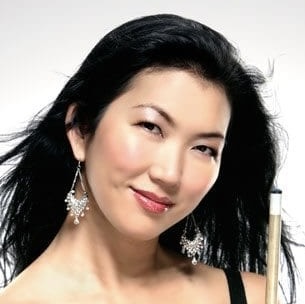
Jeanette Lee did not simply become one of the most famous players in billiards history; she changed what a pool champion could look like, sound like, and mean to the wider world. To sports fans everywhere, she became known as “The Black Widow,” a magnetic champion in black, a fierce competitor with movie-star presence, and one of the rare cue-sports figures whose fame broke far beyond the poolroom. But behind the iconic image is a far deeper story: one of pain, resilience, rebellion, craft, and relentless self-invention.
Born in Brooklyn, New York, on July 9, 1971, to Korean immigrant parents, Lee grew up straddling cultures while trying to find where she belonged. In the stories she shared on Legends of the Cue, she speaks candidly about racism, loneliness, and the emotional toll of feeling like an outsider from an early age. She also describes the values that came from her Korean upbringing: discipline, respect for elders, family obligation, and toughness. Those tensions, between rebellion and duty, would shape much of her life.
A defining challenge came in childhood, when Lee was diagnosed with severe scoliosis and underwent major spinal surgery. The physical pain was immense, but the emotional impact may have been even greater. In the podcast transcripts, she describes how the surgery, body brace, and feelings of isolation darkened her view of herself and the world. Yet those same experiences also forged the stubborn will that later became her trademark. Long before she was a champion, Jeanette Lee was already learning how to endure.
She atte… Read More