Mataya Laurance, Ewa

Pool Professional
Ewa Mataya Laurance, forever known to fans as “The Striking Viking”, is one of the most significant figures in women’s professional pool: a champion who helped define an era, a broadcaster who helped explain the game to the wider world, and a leader who fought to move women’s billiards from smoky back rooms to legitimate sponsorship, television, and tour stability. Her story isn’t only about trophies. It’s about an immigrant’s stubborn commitment to a dream, the realities of making a living in a niche sport, and the will to keep building something bigger than yourself—while still caring, first and last, about playing pool.
Raised in Sweden, Ewa grew up athletic and fiercely competitive, a self-described “tomboy” who preferred sports and action to anything delicate. She played team games, but the longer she competed, the more she wanted full responsibility for outcomes. Pool gave her that: complete accountability, a mental battlefield, and an endless puzzle. What hooked her wasn’t just pocketing balls; it was the strategy, especially the pattern play and precision that turned runs into something planned, not accidental. From early on she gravitated to the “chess” side of the game: cue-ball routes, discipline, and learning how to control a table under pressure.
As a teenager, she began traveling and competing seriously, and by the time she reached international events she had already developed the engine that would define her career: practice, repetition, and a refusal to accept limits. A formative trip to the United States opened her eyes to the scale of opportunity and the culture around pool. And when her time in America was supposed to end, she made a choice that changed her life: she stayed. Not because she was running from Sweden, but because she was running toward pool. “I wanted to play pool,” she said. “That’s all I cared about.” She loved the lifestyle, the potential, the players she could watch and learn from, and the country itself. But wanting the life and affording the life were different things, so she worked.
Ewa waited tables. She took a job at her friend Vicki’s insurance office and learned quickly that she was not built for an office routine, she joked that after repeatedly getting stuck in the primitive green-screen computer system, she was basically fired when the machine asked, “How did you get here?” She did modeling work when she could. And in one of the most unforgettable early chapters, she landed a job at the Playboy Club opening in Lansing, Michigan, complete with a bumper pool table and the infamous “bunny dip.” It was funny, awkward, and real, and it captured a theme that followed her for years: pool in that era often tried to sell entertainment before it sold sport, and the players had to navigate both worlds.
That collision reached its peak when the first ESPN women’s-only seven-ball championship was held at the Playboy Casino in Atlantic City. Ewa, who wanted nothing more than to be taken seriously as “one of the players,” was asked to wear the Playboy costume on TV and perform trick shots alongside icons like Allen Hopkins and Willie Mosconi. She did it, careful not to “fall out” of the outfit, as she put it, but the moment reinforced something she would spend much of her career fighting for: women’s professional pool deserved to be marketed as elite competition, not novelty.
Through the early 1980s she chased tournaments relentlessly, often driving long distances, sometimes cross-country, with fellow player and friend Vicki Frechen Paski. The WPBA in those days was more concentrated in the Northeast, while Ewa was based in the Midwest, so travel was part of the job. She even spent a stretch in New York doing promotional work, staying in a hotel, going on casting calls, until the clarity hit again: she didn’t want that life. She wanted the table. She packed up and returned to tournament pool.
Then, in her early 20s, life shifted abruptly. Ewa became pregnant at 20, a moment she describes with humor and blunt honesty, “I did. I got knocked up”, but also with gravity. She hadn’t fully committed to staying in the United States forever, but now there was a child with two parents, and she couldn’t simply leave. Her daughter, known as “Little Nicky” in the conversation, changed everything. Travel became complicated. Tournament schedules became harder to chase. She had to grow up quickly, and she describes the experience as both wonderful and disruptive: it changed her life for the better, but it wasn’t how she pictured her future at the time.
Even so, her competitive breakthrough came fast. Ewa won the Clyde Childress 9-Ball Open, a win she still frames as pivotal because it separated “playing well” from “winning.” She described the old-school setting vividly: a smoky, chaotic place that wasn’t even really a poolroom, more like a bar with nine-foot tables, filled with the best players in the world. She beat Geraldine Titcomb in the finals, and for a young pro it was validation: not a fluke, not a local result, but a major win.
And then came a story so wild it sounds fictional, except it isn’t. In a title defense, Ewa was ahead 4–2 in the finals against Lori Shampo, breaking, playing great, when the doors exploded open and roughly 20 FBI agents stormed the building. There was illegal gambling in the back, drugs further back, and the entire place was raided. Players were forced to leave and the tournament appeared dead. When organizers later said matches would restart from 0–0 the next day, Ewa fought back. She refused to accept erasing a real score in a real final. She won the argument, they continued from the correct score, and she won the title. Mark Wilson joked that it was the moment “Ewa’s political career started,” but the truth is deeper: she has always been willing to argue for fairness and legitimacy, even when it’s uncomfortable.
As her career advanced, she became not only a star but a bridge, between eras, between regions, and often between men’s and women’s pool. She recalled the early landscape of women’s professional billiards as rich with talent but divided by geography and travel costs, players often stayed in quadrants because crossing the country was expensive. She spoke warmly about many of the foundational competitors of the time: Jean Balukas, LoreeJon Brown, Belinda Bearden, Gloria Walker, Robin Dodson, Mary Kenniston, Vivian Villarreal, Billie Billings, Palmer Byrd, and others who helped build the tour’s competitive identity long before mainstream attention arrived.
In mixed events, Ewa’s reputation also carried weight. In the 1987 9-Ball Team Challenge, a random draw paired top women with top men; Ewa partnered with Mike Sigel. While others went to dinner, she and Siegel practiced, he skeptical at first, then realizing quickly she could play. They went on to win the entire event, a meaningful result in an era when women were still routinely underestimated and prize money mattered.
By the late 1980s, Ewa’s life outside the poolroom became inseparable from her drive inside it. In 1988 she received a call from Brunswick offering sponsorship, because they liked who she was and how she carried herself. The timing was critical: her marriage was ending, the pressure to support her daughter was intense, and she needed stability. Sponsorship helped, but it also sharpened her thinking: she had to win. She describes that period as a push into constant competitiveness, winning tournaments big and small, doing exhibitions she found personally uncomfortable (she says she’s an introvert offstage), and grinding for results because the sport didn’t provide guarantees.
Just as important, Ewa became a builder. She was deeply involved in the larger fight to professionalize women’s pool, debates about dress codes, sponsorship approaches, and the “chicken-and-egg” reality of audience, television, and corporate support. She described long conversations with Harold Simonsen about unifying the men’s and women’s tours under one structure, the PBTA (Pro Billiards Tour Association), built with a board of men, women, and independent businesspeople and a plan to bring the entire billiard industry into a coherent professional tour model. The effort ultimately collapsed under power struggles, but the vision mattered: the ideas influenced what followed, and it highlighted a truth Ewa has lived, women’s pool has survived because women kept organizing, insisting, and enduring.
Ewa Mataya Laurance’s legacy is therefore bigger than any single title. She represents the player who chased excellence, the immigrant who made a life by sheer will, the mother who adapted under pressure, and the leader who refused to accept that pool had to remain small. She is funny, blunt, and fiercely honest, about how gritty the old days were, how difficult legitimacy is to earn, and how much the sport asks of the people who love it. And through every chapter, one line remains the clearest summary of who she is: she stayed for pool—because playing was, and still is, the thing she cared about most.

Ewa Mataya Laurance - Part 4 (The Win That Mattered Most—and the Life…
In the final chapter of our four-part life story with WPBA Hall of Famer Ewa Mataya Laurance , we land where legends are forged: on the road, under the lights, and in the moments that reveal what matters most. Ewa takes us in...

Ewa Mataya Laurance - Part 3 (The Perfect Storm: Fame, the WPBA Boom …
In Part 3 of our four-part Legends of the Cue conversation with pool Hall of Famer Ewa Mataya Laurance , the “Striking Viking” hits the most turbulent—and transformative—stretch of her career. We rewind to 1990–91 , the perio...
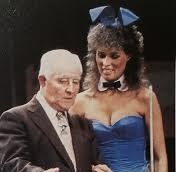
Ewa Mataya Laurance - Part 2 (Bunnies, Breakthroughs, and the FBI Rai…
Part 2 picks up as Ewa Mataya Laurance—“The Striking Viking”—plants her feet in America with one goal: play pool, and nothing else. From home in Michigan to road trips with her friend Vicky Frechen (Paski), Ewa relives the hu...

Ewa Mataya Laurance - Part 1 (The Striking Viking: Ewa Mataya Lauranc…
In this first chapter of our four-part life-story series, we welcome one of the most captivating figures ever to pick up a cue: Pool Hall of Famer Ewa Mataya Laurance —the iconic “Striking Viking.” From her earliest days in S...