Varner, Nick
Pool Professional
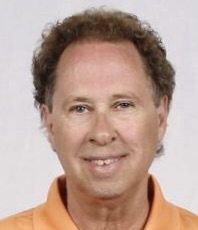
Nick (Kentucky Colonel) Varner’s name has been spoken with reverence in poolrooms for more than five decades—not just because he won, but because of how he won. Calm under pressure, relentlessly prepared, and unfailingly respectful to opponents, Varner became known to generations of fans as one of the sport’s true standard-bearers: a complete player with a champion’s nerve and a gentleman’s touch. Born May 15, 1948, in Owensboro, Kentucky, Varner’s story begins in the kind of everyday American setting that has launched so many great cueing lives: family, hard work, and a neighborhood poolroom.
Although he was born in Kentucky, Nick grew up in southern Indiana, where his father owned (and later expanded) a small poolroom. In the Varner household, pool wasn’t something you “discovered” later—it was part of the family fabric. In the earliest days, Nick’s father stood him on a Coke crate so he could reach the table, and that image—kid, cue, crate, and curiosity—captures something essential about Varner: the game met him early, and he met it with discipline. From those first formative years, he learned more than mechanics; he learned what a poolroom can be: a place where stories are traded, reputations are built, and character is tested one rack at a time.
As Varner grew, he absorbed the traditions of an era when top players traveled from town to town giving exhibitions, taking on challengers, and turning pool into equal parts competition and theater. In those rooms, Nick didn’t just watch—he studied. He sought out the old masters and learned from their styles and their standards. He admired icons such as Joe Balsis, Luther “Wimpy” Lassiter, Jimmy Caras, and Irving Crane, drawn to the way they combined talent with showmanship and sportsmanship. Their influence echoes through Varner’s later career: the steady demeanor, the strategic patience, and the sense that every match, whether a world final or a back-room set, deserved professionalism.
That seriousness traveled with him to school. Nick attended Tell City High School in Indiana and later enrolled at Purdue University, where his competitive drive and table intelligence translated into immediate success. While at Purdue, Varner won two ACUI intercollegiate national championships—proof that even in his early years, he wasn’t merely “good for his age” or “the local kid who could run a few.” He was already building the mental game that would define him: the ability to manage nerves, lock in on patterns, and out-think opponents over long formats.
What makes Varner’s journey especially compelling is that pool was not his only path for a time. He explored golf seriously enough to pursue a PGA apprenticeship program and worked as an assistant golf professional. That detour matters, because it speaks to the breadth of his athletic interests, and to a theme that runs through his life: Nick Varner did things the right way, even when the right way meant taking the longer route. Ultimately, pool called him back. By the mid-1970s, he returned to the family business, giving lessons, running leagues, and selling tables, learning the industry from the inside while continuing to sharpen his own game.
A pivotal piece of Varner’s growth came through mentorship, particularly from Hubert Cokes, known widely by the nickname “Daddy Warbucks.” Under Cokes’ guidance, Nick’s one-pocket game accelerated, strategically, psychologically, and financially. One-pocket is a discipline that exposes impatience and punishes ego; it’s chess with side pockets and pride on the line. Varner learned how to manage moving, trapping, and outlasting skills that later served him across every major rotation and specialty discipline.
By the late 1970s and into 1980, Varner was no longer a talented regional threat, he was a genuine world-class contender. Then came the breakthrough that changes a career’s trajectory: the 1980 World Straight Pool Championship, where Varner captured a world title and announced himself as a player built for the biggest stages. Straight pool rewards precision, planning, and stamina, traits that fit Varner like a tailored jacket. He would later add a second straight-pool world crown in 1986, reinforcing that the first was not a lightning strike but a sign of lasting greatness.
If straight pool established Varner’s pedigree, television helped cement his place in the public imagination. In 1982, he earned a signature win at the PPPA World Championship, broadcast on ABC’s Wide World of Sports, with Howard Cosell on the call. In an era when pool rarely enjoyed mainstream spotlight, Varner delivered the kind of poised, high-quality performance that made casual viewers lean closer to the screen.
Then came the stretch many fans still point to as one of the most dominant seasons any player has produced: 1989. Varner described that year in a way champions often do, not as magic, but as the product of clarity, confidence, and relentless work. Results tell the story: he won 11 of 22 elite events, a run that remains a benchmark for sustained excellence. In the same season, he added another pillar to his résumé by winning the U.S. Open 9-Ball Championship. Yet even in dominance, his humanity showed through: he could laugh at the moments that would rattle lesser players, like a famously mishit break against Dallas West, and then refocus to win anyway. That ability to absorb embarrassment, stay composed, and keep moving forward is central to what made him “Varner” on the road.
One of the defining marks of his career is versatility. Some champions master a single discipline. Varner won at world-class levels across straight pool, 9-ball, 8-ball, one-pocket, and banks, earning a reputation as one of the game’s most complete American players. And he did it without theatrics, his cue stayed quiet, his body language stayed steady, and the pressure seemed to land everywhere except on his face.
His greatness also endured. In December 1999, Varner captured the WPA World 9-Ball Championship in Alicante, Spain, winning the world title at age 51, often cited as one of the most impressive late-career championships in modern pool. That same era included major wins in other disciplines as well, and in 2000 he added another world title by winning a World One Pocket championship in Portland, Maine, underscoring that his prime wasn’t a window, it was a long runway.
Like many true legends, Varner’s influence extends beyond the table. He helped sustain the sport through periods of instability, especially when tour sponsorship shifted and he built a parallel legacy as a businessman and ambassador. He launched Nick Varner Cues & Cases, including his “White Lightning” branding, turning his name into a trusted marker of quality for players who wanted equipment backed by lived expertise. Just as importantly, he remained a teacher at heart: clinics, exhibitions, stories, and advice, passing forward what the old masters once passed to him.
Recognition followed, as it should. Varner was inducted into the Billiard Congress of America Hall of Fame in 1992, a milestone that reflects both performance and reputation. Later honors tied him to the deeper history of specific disciplines, including acknowledgment within one-pocket circles.
Ask players what they remember about Nick Varner, and you’ll hear the titles, but you’ll also hear about temperament: the even keel, the sportsmanship, the quiet confidence. You’ll hear about a man who could win big without making it about ego, who could handle the road without losing himself, and who treated opponents as peers, not obstacles.
That is why Nick Varner fits Legends of the Cue so naturally. His story isn’t only a record of championships; it’s a portrait of professional excellence, built in small rooms, refined through mentors, proven under the lights, and sustained by character. In a game that has always mixed artistry with survival, Nick Varner showed what it looks like when talent, preparation, and respect all arrive at the table together, and stay there for a lifetime.

Nick Varner - Part 4 (From World Championships to "White Lightning")
In this fourth and final installment of our exclusive Legends of the Cue series with Hall of Fame icon Nick Varner , we bring his extraordinary journey full circle. From the heights of world titles to the challenges of sustai...

Nick Varner - Part 3 (From Straight Pool to Mosconi Cup Glory)
In Part 3 of our four-part conversation with BCA Hall of Famer Nick Varner , we dive into the rich details of his legendary career, exploring the transitions, rivalries, and defining moments that shaped one of the greatest ch...

Nick Varner - Part 2 (From First World Title to an Unmatched Season o…
In Part 2 of our four-part conversation with Billiard Congress of America Hall of Famer Nick Varner, we dive deep into the years when his career shifted into high gear — and he began carving out one of the most remarkable rés...

Nick Varner - Part 1 (From Farm Fields to Pool's Grand Stage)
In this first installment of our four-part conversation with Hall of Fame legend Nick Varner , we trace his remarkable journey from the dusty farmlands of southern Indiana to the glittering lights of pool’s biggest stages. Kn...