Tabb, Michaela
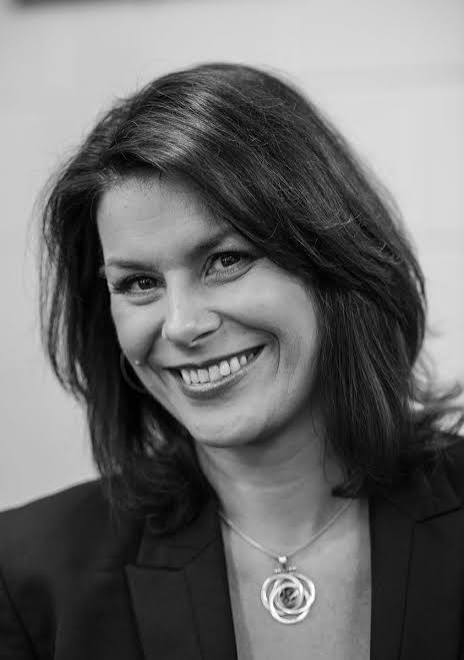
Professional Referee
Michaela Tabb has occupied one of the most unusual places in cue-sports history. An international pool player, pioneering professional referee, business owner, wife and mother, she rose from the pubs and league tables of Scotland to the center of the Crucible Theatre, ultimately becoming the first woman to referee a World Snooker Championship final.
Born in Bath, England, on December 11, 1967, Michaela moved to Scotland when she was three and a half after her father, who worked on nuclear-submarine refits, transferred from Devonport to the Rosyth naval base. The family settled in Dunfermline, which Michaela still considers home. She grew up alongside her younger sister, Juliet, in a close family whose encouragement helped shape the strong-willed independence that became one of her defining characteristics.
Cue sports were not her first passion. As a girl she did gymnastics, later became absorbed in music and played both bassoon and cornet—the latter during a period in the Salvation Army. She once imagined becoming an air-traffic controller, an ambition ended by eyesight requirements of the time. Michaela also attended Glasgow University, although university life proved a poor fit, in part because she returned home each weekend to work and help support herself. She subsequently entered the financial-services world, including several years with the Halifax Building Society, and even spent time as an Ann Summers sales representative—a chapter she recalls with considerable humor.
Snooker, however, had been part of family life from childhood. Michaela remembers watching Alex Higgins’ emotional 1982 World Championship victory, Cliff Thorburn’s maximum break, the famous 1985 final between Dennis Taylor and Steve Davis, and stars such as Jimmy White, Kirk Stevens and Tony Knowles. Long before she worked inside the Crucible Theatre, she had watched the game like millions of other British fans.
Her own competitive career began with pool around 1991. A boyfriend introduced her to a Dunfermline pub called The Thistle, where two pool tables dominated the room. Michaela quickly realized that if she wanted to participate socially, she needed to pick up a cue.
She was not, by her own admission, a natural potter. Instead, she developed a fiercely tactical game. Michaela learned to deny opponents opportunities, protect key pockets and patiently manufacture winning positions. “I played to stop my opponent from winning,” she recalled on Legends of the Cue. That style proved remarkably effective in single-frame team competition.
By 1992 she was representing Scotland. Michaela became an important member—and later captain—of the Scottish women’s team and developed into an accomplished individual competitor. She won the UK women’s title in 1997 and the European women’s title in Gibraltar in 1998, achievements independently reflected in contemporary cue-sports profiles.
Pool also brought Michaela together with Scottish international player Ross McInnes, who became her husband. Their partnership would profoundly influence both her career and later business life.
In fact, Michaela’s refereeing career largely began because Ross saw an opportunity.
When Matchroom staged the St Andrews Cup nine-ball event in Scotland in 1997, Ross told organizers they already had a local referee available. There was one complication: Michaela had never refereed professional American pool. She and Ross effectively created her refereeing résumé, she studied what she believed were the necessary rules, and she got the assignment. The St Andrews Cup became her professional refereeing debut.
One year later she worked her first Mosconi Cup. Michaela has described that 1998 experience as terrifying: live television, intense team rivalry, partisan spectators and some of the most forceful personalities in professional pool. Over time, however, the Mosconi Cup became her favorite event.
Few players tested her authority more than Earl Strickland. Michaela learned how far to let the volatile American express himself before drawing a firm line. Beneath the calm exterior, she admits, she could be “going to jelly,” but spectators and players saw a referee who remained controlled, decisive and unwilling to be intimidated.
At the opposite end of the spectrum was Efren Reyes, her favorite player to referee. Even after years around world-class pool, Michaela said Reyes remained the one player whose intentions she often could not anticipate. His imagination and extraordinary repertoire of shots left her wondering, from the best seat in the house, what he would attempt next.
Her television work in pool attracted the attention of professional snooker. In 2001, World Snooker recruited Michaela directly rather than through the traditional refereeing pathway. She arrived without the years of formal training and examinations undertaken by many colleagues and had to learn quickly in public.
Her early experiences were difficult. During her first ranking assignment at the 2002 Welsh Open, Michaela struggled with unfamiliar scoring equipment and was overruled on a free-ball decision. Yet encouragement from former world champion Ken Doherty helped restore her confidence. She later credited referees including Leo Scullion, Graham Harting and Jan Verhaas with giving her the support and guidance she needed while learning on the job.
In 2003 she made her first appearance at the Crucible Theatre during the World Championship. That same year, however, cost-cutting resulted in her contract being discontinued. Michaela was devastated after working so hard to establish herself. Within months she was asked back—a moment she later said meant even more than being hired originally because it demonstrated that she had earned her place.
From there, the landmark assignments accumulated.
In 2007, Michaela refereed the Welsh Open final between Neil Robertson and Andrew Higginson at the Newport Centre, becoming the first woman to referee a professional ranking-event final. Robertson won 9–8. That same year she refereed the first official maximum break of her career, Ding Junhui’s 147 at the Masters.
Then came the defining moment.
On May 3–4, 2009, Michaela officiated the World Snooker Championship final between John Higgins and Shaun Murphy at the Crucible, becoming the first woman ever to referee the sport’s world final. Higgins won 18–9. Michaela had known about the appointment for much of the season and spent months worrying that a mistake might cost her the opportunity. When the match finally ended, she described the feeling as “pure joy”—an emotional high that stayed with her for days.
Three years later she returned to referee another World Championship final, Ronnie O’Sullivan against Ali Carter in 2012. O’Sullivan won 18–11.
Behind those achievements was a demanding family balancing act. Michaela and Ross raised two sons, Morgan and Preston, while her refereeing career required extensive international travel. Michaela has repeatedly emphasized that the career would not have been possible without Ross managing family life while she was away.
Her relationship with the professional snooker tour ended painfully in 2015. Michaela brought claims alleging sex discrimination, unfair dismissal and breach of contract; World Snooker disputed the allegations. The matter ended in a confidential out-of-court settlement, not a judgment on the merits of the claims.
She nevertheless remained active in cue sports through pool, exhibitions and seniors snooker while building a new chapter with her family.
In 2018 Michaela and Ross launched the business that developed into On Cue World, initially focused on pool tables and later expanding into cues, cases and accessories. Their son Morgan subsequently joined the operation. The family business is based in Rosyth, near Dunfermline.
In May 2025, Michaela returned to the Crucible Theatre for a ceremonial farewell from traditional snooker refereeing. She officiated the opening five-frame session of the World Seniors Championship final between Alfie Burden and Aaron Canavan. Burden went on to win the championship 8–4.
For all the historic “firsts,” Michaela prefers a simpler measure of her career. Asked on Legends of the Cue how she would like to be remembered, she answered:
“Honest, hardworking, good referee. Not female, because it wasn’t about being a female. It was about being a good referee.”
It is a fitting summary of a career that changed what a professional cue-sports referee could look like—and helped open a door through which a new generation of women has since followed.

Michaela Tabb - Part 2 (Earl Strickland, Efren Reyes and the Road to Snooker)
